



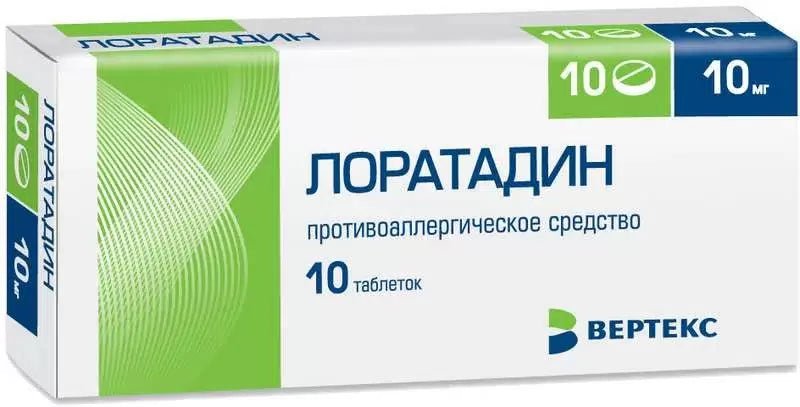
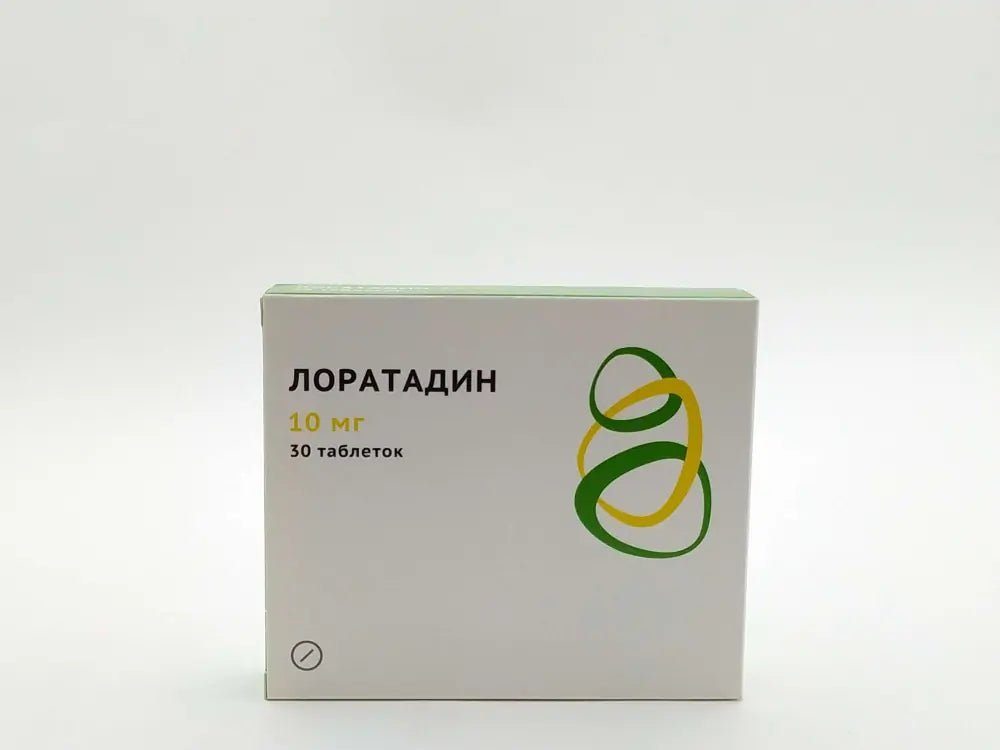
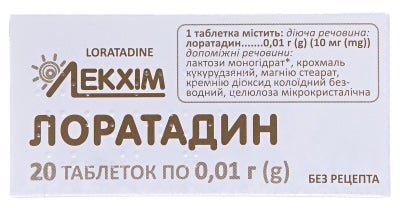
Loratadine is one of the most familiar seasonal support products in the world, and the small 10 mg tablet sold under this plain name in Russia, Ukraine and the wider CIS region contains the same substance Americans know as Claritin. It blocks the effects of histamine, a messenger substance the body releases when the immune system overreacts to pollen, dust mites, pet dander or other harmless things. Histamine is what makes the nose run and itch, the eyes water and the skin break out in itchy welts. Loratadine is taken to ease sneezing, a runny nose and itching during pollen season or all year round, and to calm hives that keep coming back. One tablet works for about a day, and it causes drowsiness far less often than the older products of this kind.
On USA Apteka, loratadine comes as 10 mg tablets in the original packaging. People usually want to know four things about it: whether it helps with a nagging throat irritation, what the leaflet says about its makeup and limits, how to take the tablets, and how loratadine compares with Suprastin, Cetrin or Claritin. The sections below go through these one by one, and the leaflet inside the pack remains the main reference for amounts and age limits.
Loratadine and throat irritation: what it can and cannot do
Loratadine is often the one tablet already in the cupboard when a throat tickle will not settle, so the question comes up every season. Loratadine does not quiet the urge to clear the throat and does not loosen phlegm. It works on histamine, and in most throat irritation histamine plays only a small part.
There is one situation in which it can help indirectly. When pollen or dust sets off a runny nose, mucus drips down the back of the throat, a pattern doctors call postnasal drip. The constant tickle makes a person clear their throat all day, and it often gets worse at night when lying down. If that runny nose comes from seasonal sensitivity, loratadine reduces it, and the tickle eases along with it. The tablet is working on the nose here, and the throat simply benefits.
A seasonal cold is a different story. The scratchy throat and the hacking that come with a cold are caused by the virus and the irritated airways rather than by histamine. A review of studies by the Cochrane Collaboration found that products from this group were no more effective than a placebo for a short-lived throat irritation, in adults or in children. Loratadine also does not take the place of an inhaler for asthma, and it does nothing for bronchitis or pneumonia.
A doctor is needed when a throat irritation lasts more than three weeks, comes with wheezing, shortness of breath, a high temperature, chest pain or blood, or keeps waking a person at night. A child who breathes fast, with a whistling sound or with visible effort, needs urgent care the same day.
Loratadine leaflet: makeup, product forms, uses and who should not take it
Each tablet contains 10 mg of loratadine. In the packs sold on USA Apteka the other ingredients are lactose monohydrate, potato starch and calcium stearate; other manufacturers use slightly different fillers, such as microcrystalline cellulose. The tablets are white or nearly white, round and flat, with a bevelled edge. The lactose matters to anyone with lactase deficiency, and the full list is printed on every pack.
Loratadine is made in several forms:
- 10 mg tablets, the most common form, sold in packs of 10, 20 or 30;
- a syrup with 5 mg in every 5 ml, which many manufacturers make for small children;
- in the United States, also chewable tablets, quickly dissolving tablets and capsules.
On USA Apteka, loratadine is available as 10 mg tablets, and the syrup is not part of the catalog.
According to the leaflet, loratadine is used for:
- seasonal and year-round runny nose caused by sensitivity to pollen, dust or animals, with sneezing, an itchy nose, and itchy, watery eyes;
- long-lasting hives with no clear trigger, which doctors call chronic idiopathic urticaria.
The leaflet lists several situations in which loratadine is not taken:
- a previous reaction to loratadine or any other ingredient of the tablet;
- breastfeeding;
- age under three, and for tablets some manufacturers also set a minimum body weight of 30 kg;
- lactose intolerance, lactase deficiency or glucose-galactose malabsorption, because of the lactose in the tablets.
Some situations call for extra care and a conversation with a doctor first. With serious liver problems, the leaflet gives a separate, less frequent schedule. During pregnancy, leaflets from different manufacturers say different things: some ask for caution, others advise against it, so the decision belongs with the doctor who knows the pregnancy. Ketoconazole, erythromycin and cimetidine raise the level of loratadine in the blood, and anyone taking them should mention it. Loratadine is stopped at least 48 hours before skin-prick sensitivity tests, otherwise the results may come out falsely negative.
Side effects are uncommon. Adults occasionally notice headache, drowsiness or tiredness, and children sometimes get a headache or become restless. Rash, a racing heartbeat and severe allergic reactions are very rare. Hives that come with swelling of the lips, tongue or throat, or with trouble breathing, are an emergency: call 911. Loratadine is not a product for that situation.
How to take loratadine tablets: amounts for adults and children
The amounts below come from the leaflet, and the leaflet in the specific pack has the final word.
- Adults and children over 12 take one 10 mg tablet once a day.
- For children from 3 to 12 years, many leaflets set half a tablet, 5 mg, once a day for a child weighing 30 kg or less, and a full 10 mg tablet for a child over 30 kg.
- Some manufacturers allow the tablets only for children over 30 kg and suggest the syrup for smaller children.
- With serious liver problems, the leaflet gives a less frequent schedule, and a doctor confirms it.
In practice, the tablet is taken at about the same time every day, with water, with or without food. The effect lasts about a day, so a second tablet on the same day does not make it work better and only makes side effects more likely. A tablet with a score line can be split in half for a child, and if there is no line, it is better to ask a pediatrician how to give the right amount.
During pollen season, doctors often suggest taking loratadine every day through the season rather than only on the worst days, and the length of the course is worth agreeing with a doctor. If there is no improvement within a few days, or the tablets are needed month after month, an allergist can look for the cause and suggest other options, such as nasal sprays or desensitization shots.
Double use is the most common mistake. A family that brought loratadine from home and also buys Claritin at a US store has the same substance twice. Desloratadine, sold as Erius or Clarinex, is the active form that loratadine turns into in the body, so it is not taken together with loratadine either. Claritin-D also contains pseudoephedrine, which is not suitable for people with high blood pressure, heart rhythm problems or glaucoma without a doctor's approval. Children under two are given loratadine only on a pediatrician's advice.
How loratadine differs from other seasonal support products
Products that block histamine fall into two broad generations. The older ones, such as Suprastin (chloropyramine), Tavegil (clemastine) and diphenhydramine, work quickly but wear off within hours, so they are taken several times a day. They pass easily into the brain, which is why they make people sleepy and slow, and why they often cause a dry mouth. The newer ones, loratadine among them, reach the brain much less, last about a day and are taken once.
| Product | Generation | Times a day | Drowsiness | Worth knowing |
|---|---|---|---|---|
| Suprastin (chloropyramine) | first | 3 to 4 | often | works fast, often taken at night |
| Tavegil (clemastine) | first | 2 | often | lasts longer than Suprastin |
| Loratadine (Claritin) | second | 1 | rarely | long track record, affordable |
| Cetirizine (Cetrin, Zyrtec) | second | 1 | somewhat more often than loratadine | starts working a little faster |
| Ebastine (Kestin) | second | 1 | rarely | once a day, tablets |
| Desloratadine (Erius, Clarinex) | newer form of loratadine | 1 | rarely | not combined with loratadine |
Within the newer group the differences are modest. Cetirizine and its relative levocetirizine start working a little sooner, but they make some people sleepy more often. Fexofenadine, sold in the US as Allegra and in the CIS as Telfast, is the least likely to cause drowsiness. Loratadine sits in the middle: it rarely makes people sleepy, it has been used for decades and it is inexpensive.
The older products still have their place. A doctor may suggest one at night, when drowsiness does not matter, or for a short course. During the day, especially behind the wheel, at work or at school, the newer products are usually the more comfortable choice. Which one suits a particular person depends on age, other conditions and other products taken every day, and that choice is best made with a doctor, especially for a child or during pregnancy.
Neighboring themes
Many adults keep one blister in the kit that comes out every spring when the birch trees bloom, and next to it lie several things that have nothing to do with pollen.
- Nurofen is kept for a headache, a toothache or a high temperature. During pollen season it sometimes ends up in the same day as loratadine, for example with a headache from a blocked nose, and the two do different jobs. One detail is worth knowing: in some people with chronic hives, ibuprofen and similar pain relievers make the welts flare, and anyone who has ever had wheezing or swelling after aspirin-type pain relievers should talk to a doctor before taking Nurofen.
- Vetom is a dietary supplement, not a registered product like loratadine: spores of Bacillus subtilis bacteria that people take for digestion. It does not ease sneezing or hives, and claims that gut bacteria can make seasonal sensitivity go away are not backed by solid evidence. People with weakened immunity, during pregnancy or for a child start it only after talking to a doctor.
- Bepanthen looks after dry, chapped or rubbed skin with dexpanthenol. It helps to tell two kinds of rash apart: welts that appear and fade within hours are hives, which is where loratadine helps, while a dry patch that stays in place and flakes needs skin care. Bepanthen Plus also contains chlorhexidine, which some people react to. A rash that spreads, blisters, weeps or comes with swelling needs a doctor or a dermatologist.
Loratadine itself is there for the pollen months and for hives that keep returning. One tablet a day, a check of the expiry date before the season starts, and storage out of children's reach.
What sits next to loratadine depends on who lives in the house, and there is no one right list. None of these products replaces a doctor, and if the sneezing returns every spring, a visit to an allergist often makes the whole season easier.
Where to find
Loratadine 10 mg tablets can be ordered from USA Apteka in packs of 10 and 30, in the original packaging. Delivery within the US, including Hawaii and Alaska, is free over $69, while orders to other countries ship at a paid rate regardless of the total. The care team answers questions about a specific pack or stock in the chat on the website or on WhatsApp, and regular customers have a bonus program and seasonal sales.
The tablets are stored in a dry place at room temperature, out of children's reach, as the leaflet describes. The amount and the length of the course for a child, during pregnancy or alongside other products are decided with a doctor, and the leaflet inside the pack remains the main document.
Please Chat with us or send us a message on WhatsApp