



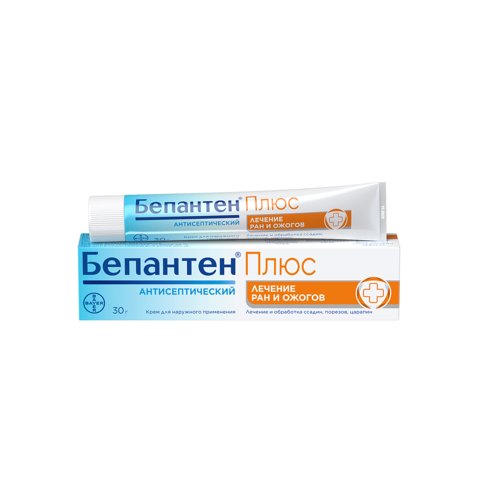

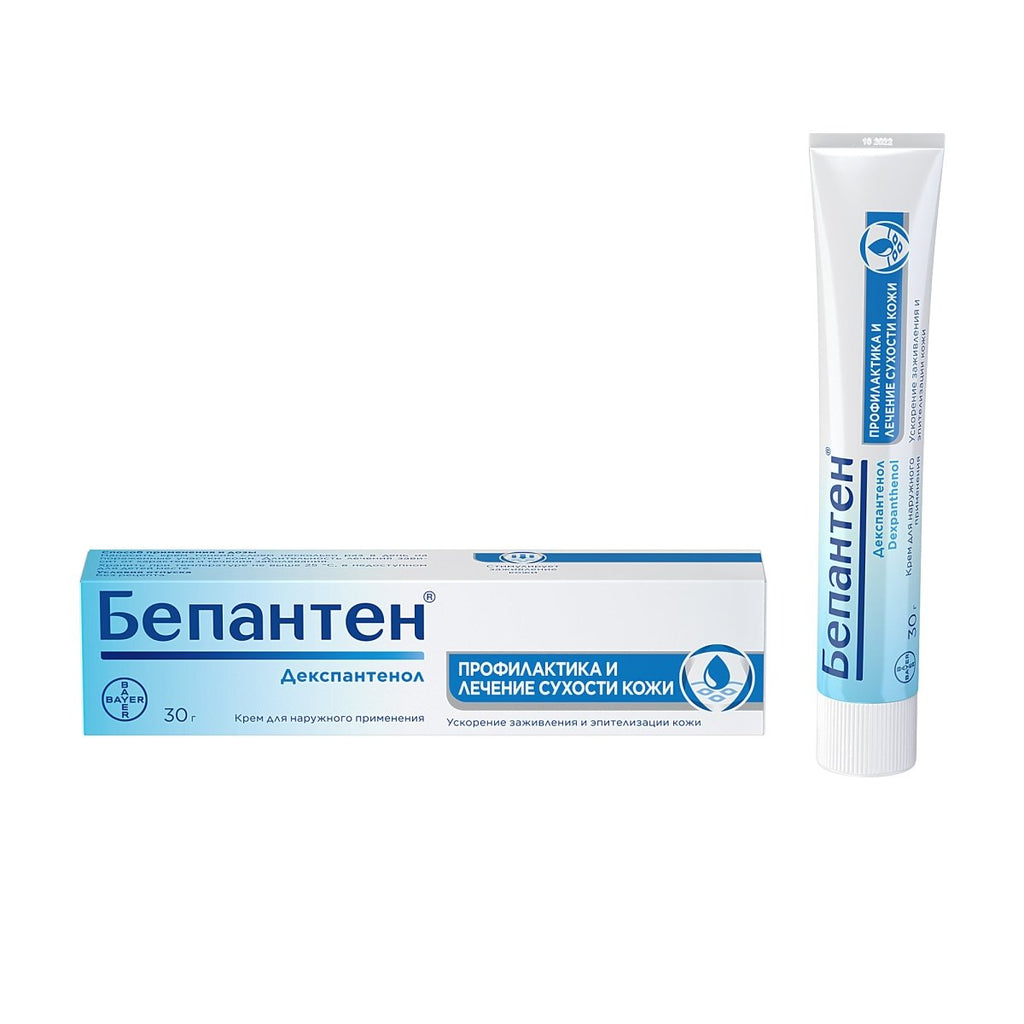

Bepanthen is a skin care line built around dexpanthenol, the form of provitamin B5 that skin converts into pantothenic acid once it has been applied. That conversion is the whole idea behind the line. Pantothenic acid takes part in the skin’s own repair processes, and dexpanthenol itself holds water in the upper layer, so skin that has been rubbed, chapped or dried out gets both moisture and something to rebuild with. The name is familiar to Russian and Ukrainian speaking buyers in the United States because it is the same box they knew at home, and because the reasons for reaching for it are so ordinary: hands worn down by a winter of hot water and cold air, a baby’s diaper area, sore nipples in the first weeks of breastfeeding, a patch of skin still tight after a long day in the sun, a scraped knee once it has been rinsed clean.
Two forms live under one name, an ointment and a cream, and a separate product called Bepanthen Plus sits beside them with a different makeup. What follows covers the difference between the two bases and which one suits which job, what dexpanthenol genuinely does for skin stretched by pregnancy and what no cream has been shown to do about stretch marks, how Plus differs from plain Bepanthen, how the cream behaves on the face, and the practical points worth knowing before the first application. For skin that is not behaving as expected, a doctor’s word comes before any of this.
Bepanthen ointment and cream: the bases do different jobs
The active idea is the same in both forms. The base is not, and the base is what decides where each one goes. The ointment sits on a fatty, occlusive base that stays on the surface as a film, holds moisture underneath it and screens the skin from rubbing and from wet. That is why it is the usual pick for the diaper area, where skin is in contact with damp for hours at a stretch, for cracked heels and fingertips that split open again by evening, and for nipples between feeds. The cream is put together the other way around: a lighter base with a high water content that sinks in quickly and leaves no film behind. It spreads easily over a large area, it can go on hands several times a day without the greasy feel, and it suits skin that needs moisture rather than a barrier.
A short way to choose between them:
- skin in constant contact with wet, rubbing or a diaper: the ointment, for the barrier it leaves;
- a large area, or anywhere the greasy feel would be a nuisance: the cream;
- cracks, thickened dry patches, skin that keeps reopening overnight: the ointment, often applied last thing;
- daily upkeep on hands and face: the cream.
Many people keep both and switch by season, using the cream through the year and the ointment on the worst weeks of winter. If skin reacts in a way that does not fit any of this, with itching, spreading redness or weeping, the form is not the question to solve on your own and a doctor should look at it.
Bepanthen for stretch marks
This is the most searched question about the line and it deserves a straight answer in two parts, because the two parts pull in different directions.
What dexpanthenol genuinely does is moisturize and support the skin barrier. Skin that is kept well hydrated feels softer and more pliable, and the tight, itchy feeling that comes with a rapidly growing belly in the second and third trimesters is often easier to live with when the skin is not dry on top of being stretched. Daily application also means a few minutes of gentle massage, which many people find comfortable and calming, and which makes the routine easy to keep up. Those are real benefits and they are the reason the cream ends up in so many pregnancy bags.
What no cream has been shown to do is prevent stretch marks from forming or remove the ones already there. Whether they appear, and how many, depends mostly on genetics, on hormones and on how fast the skin is stretched, and none of those things is reachable from the outside. Mature stretch marks, the pale silvery ones that have settled, are a change in the deeper structure of the skin, and a cream does not erase them. Anyone promising otherwise is selling something.
So the reasonable expectation is comfort rather than prevention: softer skin, less itching, a routine that feels good. During pregnancy it is worth running any product you apply daily past the doctor who is following you, simply because that is the moment when everything applied over a large area deserves a second opinion.
Bepanthen and Bepanthen Plus: what separates the two formulas
Bepanthen Plus is a separate product rather than a stronger version of the same thing, and the difference sits in the makeup.
Plain Bepanthen contains dexpanthenol and its base, nothing more. It is made for skin that is intact or nearly so: dry, chapped, rubbed, irritated, or a graze that has already closed over.
Bepanthen Plus carries dexpanthenol alongside chlorhexidine, an added component whose job is to clean the surface and keep it protected from contamination. That makes it the version people reach for when a fresh scrape or a small superficial wound needs the surface handled as well as the skin supported, rather than skin care alone.
The practical consequence is worth stating plainly, since the two boxes look related: plain Bepanthen does nothing about surface contamination, and Plus is not a daily moisturizer for dry hands or for a baby’s skin. Using one where the other belongs is not dangerous, but it does not do the job. The manufacturer’s leaflet sets out where each is intended and the age limits that apply, and it is worth reading rather than assuming, since the two products do not share the same instructions. A doctor is the right person to ask when a wound looks like more than a scrape.
Bepanthen cream on the face, and where the ointment does not belong
The cream turns up in face routines more often than the label suggests, and usually for the same handful of reasons: dry flaking patches in winter, skin that stayed hot and tight after a day outdoors, chapped lips, the raw feeling on cheeks after a cold wind. Its light base sits well under other products and it is unscented, which is part of why people with easily irritated skin gravitate to it.
The ointment is a different matter on the face. That fatty, occlusive base is the whole point of it elsewhere, but on skin prone to breakouts it can block pores, and the face is where that shows. The general rule people settle on is simple: the cream is the face option, the ointment stays for hands, heels, diaper area and nipples.
Two more things worth knowing. First, it is a supportive product for dryness and irritation rather than something aimed at acne or rosacea, and anyone with either of those should get a dermatologist’s word before adding it to a daily routine, because what soothes ordinary dry skin can behave differently on skin that is already inflamed. Second, patch testing on a small area is a sensible habit with any product going on the face, particularly for anyone who reacts to things easily.
How Bepanthen is applied in everyday care
Most of the practical points are mundane, which is exactly why they get skipped.
- Apply to clean skin. On a graze that means the surface has been rinsed first; sealing anything under a fatty film is the one thing worth avoiding.
- For a baby, the ointment goes on at each diaper change, in a thin layer over the area that stays damp.
- For sore nipples, it is applied after a feed rather than before, and the leaflet states whether the particular pack needs to be removed before the next one. That instruction is on the box and it differs between products, so it is worth checking rather than remembering.
- On hands, the cream goes on through the day and the ointment overnight, which gives it hours to work without getting washed off.
- A thin layer is enough. More does not work faster and on the face it simply sits there.
Two cautions are firmer than the rest. Deep wounds, dirty wounds and anything bleeding heavily are not a job for skin care at all, and need medical care. And if redness, swelling or weeping increases rather than settles over the following days, that pattern points to an infection rather than simple irritation, and it needs a doctor rather than another layer of cream. Known hypersensitivity to any of the components rules the product out. Storage is the usual: a dry place away from direct sun, the tube closed, the date on the box.
Neighboring themes
A fresh graze has an order to it, and that order is the clearest way to see where each of these names belongs. The first step is getting the surface clean, which is where Miramistin sits, and where a Furacilin solution is used to rinse the area and to soak off a dressing that has dried onto the skin. The second step is the edge: iodine goes on the intact skin around a graze rather than into it, since on an open surface it is harsh on the tissue underneath.
Bepanthen comes after both of those, on skin that is already clean and closed and simply dry, tight or rubbed. The order is what matters, because the steps do not swap places. A fatty layer over an unrinsed scrape seals in whatever was on it, and iodine painted over a scab that has already formed is doing nothing useful. And when a wound is deep, dirty or bleeding heavily, none of these steps is the right one, and a doctor should see it the same day.
Where to find
Bepanthen can be ordered from USA Apteka with delivery across the United States and abroad, as an ointment and as a cream in the original packaging of European and CIS-region producers, so a returning buyer finds the tube they recognize. Delivery within the US, including Hawaii and Alaska, is free over $69, while orders to other countries ship at a paid rate regardless of the total. The support team is glad to help by chat or WhatsApp with choosing a form or a pack size and with a stock check, and regular customers have a bonus program and seasonal offers.
This section is reference material for getting your bearings between the forms, not advice for a particular person. Skin that keeps flaring, a wound that is not closing or any doubt about what to use during pregnancy is a conversation for your doctor.
Please Chat with us or send us a message on WhatsApp