





In Russian and Ukrainian, vazelin is not a brand but the everyday word for petroleum jelly, and a small orange glass jar of it has stood in family kits for generations. It went on chapped lips and cracked heels, on a baby's skin under the diaper, on the tip of an enema, on a back before cupping, and on cheeks before a walk in the frost. The jar sold on USA Apteka is medical petroleum jelly from Russian manufacturers, registered at home as a skin-protecting product, and it should not be confused with the American brand of the same name, although the substance inside is very similar.
Petroleum jelly is a soft mixture of hydrocarbons obtained from petroleum and purified. The story of the word starts in the United States: in 1859 the chemist Robert Chesebrough saw oil workers in Pennsylvania rub the waxy residue from their rigs onto cuts and burns, refined it, and in 1872 patented it under the name Vaseline. The sections that follow cover what medical petroleum jelly is used for and how it works, how to apply it, how medical and cosmetic petroleum jelly differ, and which forms and pack sizes are sold, with a separate look at the places where petroleum jelly does not belong.
What medical petroleum jelly is used for at home
According to the leaflet, medical petroleum jelly is a skin-protecting and softening product. Its makeup is as short as it gets: 100 g of the product contain 100 g of petroleum jelly, with nothing else added. It looks like a uniform, balm-like mass that stretches into threads, white to yellowish in color, with a faint smell of paraffin.
The way it works is purely physical. Petroleum jelly does not soak into the skin and does not feed it anything. It lies on the surface as a thin water-repellent film, and that film keeps the skin's own moisture from evaporating and protects it from wind, frost, water and rubbing. That is why it is one of the most effective products for sealing in moisture, and why dermatologists often suggest it for dry, cracked skin.
The leaflet lists three situations:
- dry skin, including the delicate skin around the natural openings of the body, such as the lips and the nostrils;
- protecting the skin before cupping, a traditional procedure in which glass cups are placed on the back;
- lubricating the tip of an enema or a gas tube before a procedure, so that it slides in gently.
Everyday practice has added a few more uses that fit the same logic of a protective film:
- chapped lips and cheeks in cold and windy weather;
- cracked heels and rough elbows, especially overnight under cotton socks;
- the skin under a diaper, as a barrier against moisture;
- small scrapes and minor burns once they have been cleaned and cooled: the American Academy of Dermatology suggests keeping such skin under a thin layer of petroleum jelly so that it does not dry out and form a hard crust;
- skin that rubs against clothing or against itself during long walks, runs or hot days.
Petroleum jelly does not kill germs and does not repair anything by itself; it creates conditions in which the skin restores itself more comfortably. A wound that is deep, dirty, red, hot and swollen, or a burn larger than the palm, with blisters, on the face or in a baby, needs a doctor.
How to apply petroleum jelly correctly
The leaflet describes the method in one line: externally, a small amount on previously cleansed skin, rubbed in lightly. A few practical details make that line work better.
The skin is washed first, because petroleum jelly seals in whatever is under it, including dirt and sweat. A thin layer is enough: a thick one stays greasy, stains clothes and does not protect any better. For dry skin, it works best on skin that is still slightly damp after a shower or washing, so that the film locks the water in. On cracked heels or hands, many people apply it at night under cotton socks or gloves.
For a minor burn, the order matters. First the skin is cooled under cool running water for about 10 minutes, or until the pain eases, and only after that is a thin layer of petroleum jelly applied. Putting oil or fat on a hot burn straight away is a common home mistake. Blisters are not popped, and the area is covered with a nonstick bandage.
For an enema tip, a small amount is spread over the tip just before use. For a baby's skin under the diaper, a thin layer is applied to clean, dry skin at each change.
The leaflet names only one contraindication, sensitivity to the product, and warns that long use can occasionally cause skin irritation or an allergic reaction. If redness, itching or a rash appears, the petroleum jelly is washed off and not used again, and a rash that does not settle is shown to a doctor. During pregnancy and breastfeeding, external use is not restricted by the leaflet, though a doctor is the right person to ask about any specific situation.
Medical and cosmetic petroleum jelly: what is the difference
On the shelf, petroleum jelly comes in two kinds of packs, and people reasonably ask whether they are the same thing.
Medical petroleum jelly is registered in its home country as a regulated skin product and made to official purity standards: the leaflet, the composition and the storage conditions are regulated in the same way as for other skin products. Its composition is one ingredient. This is the version used for procedures, such as lubricating an enema tip, and the one traditionally chosen for a baby's skin.
Cosmetic petroleum jelly is sold as a cosmetic product. The base is the same, but makers often add fragrances, lanolin, plant oils, vitamin E or glycerin to make it softer and more pleasant. For lips, hands and heels, it does the same job, but the added ingredients are what sometimes irritate sensitive skin, so the composition on the pack is worth reading. For procedures and for newborns, medical petroleum jelly without additives is the simpler choice.
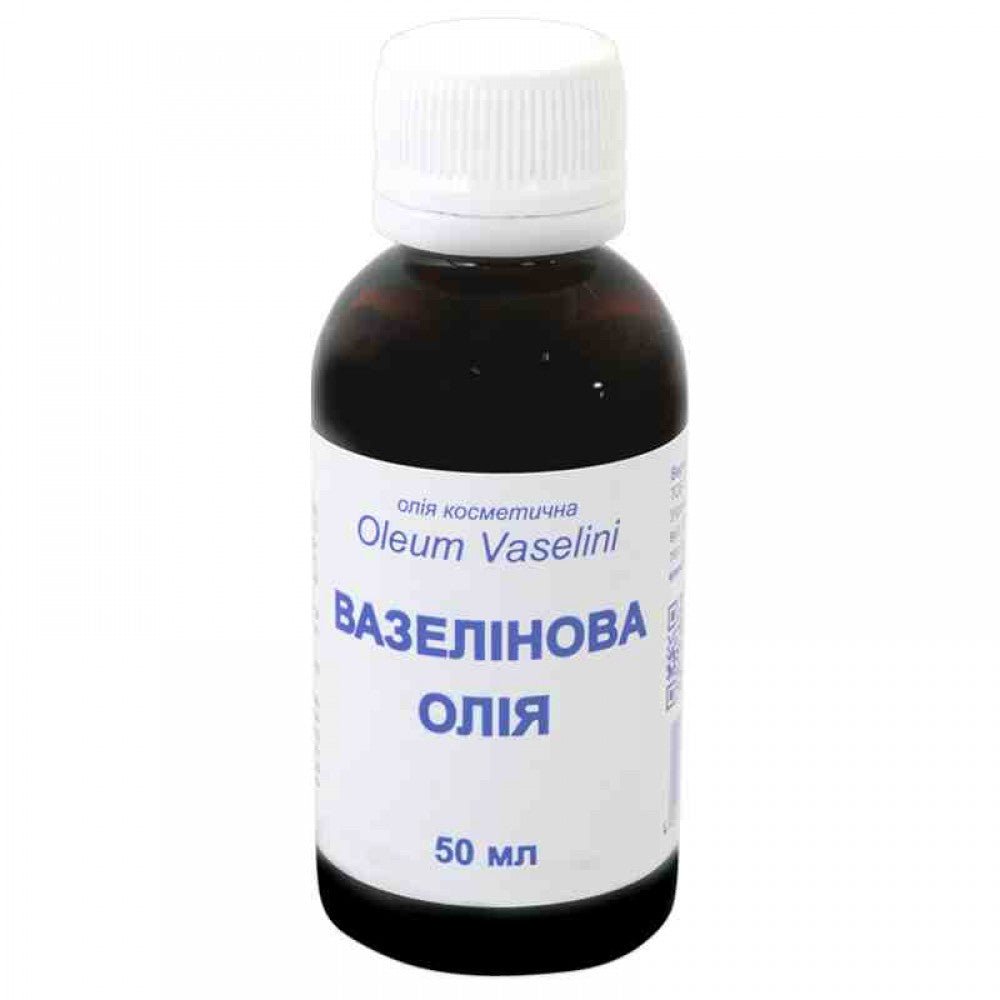
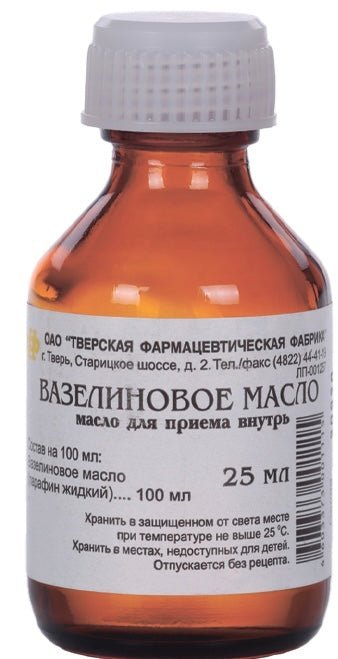
There is also a liquid relative, petroleum jelly oil, known in Russian as vazelinovoe maslo, which is a refined liquid paraffin. It is made in two versions: one for the skin, used for massage and dry skin, and one taken by mouth as a laxative. The two are not interchangeable, and the oral version is used only according to its own leaflet and, for a child, an older person or during pregnancy, only after a doctor's advice. In the US, petroleum jelly in jars and tubes is sold as a skin protectant under many brand and store names.
Vaseline on the shelf: product forms and pack sizes
Russian and Ukrainian manufacturers make medical petroleum jelly in a few standard formats:
- jars of orange glass of 20, 25 or 30 g, the classic form;
- aluminum tubes of 25 g, convenient in a bag and more hygienic, because a finger does not go into the jar;
- larger jars for cosmetic petroleum jelly, from 50 g and up.
On USA Apteka, medical petroleum jelly for external use is sold in a 30 g jar. Petroleum jelly oil for the skin and for oral use appears in the catalog as separate products when they are in stock, and the oral version is taken only after talking to a doctor.
The leaflet asks for storage in a dry place protected from light, at no more than 25 °C (77 °F), out of children's reach. The shelf life of medical petroleum jelly is long, often up to five years, and the exact date is printed on the pack. A jar that has changed color or smell is better replaced. To keep the jar clean, it helps to take the product out with a clean spatula or cotton swab rather than with fingers, especially if the petroleum jelly is used on a baby's skin or for procedures.
Where petroleum jelly does not belong
Petroleum jelly is gentle, but there are a few situations in which it is not used at all, and they are worth knowing in advance:
- with home oxygen: MedlinePlus advises people on oxygen not to use oil-based products such as petroleum jelly on the face or in the nose, and to use a water-based lubricant instead, because of the fire risk;
- with latex condoms: the CDC warns that oil-based products, petroleum jelly among them, cause latex condoms to break;
- deep inside the nose: a little on the skin at the entrance of the nostrils is fine, but oily products are not pushed far inside, because in rare cases oil that gets into the lungs over a long time causes lung problems; this matters especially for babies and older people;
- on a hot burn before it has been cooled, and on a deep, dirty or infected wound, where a doctor decides what goes on it.
On skin that tends to break out, a thick layer can feel heavy, and a dermatologist can suggest a lighter product. Any rash, wound or burn that worsens instead of improving is a reason to see a doctor.
Neighboring themes
In a family kit, the jar of petroleum jelly usually stands somewhere between the tablets and the bandages, and each neighbor next to it has its own reason to be there.
- Septolete is kept for a sore, scratchy throat during a cold. It meets petroleum jelly in the same week of a cold: the lozenges are dissolved slowly for the throat, and the lips that crack from breathing through the mouth get a thin layer of petroleum jelly. A throat that does not feel better after several days, or comes with a high temperature or trouble swallowing, needs a doctor.
- TurboSlim is a line of dietary supplements for weight control, and supplements are regulated more loosely than registered products such as medical petroleum jelly. Some products in the line contain senna, which has a laxative effect, so the composition of each pack is worth reading. When someone starts walking or running more to lose weight, the inner thighs and the skin under straps often rub raw, and a thin layer of petroleum jelly before a walk protects them. During pregnancy, with heart or blood pressure problems, or alongside other products, supplements for weight control are started only after talking to a doctor.
- Solpadeine is kept for a headache or a toothache and is taken strictly according to its leaflet. It is not combined with other pain relievers or products for seasonal discomfort without a doctor's advice, since they may contain the same ingredients. Petroleum jelly does nothing for pain inside the body, and pain that keeps returning is worth showing to a doctor.
The jar of petroleum jelly itself is there for dry skin, chapped lips, the skin under a diaper and home procedures, and it lasts for years if it is kept clean and away from heat.
Kits differ from home to home, because skin, habits and worries differ too. None of these products replaces a doctor, and a skin problem that does not settle is worth showing to one.
Where to find
Medical petroleum jelly for external use can be ordered from USA Apteka in a 30 g jar, in the original packaging of its Russian manufacturer. Delivery within the US, including Hawaii and Alaska, is free over $69, while orders to other countries ship at a paid rate regardless of the total. The care team answers questions about the product or stock in the chat on the website or on WhatsApp, and regular customers have a bonus program and seasonal sales.
Store the jar in a dry place away from light, out of children's reach, and check the date on the pack. For a wound, a burn or a rash that does not improve, see a doctor.
Please Chat with us or send us a message on WhatsApp