



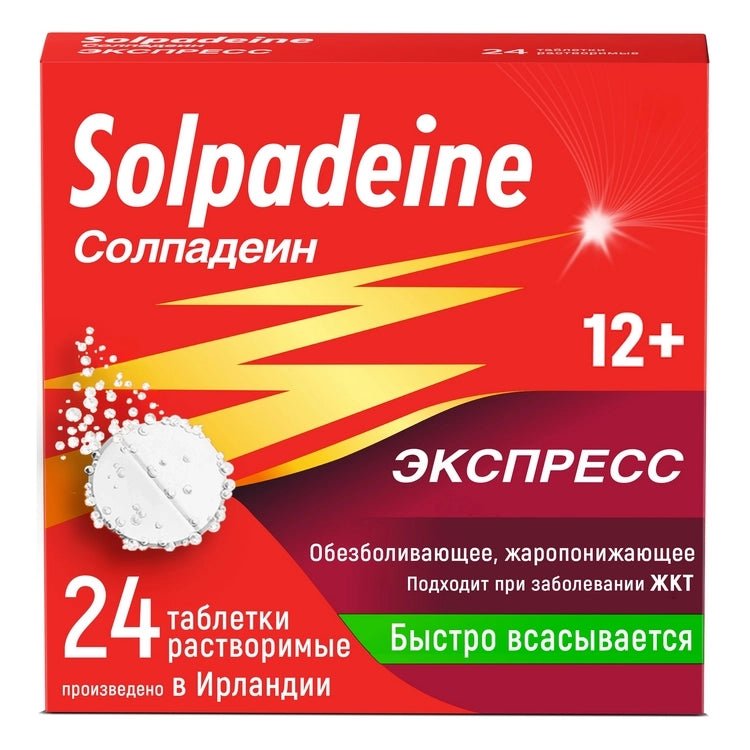


Solpadeine is a familiar name in the pain-relief aisle across Russia and the CIS region, reached for a headache, a toothache, period pain, or an ache in the muscles and joints that a quiet day at home doesn’t quite fix on its own. On USA Apteka it ships in its familiar packaging from established manufacturers, the same blister strip and box that regular customers already know.
The sections below cover what Solpadeine is typically reached for, how it is generally taken, and who should check with a doctor before using it. The exact composition and full list of active ingredients are printed on the leaflet inside the box and can differ between specific product lines sold under this name, so that leaflet, not this page, is the place to check exactly what is inside a given pack.
What Solpadeine helps with and the kinds of pain it eases
Solpadeine tends to get reached for a step up from an everyday ache: headaches, migraine, toothache, period pain, muscle and joint aches, and lower back pain are the kinds of everyday discomfort where it comes up. It is meant for short, defined bouts of pain rather than as a running fix for pain that keeps coming back week after week. A headache that shows up occasionally after a long day is a reasonable reason to reach for it; a headache that has become a daily pattern is a reason to talk to a doctor about what is actually causing it, rather than treating a tablet as the long-term answer.
It also is not the product for every kind of discomfort. It does not fill the same role as a seasonal wellness pick during a cold, and it is not a fit for chest discomfort or a racing heartbeat, which call for something entirely different and usually a prompt conversation with a doctor. Its lane is pain relief, and specifically the kind of pain where the mildest everyday option already falls short.
How Solpadeine is typically taken
The leaflet inside the box sets the exact amount per dose and the maximum for a day, and that maximum is not a target to reach, it is a ceiling that should not be crossed. As a rule, a tablet like this is meant to be taken only when the pain is actually present rather than on a fixed schedule, using the smallest amount that brings real relief.
A full glass of water with the tablet is the simple standard, and taking it with a small amount of food can ease mild stomach discomfort for anyone prone to it. If the pain has not eased by the time the leaflet says the next dose is due, that is a moment to stick to the schedule rather than double up. And if pain continues for more than a few days despite taking it as directed, that is the point to stop and start a conversation with a doctor instead, since ongoing pain that does not respond deserves an actual look rather than a bigger dose.
Contraindications, side effects, and precautions when taking Solpadeine
A short list of situations are worth a conversation with a doctor before the first tablet rather than after.
- Pregnancy and breastfeeding: check with a doctor first rather than assuming it is fine, since the right choice can depend on exactly what is in a given pack and how far along a pregnancy is.
- Children: only give a child the dose set specifically on the leaflet for their age, and for a younger child a pediatrician’s word comes first.
- An existing liver, kidney, or stomach condition: worth mentioning to a doctor or pharmacist before starting, since a pain reliever like this is processed through the body in ways that can matter for an existing condition.
- Already taking another pain-relief product, prescription or otherwise: check with a pharmacist before adding Solpadeine into the mix, since combining two pain relievers without checking can mean taking more of an overlapping ingredient than intended.
- Alcohol: better skipped alongside it, as with most pain-relief tablets.
- Regular, ongoing use for more than a few days: not what Solpadeine is meant for. Pain that keeps coming back deserves a doctor’s look rather than a running supply of tablets.
Some people notice mild drowsiness or stomach discomfort; anyone who does should be cautious about driving or operating equipment until they know how it affects them personally. None of this is about alarm for its own sake, it is simply the ordinary care that comes with a pain reliever stronger than the mildest everyday option, and a doctor or pharmacist is the right person to ask if anything above raises a question specific to your situation.
A few practical facts about Solpadeine
- the leaflet inside the box lists the exact active ingredients and the amount in each tablet, and this can differ between specific product lines sold under the Solpadeine name, so it is worth checking the leaflet in hand rather than assuming it matches a pack bought previously;
- it is meant for short, as-needed use rather than an everyday habit;
- a full glass of water with the tablet, and food alongside it if the stomach is sensitive, is the general approach;
- the expiry date and storage instructions are printed on the box, and a dry place away from direct light is the standard advice for a tablet like this;
- keep it out of reach of children, as with any pain-relief product.
Common questions about Solpadeine
What does Solpadeine help with? Pain that calls for more than the mildest everyday option, including headache, migraine, toothache, period pain, and muscle or joint aches.
How long can it be used? For short, defined bouts of pain, not as an everyday habit; ongoing pain deserves a doctor’s look rather than a running supply.
Can it be combined with other pain relievers? Check with a pharmacist first, since combining products without checking can mean taking more of an overlapping ingredient than intended.
Is it fine during pregnancy or breastfeeding? Check with a doctor first rather than assuming, since the right answer can depend on exactly what is in a given pack.
Can children take it? Only at the dose set on the leaflet for their age, and a pediatrician’s word comes first for a younger child.
Solpadeine and neighboring themes
A name on a box is only half the picture: Solpadeine, Citramon, Validol, and Viferon can all end up sharing the same shelf at home, and none of them do each other’s job, even when two of them look like they might at first glance. Citramon is reached for the same kind of headache but sits at a gentler level of pain relief; Validol has nothing to do with pain relief at all and works on a completely different kind of discomfort around the heart; and through a cold or a seasonal bug, something like Viferon works on the illness itself rather than easing pain anywhere in the body.
The practical habit worth keeping is simple: read the leaflet in the box in hand before reaching for any of these, every time, rather than assuming a box remembered from last year matches exactly what is inside the one on the shelf today. A name is a starting point, not the full picture.
Where to find
Solpadeine is available to order from USA Apteka, carried in its familiar packaging from established manufacturers. Delivery within the US, including Hawaii and Alaska, is free over $69, while orders to other countries ship at a paid rate regardless of the total. A quick word with a doctor before the first use is always the safer starting point, and this page is meant to support that conversation, not replace it.
Please Chat with us or send us a message on WhatsApp