




Septolete is a familiar name in throat lozenges, a line that has sat on shop shelves across Russia and the wider CIS region for years, long enough that many people recognize the wrapper before they read the label. The classic pastilles bring together a local ingredient long used in lozenges and mouth rinses for its cleansing quality, alongside eucalyptus oil, menthol, and peppermint oil, which is why the first thing anyone notices is the cooling, almost sharp sensation as the lozenge dissolves. That combination is built for ordinary throat roughness, the kind that shows up with a change in weather or the first scratchy day of a cold, rather than for anything more serious. On USA Apteka, Septolete comes in the original packaging familiar from CIS-region shelves, so a returning customer finds the same box they remember.
This page walks through three things people commonly search for around Septolete: how the classic lozenges actually differ from Septolete Total, what the leaflet says about how much to use and who it is not meant for, and which reactions are worth watching for. A short section on where the two versions sit next to other familiar wellness items closes things out.
How Septolete differs from Septolete Total in ingredients and effect
People often assume Septolete Total is simply a stronger version of the same lozenge, and that mix-up is common enough to be worth clearing up directly. The two lines share a name and a wrapper style, but the active ingredient is not the same, and neither is the job each one does.
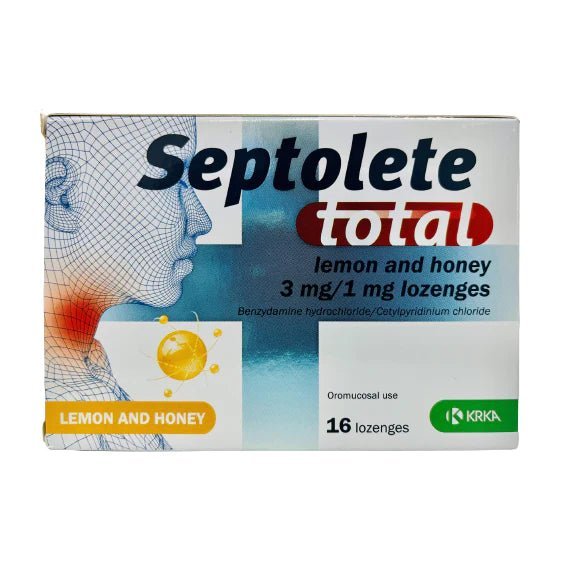
The classic Septolete pastille leans on a mild local ingredient, benzalkonium chloride, mixed with eucalyptus oil, menthol, and peppermint oil. It is built around comfort: a cooling, fresh feeling that eases the rough, ticklish sensation many people get at the start of a cold or from talking too much in dry air. It is not aimed at real pain, just at general throat unease.
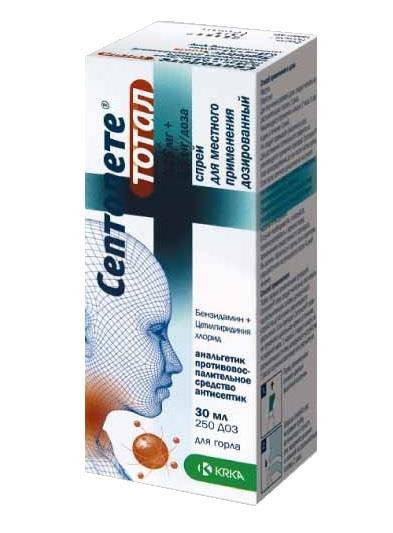
Septolete Total works differently at its core. Its active ingredient is benzydamine hydrochloride, which works more directly on discomfort itself rather than simply on freshness. It is built for a throat that genuinely hurts, not just feels a little rough, the kind of ache that makes swallowing uncomfortable. Because it works more directly on that discomfort, most leaflets describe Septolete Total as meant for short stretches, commonly not much more than about a week, before checking in with a doctor if things have not eased.
So the practical difference is intensity and purpose rather than strength in a vague sense: the classic line is a gentler, everyday comfort pastille, while Total is a more targeted option for a throat that is properly sore. They are not interchangeable, and reaching for Total out of habit when the classic pastille would do, or the other way around when the discomfort is sharper than usual, is exactly the kind of mix-up worth avoiding. When in doubt about which is appropriate, a quick read of the leaflet or a word with a doctor clears it up quickly.
What the leaflet covers for Septolete: how much to use, how to take it, and age limits
The leaflet inside each box of Septolete sets out the practical details, and it is worth reading before the first dissolve rather than guessing. Both the classic pastilles and Septolete Total are meant to be dissolved slowly in the mouth rather than chewed or swallowed whole, letting the lozenge work while it melts rather than rushing it down.
A few things the leaflet typically covers:
- how many pastilles to use across a day, spaced a few hours apart, with a maximum the leaflet sets and that is worth not exceeding on your own judgment;
- how long a course is meant to run before checking in with a doctor, especially for Septolete Total, where most instructions point to a short stretch rather than ongoing daily use;
- age limits, which are not the same across the two lines. Septolete and Septolete Total are not intended for young children below whatever age is printed on that specific pack, and because the cutoff differs between the classic pastilles and Total, the number on the box in hand is the one that matters, not a number remembered from somewhere else;
- how to space it around eating or drinking, since dissolving something in the mouth works differently right after a meal than on an empty stretch of time.
Because Septolete pastilles dissolve rather than get swallowed, using them properly also means not rushing the process. A pastille sitting in the mouth for several minutes does more than one bitten and swallowed in ten seconds. For anyone managing daily sugar intake or a phenylketonuria-related diet, the label is worth a closer look too, since some formulations use aspartame or another sweetener rather than plain sugar, and that detail lives on the specific pack rather than in general knowledge about the line. Checking with a doctor first is a reasonable extra step before giving any lozenge to a young child, or before using Septolete Total for more than about a week.
Who should be careful with Septolete, and what to watch for
Septolete pastilles are generally well tolerated, and most people use a full box without anything to report beyond the cooling taste fading before the last piece. Still, a few groups are worth calling out directly, and the leaflet is specific about each.
Worth knowing before the first pastille:
- young children below the age printed on the pack are not the intended audience, and the age differs between the classic line and Total, so the specific box is what decides this, not a general rule;
- anyone with a known sensitivity to benzydamine, benzalkonium chloride, or any other listed ingredient should not use the matching version, and checking the full ingredient list matters more than checking the front of the box;
- anyone managing phenylketonuria should check whether that specific pack contains aspartame, since not every version does;
- pregnancy and nursing call for a word with a doctor first, since the data on these lozenges in that situation is limited rather than reassuring either way;
- using any medicated lozenge frequently over a long stretch is not a stand-in for seeing a doctor if a throat has not started feeling better after several days, and dissolving something sweet often enough, over weeks rather than days, is also worth mentioning to a dentist.
As for reactions to watch for, most leaflets mention a possible local tingling or numbness in the mouth as the lozenge dissolves, which is expected rather than alarming, and note that a true allergic reaction, though uncommon, is a reason to stop and get a doctor’s input rather than push through. None of this is unusual for a throat lozenge line, but it is exactly the kind of detail that is easy to skip past on a first read and worth returning to.
A few facts about Septolete
- Septolete is a lozenge line, not a syrup or a tablet swallowed whole, and it is meant to dissolve slowly rather than be chewed;
- the classic pastilles combine a local cleansing ingredient with eucalyptus, menthol, and peppermint oil for a cooling feel;
- Septolete Total uses a different active ingredient, benzydamine hydrochloride, aimed at real throat discomfort rather than general freshness;
- the two lines are not interchangeable, and picking between them comes down to how the throat actually feels;
- most leaflets suggest short-term use for Total specifically, with a doctor’s input if things have not eased after about a week;
- storage and expiry details sit on the box itself and are worth checking before the first use, especially if a pack has been sitting in a bag or cabinet for a while.
Common questions about Septolete
- what makes it different from Total: the active ingredient and the level of throat discomfort each is built for, covered above;
- how it is meant to be used: dissolved slowly, spaced through the day, following the count on the leaflet rather than a general habit;
- whether it works for children: only above the age printed on the specific pack, since classic and Total differ here;
- what people usually look up alongside it: many people check the Septolete leaflet details and the Septolete price side by side before deciding which pack to order, and both live in the same practical decision;
- when to stop and call a doctor instead: if the throat has not started feeling better after several days, or if pain, fever, or trouble swallowing shows up alongside it.
Neighboring themes
Open a typical home bag pulled together during flu season, or a kitchen drawer kept for exactly this kind of week, and a strip of Septolete often turns up next to a small brown bottle of drops, a card of tablets, and something wrapped like candy. That mix is not random, it reflects four completely different jobs that happen to get reached for around the same time of year.
Novo-Passit is the one in the brown dropper bottle, a herbal blend meant for a frayed, wound-up feeling or trouble settling down at night, and it has nothing to do with a throat at all; it works on nerves, not on comfort in the mouth. Mukaltin is the flat, chalky tablet dissolved in water rather than in the mouth, meant for when a chest feels heavy and congested and something needs help loosening and moving, a lower, deeper job than anything a lozenge reaches. And Hematogen barely counts as a wellness item in the usual sense, it is a chewy, sweet iron bar with a Soviet-era reputation as much a childhood snack as a daily support, eaten by plenty of people who were never told to and just liked the taste.
Septolete’s whole job happens in one place: right against the throat, for the few minutes a pastille takes to dissolve. Nobody keeps it in a drawer for later the way a bottle of drops sits there for months. It gets opened, used for a few days, and the wrapper goes in the bin before the Hematogen bar next to it is even half gone.
Where to find
Septolete is available to order from USA Apteka, both the classic pastilles and Septolete Total, in the original packaging familiar from CIS-region shelves. Delivery within the US, including Hawaii and Alaska, is free over $69, while orders to other countries ship at a paid rate regardless of the total. The support team answers by chat or WhatsApp for questions about a specific pack or current stock, and regular customers have access to a bonus program and seasonal offers.
Storage is straightforward: a dry spot out of direct sunlight, the pack closed between uses, and the expiry date checked on the box. This page is meant as background information rather than personal guidance, and a throat that has not improved after several days is worth mentioning to a doctor.
Please Chat with us or send us a message on WhatsApp