

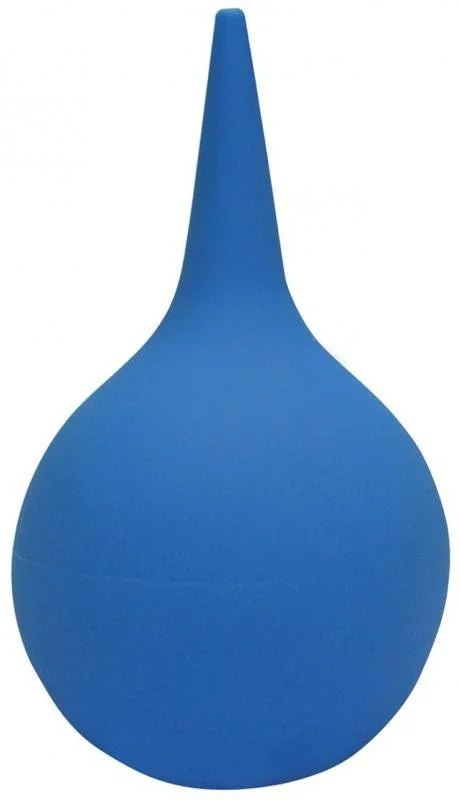
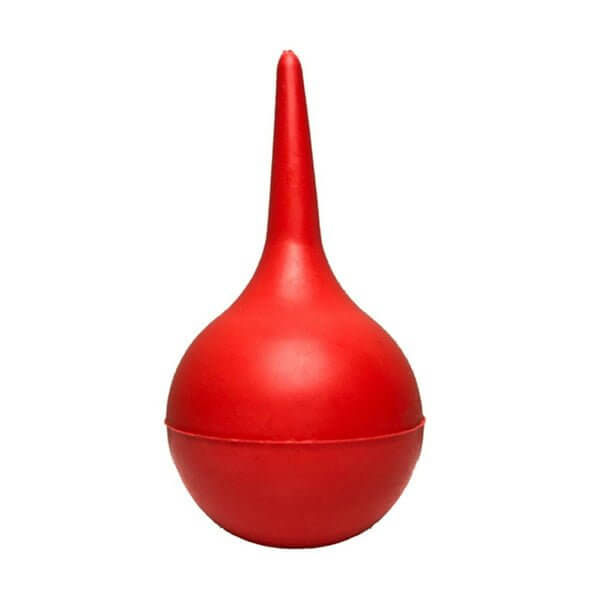
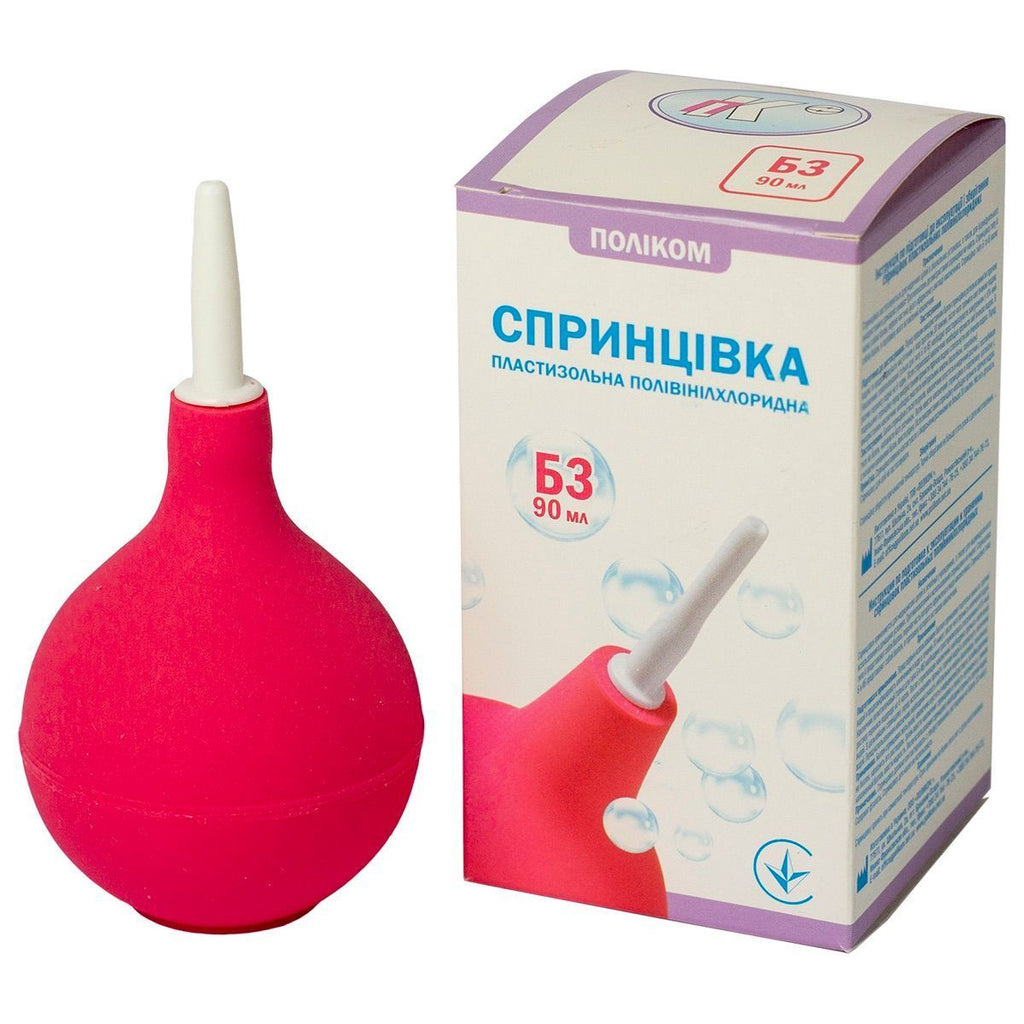



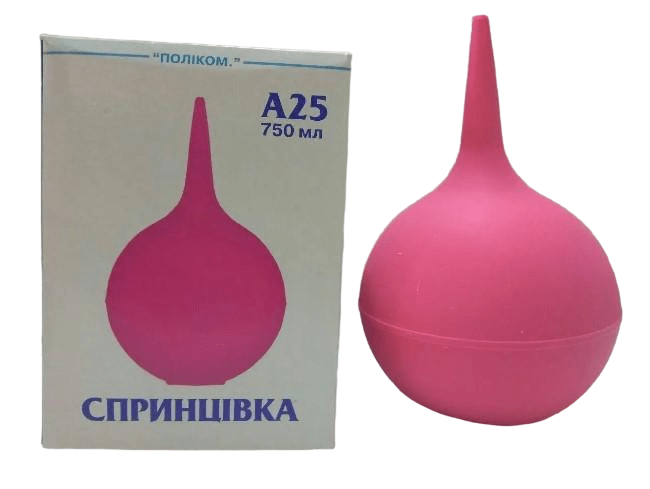

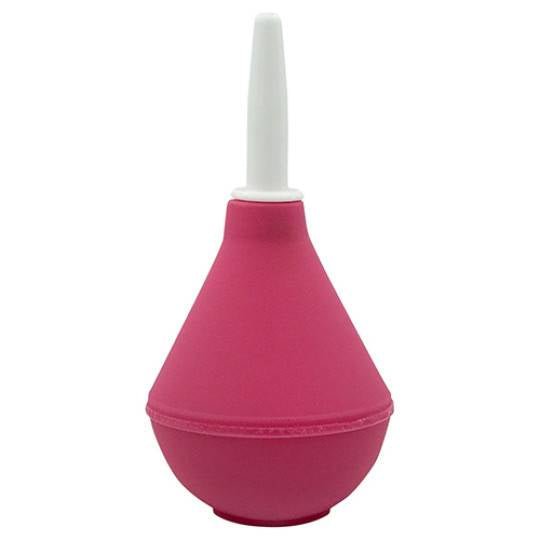
A bulb syringe, known in Russian and Ukrainian homes as a sprintsovka, is one of the plainest items in a first aid kit: a soft, pear-shaped bulb with a tip, used to push a small amount of liquid in or to draw it out. Grandmothers kept a rubber one in the bathroom cabinet, and parents of newborns still reach for the smallest size when a baby's nose is blocked. Plastisol bulbs are the modern version. They are made of plastisol, a soft form of PVC (polyvinyl chloride), instead of rubber, so they are smooth, have no rubber smell and are easy to wash.
On USA Apteka, plastisol bulb syringes come in a range of sizes, from a 30 ml bulb for a baby to a 750 ml one for adults, with a soft built-in tip or with a separate hard tip. This page explains what a bulb syringe is and what it is used for, how the types and sizes differ, what gynecologists say about douching, and how to use a bulb and look after it so that it stays clean.
What a bulb syringe is and what it is used for
A bulb syringe is a simple medical device: an elastic hollow bulb made of rubber or plastisol, with a tip through which liquid is introduced into a body cavity or suctioned out of it. The principle is the same as with a pipette. Squeezing the bulb pushes air or liquid out, and releasing it creates suction that draws liquid in.
Plastisol is PVC made soft and flexible with special additives called plasticizers. Compared with the old red rubber bulbs, plastisol ones have a smooth inner surface that is easier to rinse, they do not crack as quickly from hot water and they have no smell. They also contain no natural rubber latex, which matters to people who react to latex, although it is still worth checking the label of the specific pack.
The most common uses at home are:
- small enemas for occasional constipation in adults, and in children only on a pediatrician's advice;
- suctioning mucus from a baby's nose during a cold, with the smallest bulbs and a soft tip;
- rinsing earwax out of the ear canal with warm water, if a doctor has suggested it and the eardrum is intact;
- vaginal irrigation, known as douching, which is done only when a gynecologist has recommended it.
The manufacturer's description says there are no contraindications to the bulb itself, and that is true in the sense that it is just a tool. Each procedure, though, has its own limits. Pain, bleeding, constipation that keeps returning, constipation in a child, ear pain or discharge from the ear are reasons to see a doctor rather than to reach for the bulb again.
Types and sizes: soft tip, hard tip and what the number means
Plastisol bulbs are sold under letters and numbers, and once the system is clear, choosing the right one takes a minute.
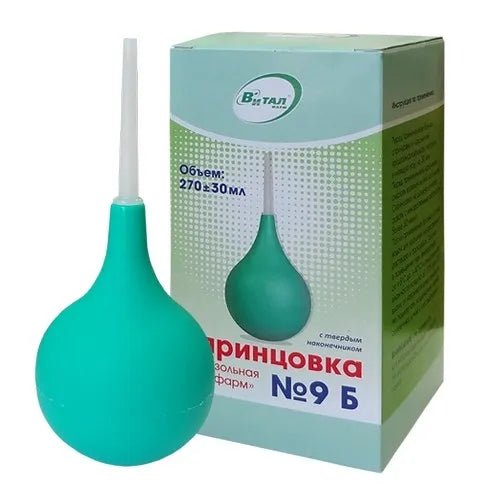
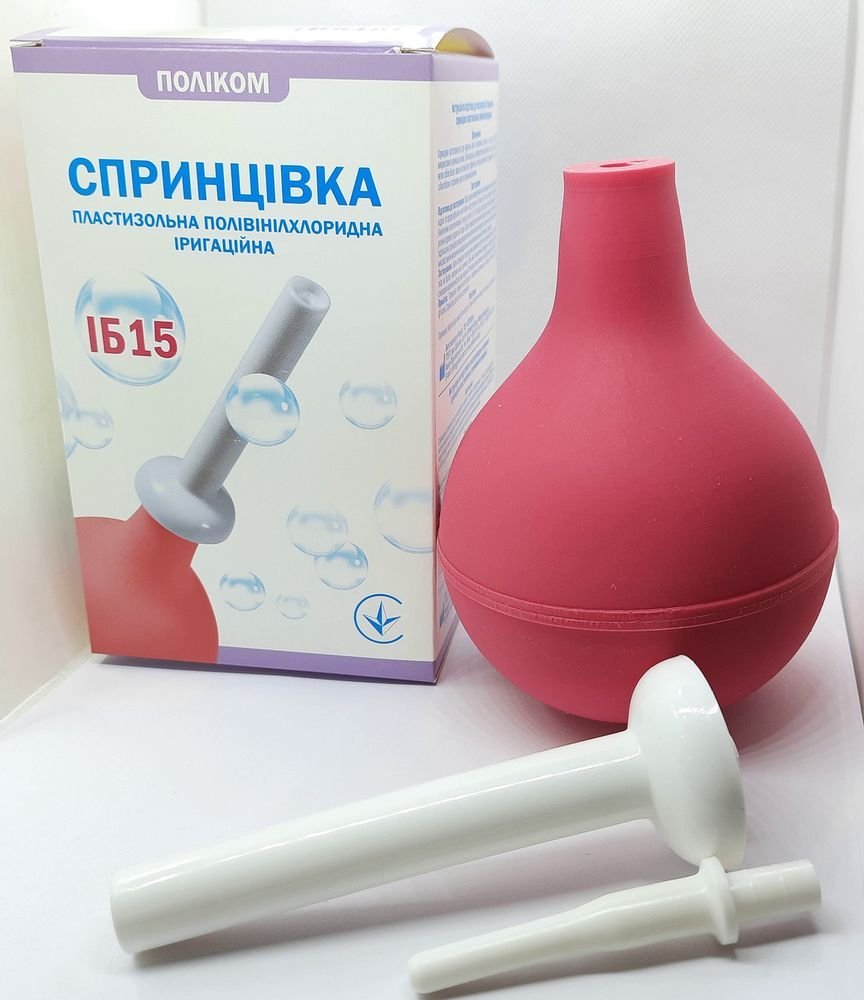
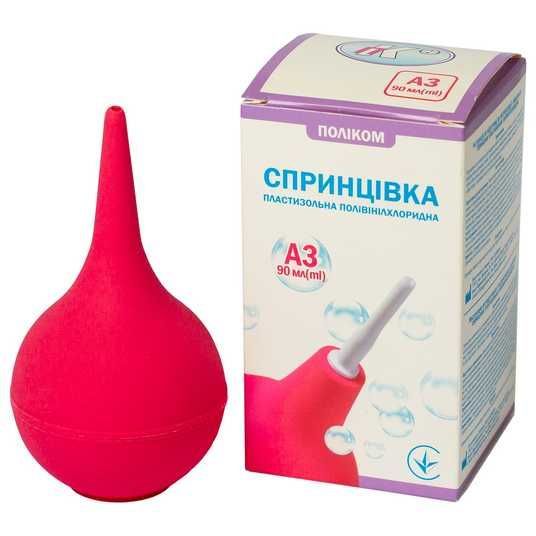
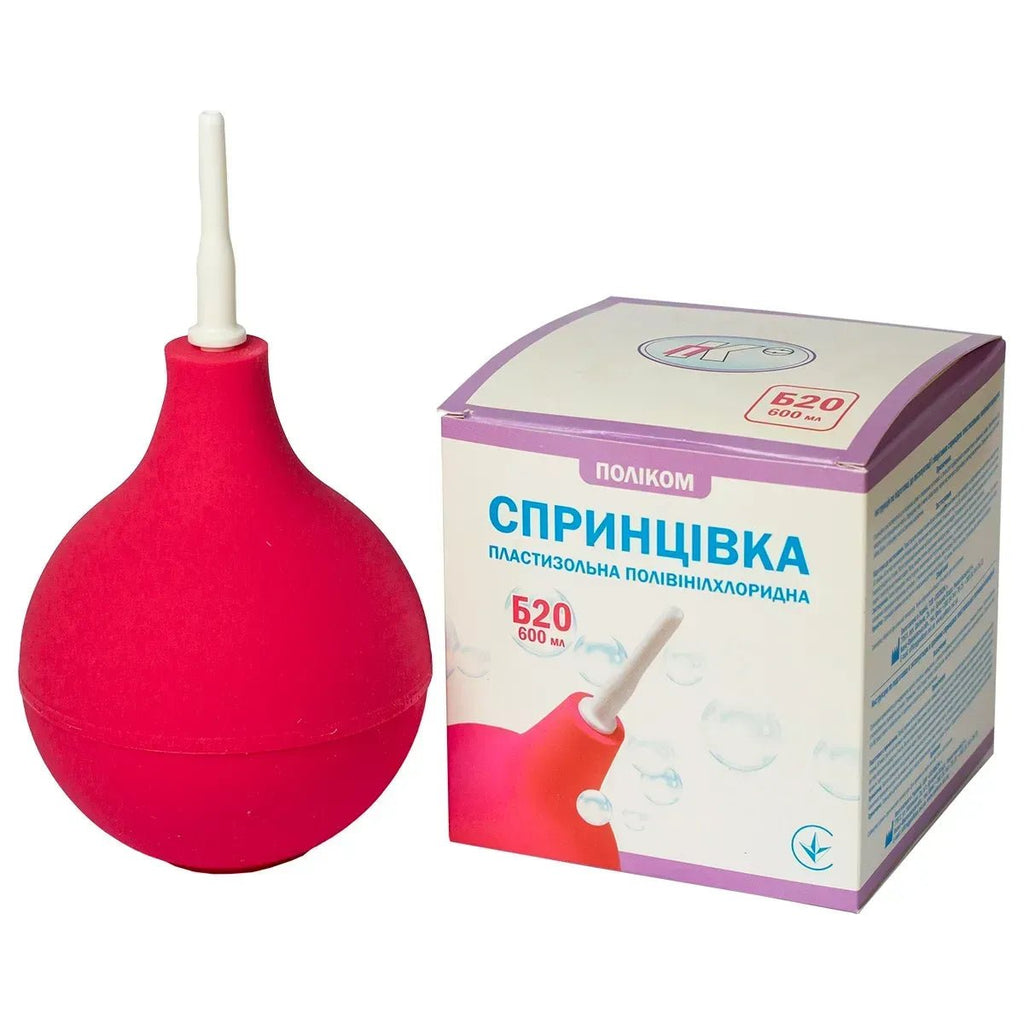
Type A bulbs have a soft tip that is one piece with the bulb. They are gentle and are usually chosen for children and for the nose. Type B bulbs come with a separate tip, made of hard plastic or soft PVC, that is pushed or screwed onto the bulb. Some packs include two tips, one for enemas and one for irrigation. A gynecological irrigation bulb has a long tip with several small holes along its end, so that the liquid spreads out instead of coming out in one stream.
On most packs the number roughly shows the volume: multiplied by 30, it gives the approximate capacity in milliliters. The sizes sold on USA Apteka mostly follow that pattern:
- A1 and B1, about 30 ml, the smallest bulbs, for a baby's nose and for very small enemas; Ae-3 is also a 30 ml bulb with a soft tip, despite its number;
- A3, about 90 ml, and A6, about 180 ml, for children's and small adult enemas;
- B9, about 270 ml, and B12, about 360 ml, with a hard tip, for adult enemas and irrigation;
- IB15, about 450 ml, B20, about 600 ml, and A25, about 750 ml, the largest bulbs.
For a baby's nose, the smallest bulb with a soft tip, or a small bulb without a separate tip, is the usual choice. For an enema in a child, the volume and the solution are set by the pediatrician, since the safe amount depends on age and weight and too much liquid can be harmful for a small child. For adults, the larger bulbs are more practical, and a hard tip is easier to clean.
Gynecological bulb: what gynecologists say about douching
For many women from Russia and Ukraine, a gynecological bulb was a regular part of personal hygiene, and some were taught to douche with chamomile, soda or a weak manganese solution after a period or at any sign of discomfort. Modern gynecology takes a different view, and it is worth knowing why.
The Office on Women's Health of the US Department of Health and Human Services advises against douching. The vagina keeps itself clean: its natural bacteria and slightly acidic environment protect it, and washing it out upsets that balance. Women who douche regularly have higher rates of bacterial vaginosis, and those who douche weekly are about five times more likely to develop it. Douching is also linked to problems in the uterus and fallopian tubes, to complications in pregnancy, including preterm birth and ectopic pregnancy, and to vaginal irritation and dryness. It does not prevent pregnancy and does not protect against sexually transmitted conditions.
For everyday hygiene, washing the outside of the genital area with warm water during a shower is enough, without scented products. Discharge with an unusual smell, itching, burning or redness are reasons to see a gynecologist, and it is better not to douche before the appointment, because it can hide what the doctor needs to see.
A gynecological bulb still has its place when a gynecologist prescribes irrigation for a specific reason, with a specific solution and for a set number of days. In that case, the doctor's instructions decide what goes into the bulb and how often, and during pregnancy irrigation is done only when the doctor has said so.
How to use a bulb syringe and care for it after use
The manufacturer's instructions describe care in a few lines, and those lines decide how long a bulb stays clean and safe.
Before the first use, the bulb is washed in hot water and disinfected by boiling it in water for 30 minutes, as the leaflet describes, then rinsed with boiled water. Before each later use, it is washed with hot water and rinsed with boiled water. For an enema, the tip is lubricated with a neutral fat, such as petroleum jelly or lanolin.
The steps for a small enema at home:
- Prepare lukewarm water or the solution the doctor recommended, close to body temperature.
- Squeeze the air out of the bulb, dip the tip into the liquid and release the bulb slowly so that it fills. Turn it tip up and press out the remaining air.
- Lie on the left side with the knees drawn toward the stomach.
- Insert the lubricated tip gently, without force. If there is resistance or pain, stop.
- Squeeze the bulb slowly and evenly.
- Keep the bulb squeezed while removing the tip, otherwise it will suck the liquid back.
Suctioning a baby's nose follows the guidance of the American Academy of Pediatrics and children's hospitals. A few drops of saline go into each nostril first, to thin the mucus. The bulb is squeezed before the tip goes in, the tip is placed gently at the entrance of the nostril, and the bulb is released slowly. The mucus is then squeezed out onto a tissue. Pediatricians suggest doing this before feeds and no more than about four times a day, because the lining of a baby's nose is delicate. The bulb works best in the first months of life, and a baby who breathes fast, struggles to feed or seems unwell needs a doctor.
The leaflet also asks that the bulb not stay in contact with a solution containing active ingredients for longer than 30 minutes, so the liquid is drawn in right before the procedure and never stored in the bulb. After use, the bulb is washed with hot water, squeezed several times to flush it out and dried thoroughly. It is easiest to squeeze out as much water as possible and leave the bulb tip down so that the rest can drain. Water that stays inside a closed bulb is where mold grows.
The leaflet sets storage conditions as well: indoors, at 5 to 40 °C (41 to 104 °F), at humidity of no more than 80 percent, away from direct sunlight, gasoline and other solvents. A heater or a hot windowsill is not a good place either. A bulb that has cracked, become sticky or cloudy, or shows dark spots inside is replaced.
Every bulb is meant for one person and one purpose. A bulb for a baby's nose and a bulb for enemas are never the same bulb, and it helps to label them. If an enema does not bring relief, causes pain or blood, or constipation keeps returning, that is a reason to see a doctor.
Neighboring themes
A home kit usually has a corner for things that are not tablets at all: a thermometer, a hot water bottle, a bulb syringe. Next to them sit the products people take by mouth, and each of these has its own job and its own point of contact with the bulb.
- Cardiomagnyl is a daily tablet of aspirin with magnesium hydroxide that a cardiologist recommends to protect the heart and blood vessels. Aspirin makes bleeding easier, including from the delicate lining of the rectum, so an enema tip is inserted especially gently, and blood after an enema or in the stool of someone taking Cardiomagnyl is a reason to see a doctor without delay. Cardiomagnyl itself is started and stopped only on a doctor's advice.
- Aflubin is a homeopathic product in drops and tablets that many families keep for the cold season. Its components are present as homeopathic dilutions, and it has no proven action against viruses; the drops also contain alcohol. For a baby with a stuffy nose, saline drops and the smallest bulb remain the main home tools, and anything given by mouth to a baby is agreed with a pediatrician first.
- Fervex is a dissolving powder for seasonal colds in adults, with paracetamol, pheniramine and vitamin C. Paracetamol is easy to double up with other products for seasonal discomfort, and pheniramine causes drowsiness. Some adults rinse their nose with saline during a cold using a bulb, and the FDA advises using only distilled, sterile or boiled and cooled water for that, never plain tap water.
The bulb syringe itself is there for the procedures described above, and it lasts longer when it is dried after each use and kept away from heat and sunlight.
Each family fills this corner differently, and no set is the model one. None of these items replaces a doctor, and a doctor's advice is especially worth having before any procedure for a child.
Where to find
Plastisol bulb syringes of different types and sizes can be ordered from USA Apteka, from 30 ml bulbs with a soft tip to 750 ml ones, including bulbs with a hard tip for irrigation. Delivery within the US, including Hawaii and Alaska, is free over $69, while orders to other countries ship at a paid rate regardless of the total. The care team answers questions about sizes, tips and stock in the chat on the website or on WhatsApp, and regular customers have a bonus program and seasonal sales.
Before the first use, the bulb is boiled and rinsed as the leaflet describes, and it is stored dry and away from heat. Enemas for children and any irrigation are done on a doctor's advice.
Please Chat with us or send us a message on WhatsApp