



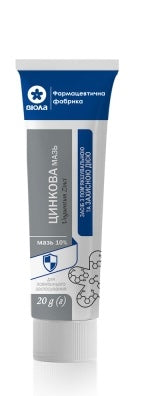

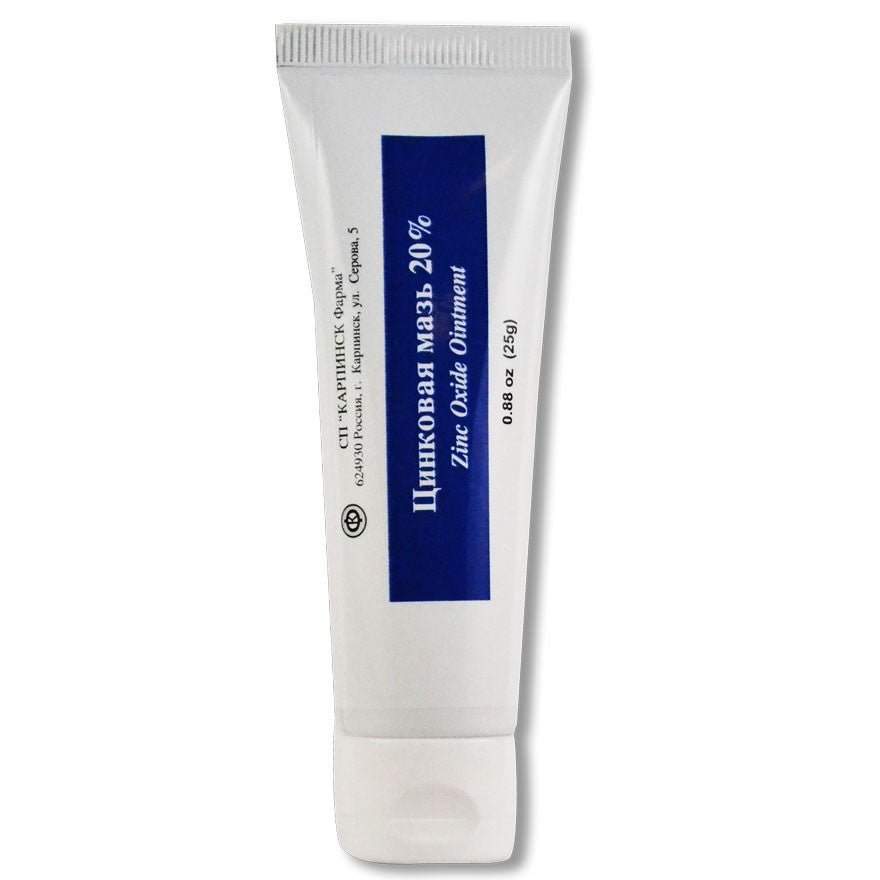

Zinc ointment is about as plain as skin care gets: zinc oxide stirred into a fatty base, usually petrolatum, and very little else in the tube. The powder dries the surface, soaks up the moisture sitting on top of an irritated patch, keeps the area a bit cleaner than it would otherwise stay, and leaves behind a physical layer that takes the rubbing instead of the skin. That same white layer works as a physical filter against sunlight, which is why zinc oxide turns up in sunscreens as readily as in tubes meant for a baby’s bottom.
On USA Apteka the tube comes in the original packaging of European and CIS-region producers, the kind a returning customer recognizes without reading the label. What follows is laid out in four parts: the jobs the white layer genuinely does, the places it has no business going, how it behaves on a child’s skin, and where it stands with rosacea-prone skin. The salicylic version gets its own space along the way, since it is a different product with a different character.
What zinc ointment actually does on the skin
Zinc oxide knows how to do very little, and that is its strength: it dries, it absorbs, it covers, and it does all three the same way every time. The whole list of everyday jobs comes out of those three properties, and nothing on the list requires the ointment to be clever.
Where the white layer earns its place:
- rubbing and chafing where skin meets skin or fabric, under a strap, under a waistband, between the thighs after a long walk;
- the diaper area on a baby, where damp and urine do the damage and a barrier layer is the entire point;
- weeping, oozing patches of irritation that stay wet and will not settle down, where drying is exactly what is wanted;
- shallow scratches and grazes once they have been cleaned, as a covering layer and nothing more ambitious than that;
- mild burns, sunburn included, applied after the area has been cooled properly first;
- pressure points on someone who spends long stretches in bed or in a chair, where the aim is to keep the skin intact before anything starts;
- a single inflamed spot, dried down overnight with a dab rather than a smear.
That last line is worth stating plainly. A thin dot of the ointment on one raised spot dries it and takes some of the surface oil with it, and that is the whole of what happens. Skin that keeps flaring, or flares across a whole area, is a question for a dermatologist rather than for a white barrier layer, and no amount of zinc oxide changes that arithmetic.
The mechanics of applying it are simple enough to describe in a sentence. A thin layer goes on clean, dry skin, usually a few times a day, with the maker’s leaflet setting the actual frequency. It leaves a visible white film, it marks fabric, and it is for external use only. If redness or itching increases rather than settles, the sensible move is to stop and let a doctor look at the area.
Places where zinc ointment should not go
The second question matters more than the first, because a thick occlusive layer is not merely useless in certain places, it actively works against the skin underneath.
The clear no-go list:
- deep, dirty or heavily bleeding wounds, which need a doctor;
- any wound showing signs of infection, meaning pus, redness spreading outward from the edges, heat in the area, or fever, where sealing the surface under an occlusive layer can make things worse and a doctor needs to see it;
- mucous membranes and the eyes, where the ointment does not belong under any circumstance;
- the skin immediately around the eyes, and this holds doubly for the salicylic version;
- large burned areas, as opposed to a small mild one;
- skin with a known hypersensitivity to the components.
One more exclusion is easy to miss because it looks like the opposite problem. Skin that is dry and cracked from a shortage of moisture, rather than from too much wetness, is not helped by something designed to dry and seal. A moisturizing product suits that skin far better, and reaching for the drying option there simply makes the cracking more stubborn.
The salicylic version deserves its own paragraph here. Salicylic-zinc paste, known in the region as Lassar’s paste, is zinc oxide combined with salicylic acid, so it dries and additionally exfoliates and softens the top layer. It is noticeably stronger and drier than the plain ointment, which is why it is not used on a baby’s skin, not spread across large areas, and not applied to the face as part of a routine. The salicylic acid is what makes it harsher, and in pregnancy anything covering a large area with it is a question to put to a doctor first rather than after.
Zinc ointment on a child’s skin
The diaper area is the oldest and most straightforward job this ointment has, and for plain zinc oxide it remains a classic choice from the first weeks of life. The logic is easy to follow: the skin there sits against damp and urine for hours, and a barrier layer is what interrupts that contact.
How it usually goes in practice:
- a thin layer on clean, dry skin at each change, with the skin properly dried first;
- plain zinc oxide only, since the salicylic version is not used on infants at all;
- no tight, sealed occlusion over the area for long stretches without a doctor saying so;
- the maker’s leaflet setting the frequency.
Where it stops being a home matter is worth marking clearly. Simple diaper rash that settles within a few days is one thing. A rash that spreads, blisters, weeps heavily, or arrives alongside a fever is something a pediatrician decides about, and the same goes for anything that has not shifted at all after a few days of sensible care. For children exactly as for adults, thin is the rule, and thicker is not faster.
Zinc ointment and rosacea-prone skin
Two things about zinc oxide genuinely suit reactive, rosacea-prone skin: it sits on the surface as a physical filter against sunlight, and sun is one of the classic triggers for rosacea flares, and the ointment is fragrance-free with an unusually short ingredient list, which matters for skin that reacts to almost everything.
Set against that, the heavy petrolatum base is the sticking point. It feels occlusive, it sits warm on the face, and for some rosacea-prone skin that is precisely the sort of thing that provokes a flare rather than preventing one. Reactions vary from person to person, and there is no predicting them in advance.
So the accurate answer has three parts. The ointment may work as a simple barrier or as a sun-blocking layer for some people with rosacea-prone skin. A patch test on a small area, a day or two before putting it anywhere visible, is a sensible precaution. And rosacea itself is not something a barrier layer addresses: it belongs with a dermatologist, who has proper options for it and decides what a given person needs.
Common questions about zinc ointment
A handful of the same practical questions come up again and again, and short answers serve better than long ones.
Quick answers:
- how often to apply it, a thin layer a few times a day per the maker’s leaflet, or at each change on a diaper area;
- why everything turns white, that is the zinc oxide itself, and it marks fabric, so older bedding and clothing are the sensible choice while it is in use;
- whether it can go under a dressing, a thin layer under a loose dressing is ordinary, while a tight sealed dressing worn for long stretches is worth asking a doctor about;
- how it works on sunburn, only after the area has been cooled properly and is no longer hot to the touch;
- how it differs from the salicylic version, the salicylic paste adds an exfoliating action, is stronger and drier, and is off the list for babies, for large areas and for routine facial use;
- whether it suits the face, as a dab on a single spot overnight yes, as a daily layer across the whole face no;
- how long to keep going with it, a few days on an irritated patch is the usual span, and skin that has not improved in that time, or has worsened, is something for a doctor to look at.
Anything beyond these is better answered by a doctor who can see the skin.
Neighboring themes
Each of these is in a home kit for a job of its own, and it helps to know which: on the same graze they are not interchangeable.
- Miramistin is kept for rinsing: it goes over grazes, small wounds and mucous membranes, disinfects the surface and leaves nothing behind. A fresh graze is rinsed with it first, and only clean skin that has dried can take zinc ointment.
- Iodine is in the kit for the edges: it is painted onto the healthy skin around a wound, never into the wound itself or onto a weeping patch, because it burns.
- Mustard plasters turn up in the kit for the cold season: they go on the back or chest for warmth and blood flow, and only onto dry, intact skin. They do not go on an irritated or weeping patch.
Zinc ointment itself is kept for diaper rash, chafing and weeping irritation: it dries and covers the patch rather than disinfecting it, so it cannot stand in for an antiseptic.
A home kit is put together for the household that uses it, and there is no correct set. And when one patch of skin is weeping, sore and red around the edges all at once, what goes on it and in what order is a question for a doctor or a pharmacist.
Where to find
Zinc ointment can be ordered from USA Apteka with delivery across the United States and abroad, in the original packaging of European and CIS-region producers, so a returning buyer recognizes the tube right away. Delivery within the US, including Hawaii and Alaska, is free over $69, while orders to other countries ship at a paid rate regardless of the total. The support team is glad to help by chat or WhatsApp with a pack size or a stock check, and regular customers have a bonus program and seasonal offers.
Storage is undemanding: a dry place away from direct sun, the tube closed, with the date printed on the box. A thin layer on clean dry skin, for external use only, and a doctor’s word for anything that spreads, worsens or refuses to settle.
Please Chat with us or send us a message on WhatsApp