




An adhesive fixation bandage is the roll that holds a gauze pad on a scraped knee, keeps a dressing in place on an elbow or secures a small tube after a procedure, so that nothing slips and nothing needs to be wound around the whole arm. Many Russian and Ukrainian families know two different things under similar names: a sticky non-woven bandage that clings to the skin, and a self-adhesive elastic wrap that clings only to itself. They look alike in a store, but they are used differently.
This page explains how these two bandages differ, how to use each one, whether a self-adhesive bandage can be used more than once, and when a wound or an injury needs a doctor rather than a fresh bandage. Each section also notes the signs that call for medical help.
Adhesive and self-adhesive bandages: how they differ
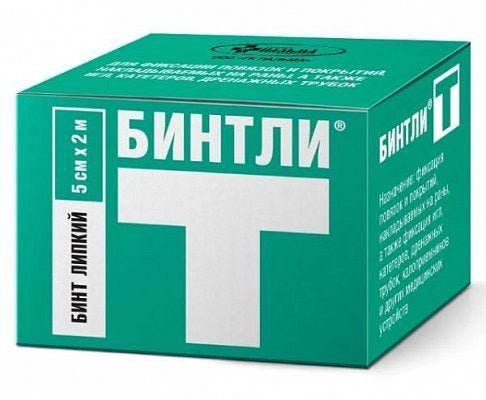
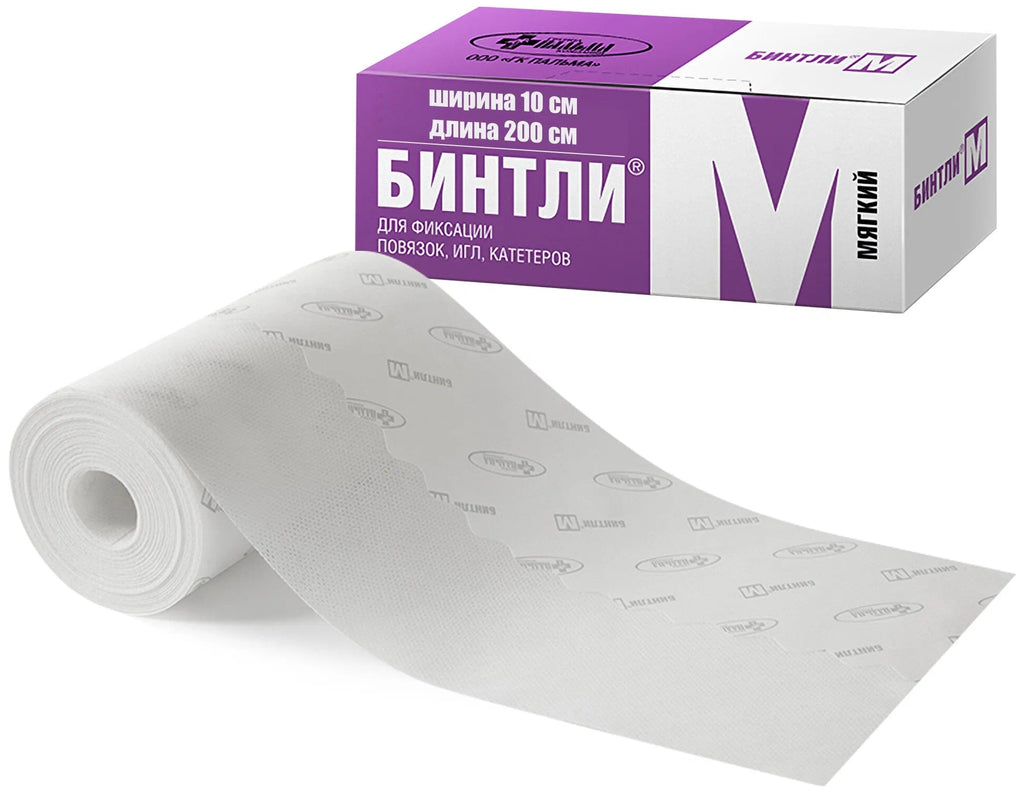
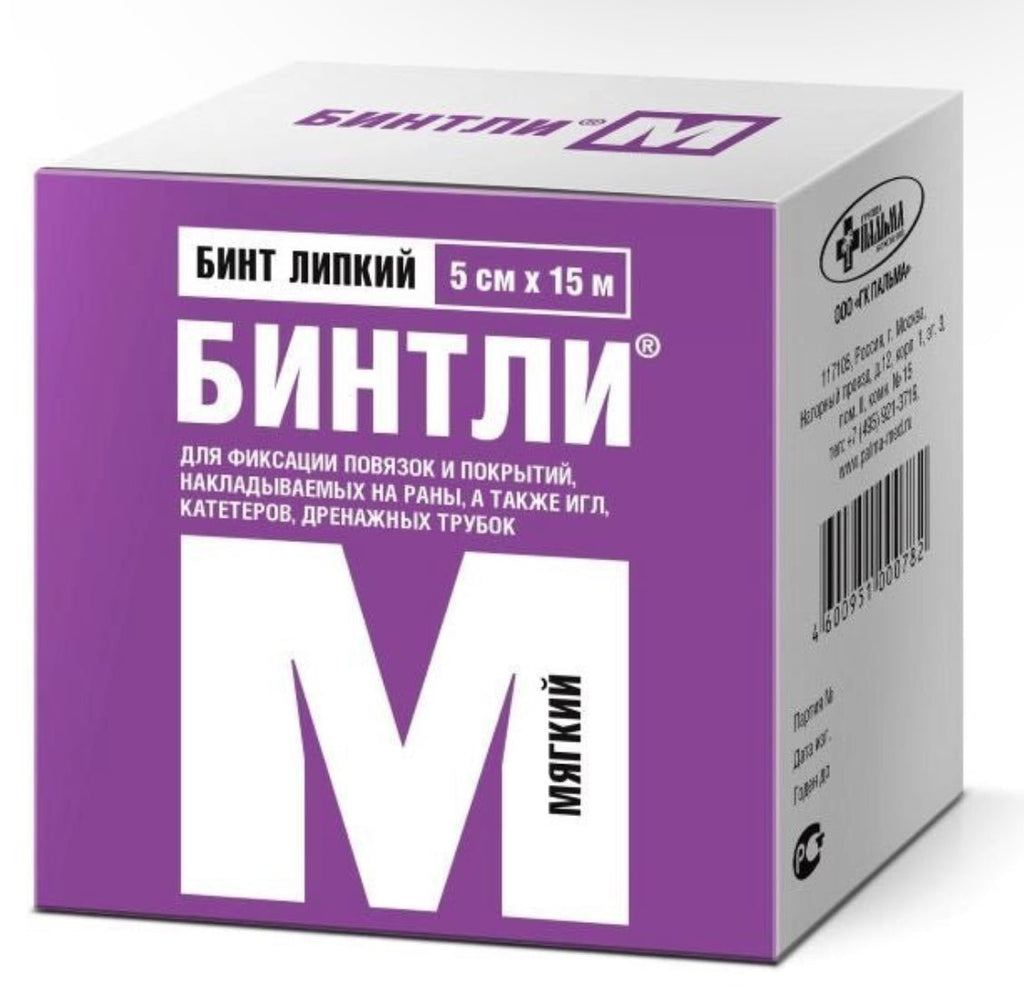
An adhesive fixation bandage is a strip of soft non-woven material with a layer of glue on one side, covered with backing paper. According to the description of the bandage sold in our store, it is made of non-woven material with a hypoallergenic acrylate adhesive, lets air and moisture through so that the skin can breathe, and is used to close wounds after surgery and to fix dressings, needles, catheters and drainage tubes. Because it is soft and drapes well, it is convenient on elbows and knees, where an ordinary plaster comes off quickly.
A self-adhesive elastic bandage, often called a cohesive bandage or cohesive wrap, has no glue on the skin side. It sticks only to its own layers, so it holds a dressing or supports a joint without pulling hair or leaving sticky marks. It is wound around a limb, like an ordinary elastic bandage, and the layers lock together without clips.
The difference matters in practice:
- an adhesive bandage is cut to length and pressed onto clean, dry skin around a dressing;
- a self-adhesive wrap goes around an arm, a leg or a finger and holds by itself;
- an adhesive bandage is used once, while a self-adhesive wrap can sometimes be used again, as the next sections explain.
It is easy to tell them apart at home. An adhesive fixation bandage has backing paper and one sticky side, while a self-adhesive wrap has no paper at all, feels slightly rubbery on both sides and does not stick to fingers. If the label is lost, it is better to test a small piece than to put an unknown bandage on a wound.
Either bandage only holds a dressing or supports a joint. It does not clean a wound and does not replace a doctor's look at a deep cut or a bad sprain.
How to use an adhesive and a self-adhesive bandage
For an adhesive fixation bandage, a few simple steps help it stay on and spare the skin:
- clean the wound as your doctor or the product leaflet advises, and let the skin around it dry completely;
- cover the wound with a sterile pad first, because the glue should never touch the wound itself;
- cut a piece long enough to reach well past the edges of the pad;
- peel the backing paper off gradually and press the bandage on without stretching it, so that the skin underneath is not pulled;
- change the dressing when it gets wet or dirty, as the leaflet or your doctor advises.
The bandage comes off more gently if you peel it slowly, close to the skin, while holding the skin next to it. If the skin under the glue turns red, itches or blisters, stop using that bandage and tell your doctor.
For a small child, a dressing is checked more often, because a child may not say that the fingers feel numb or that the bandage pinches. The end of the bandage is fixed so that the child cannot peel it off and put it in the mouth, and a wrap on a hand or a foot is checked every few hours.
A self-adhesive elastic bandage is wound around a limb. Mayo Clinic, describing first aid for a sprain, advises starting to wrap at the point farthest from the heart, not wrapping too tightly, and loosening the wrap if there is numbness, more pain or swelling below the bandage. Each turn overlaps the previous one by about half its width, and the end is pressed onto the last layer so that it holds.
Tightness is the main risk. MedlinePlus, the US government health library, notes that a bandage or cast that is too tight should be cut or loosened to relieve the pressure, and advises contacting a doctor right away after an injury if there is severe swelling or pain that does not improve with pain relievers. Fingers or toes that turn pale, bluish or cold, tingle or go numb are a reason to loosen the wrap at once.
For a sprain, the wrap is only one part of first aid. Mayo Clinic describes the P.R.I.C.E. approach: protect the injured area, rest it, put ice wrapped in a thin towel on it for 15 to 20 minutes every 2 to 3 hours while awake, compress it with an elastic bandage and raise it above the level of the heart. A wrap that is too tight undoes the benefit of compression, so it is checked several times a day.
Can a self-adhesive bandage be used more than once
An adhesive fixation bandage is used once. After it is peeled off, the glue no longer holds well, and it carries traces of the skin and of the wound, so a new piece is cut each time the dressing is changed.
A self-adhesive elastic wrap is different. When it was used only to support a joint, stayed clean and dry and still stretches and clings to itself, many manufacturers allow it to be used again, and the pack of the specific bandage says whether that is possible and how to store it in between. A wrap that touched a wound, got wet with blood or fluid, stretched out or stopped holding goes in the trash, and each person in the family uses their own.
If the same joint needs support again and again, or a wrap is needed every day for weeks, it is worth asking a doctor why. Long support with a bandage does not replace an examination of a joint that keeps getting hurt.
Which bandage fits which situation
A few everyday situations show where each bandage works best:
- a scraped knee or elbow: a sterile pad held by a strip of adhesive fixation bandage, which bends with the joint;
- a dressing on a finger or a toe: a narrow self-adhesive wrap, which holds without glue and is easy to change;
- a twisted ankle or wrist: an elastic wrap for compression, together with rest, cold and raising the limb;
- sensitive or thin skin, as in older adults, or a dressing on a hairy area: a self-adhesive wrap, because it does not stick to the skin;
- a dressing that has to stay in place for a long time after a procedure: an adhesive fixation bandage, as the doctor or nurse advises.
If you are not sure which bandage suits a wound or an injury, it is better to ask a doctor than to guess, especially for a child or an older relative.
How to store bandages in the home kit
Bandages keep best in their original packaging, in a dry place away from heat and direct sun. The rolls are kept closed so that dust does not settle on them, and sterile pads are used only while their wrapper is intact and the date on it has not passed. It helps to keep a pair of clean scissors with the bandages, so that nobody tears the roll with their teeth or cuts it with a kitchen knife. If someone in the family has had a skin reaction to plasters before, write down which product caused it and tell the doctor.
When a wound or an injury needs a doctor
A bandage helps with small scrapes and minor sprains. A doctor or urgent care is needed when:
- a cut is deep or gaping, bleeds heavily or does not stop bleeding after several minutes of firm pressure;
- the wound was made by an animal or a dirty or rusty object;
- the skin around a wound becomes more red, warm and swollen with each day, or the person develops a high temperature;
- after an injury, a joint cannot bear weight, looks deformed, or swelling and pain grow despite rest and cold;
- fingers or toes below a bandage stay numb, pale or cold after it has been loosened.
In such situations, it is better to cover the wound with a clean pad and see a doctor than to wind on more layers of bandage.
What else to keep in the kit with a fixation bandage
A roll of fixation bandage usually lies next to the gauze and the scissors, and the same shelf often holds Furacilin for rinsing, Pentalgin for pain and No-Shpa for spasms. Here is what is worth knowing about each of them.
- Furacilin comes as tablets or powder for making a solution, which is used for rinsing wounds and gargling, and the tablets are not swallowed. Many families rinse a scrape with the solution before putting on a pad and a bandage, and the skin is left to dry before the glue goes on. A wound that keeps getting redder or starts to ooze needs a doctor rather than another rinse.
- Pentalgin is a combined pain reliever with paracetamol, naproxen, caffeine, drotaverine and pheniramine, kept for pain after a bump, a sprain or a toothache. It is not combined with other products that contain paracetamol, and pheniramine can make a person sleepy. Pain that grows under a bandage instead of easing is a reason to loosen it and see a doctor, not to take another tablet.
- No-Shpa contains drotaverine and is kept for cramps and spasms. Pentalgin already contains drotaverine, so the two are not taken together without a doctor's advice. Sharp or constant belly pain needs a doctor rather than a tablet at home.
The fixation bandage itself is there to hold a pad on a scrape or support a twisted ankle, cut fresh each time if it is adhesive, and wound loosely if it is elastic.
What goes into a home kit depends on the family: some need more for scraped knees, others for sports injuries. None of these products replaces a doctor, and a wound or a joint that does not get better deserves a visit.
Where to find
Adhesive fixation bandages, along with gauze, sterile pads and other first aid basics, can be ordered from USA Apteka, a Russian and Ukrainian store in the US, and the whole selection is on this page. Delivery within the US, including Hawaii and Alaska, is free over $69, while orders to other countries ship at a paid rate regardless of the total. The care team answers questions about the products or delivery in the chat on the website or on WhatsApp, and regular customers have a bonus program and seasonal sales.
Keep bandages in their packaging in a dry place, never put the glue directly on a wound, loosen any wrap that causes numbness, and see a doctor for a deep wound or an injury that does not improve.
Please Chat with us or send us a message on WhatsApp