


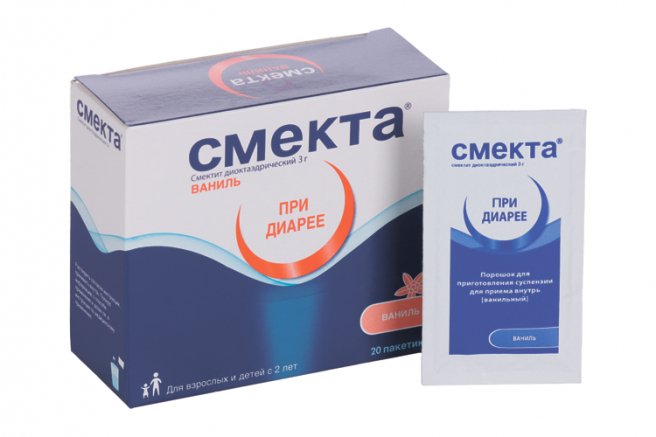

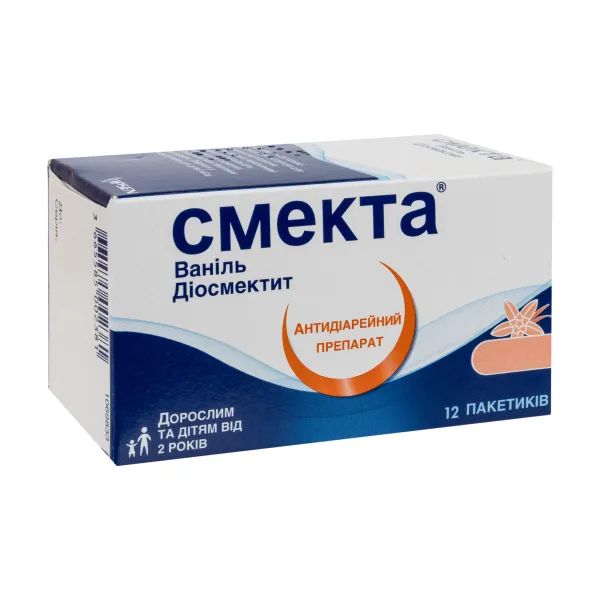

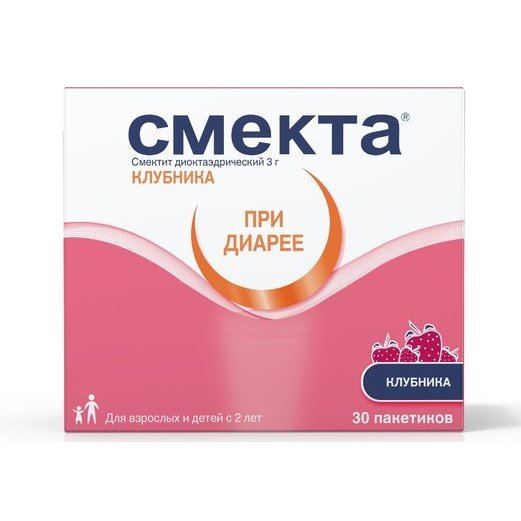

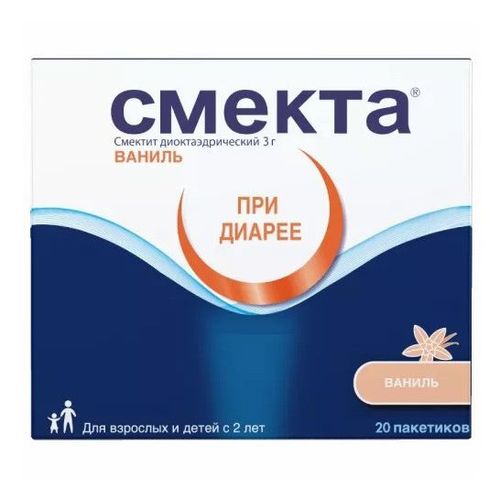

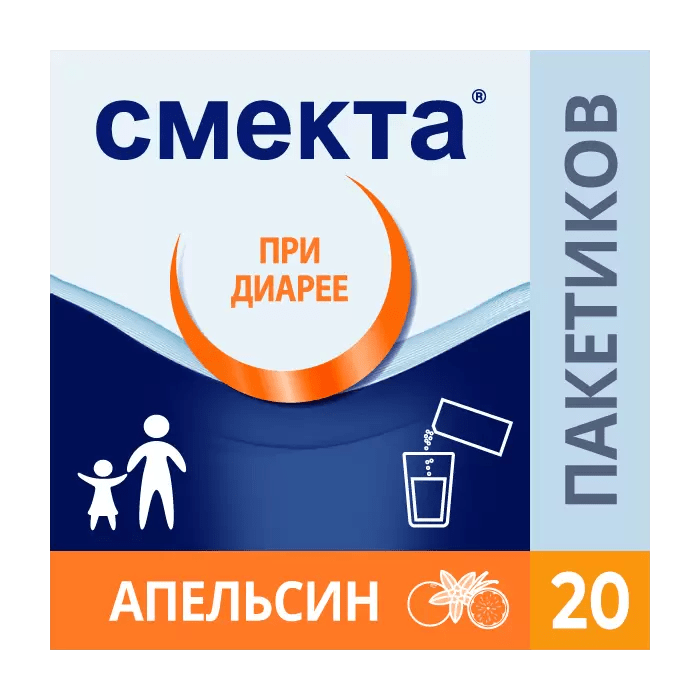

Smecta is one of the most recognizable names in the home kit for an upset stomach, a clay-based gut adsorbent that many families keep on hand for a rough day. Its active is diosmectite, a natural smectite clay that travels through the gut without being absorbed, coats the lining like a soft protective layer, and binds unwanted things along the way. People reach for it through a bout of loose stools, for heartburn and bloating, and for the general discomfort that comes when something did not sit right. On USA Apteka it comes as a powder in single-dose sachets, flavored and plain, in the original packaging of European and CIS-region producers, so a returning buyer finds a familiar name.
This page is a plain-language guide, not a personal recommendation. Smecta works only inside the gut, coating and binding rather than being absorbed, and it is an everyday home-kit item for ordinary upsets rather than a fix for anything serious. The aim here is to explain what it helps with, what is in it, how it is taken, and where the cautions are, especially for children, pregnancy, and diabetes.
What Smecta helps with
The honest way to describe what Smecta helps with is simple: it coats the gut lining and binds what is irritating it. People search it as both what Smecta is for and what Smecta helps with, and the answer is the same set of everyday situations.
The familiar reasons:
- through a bout of loose stools, whether it came on suddenly or is dragging on;
- for heartburn and the sour, uncomfortable feeling after something that disagreed;
- for bloating and the general unsettled feeling of an upset stomach;
- as a gentle protective layer while the gut settles down.
A useful point on how it works: the clay spreads over the lining and holds onto irritants and by-products, then leaves with them, rather than being taken up into the body. It is not a fix for the cause of a serious illness, so an upset with a high fever, blood, severe pain, or signs of dehydration is a doctor’s matter, with an adsorbent only ever a small part of the picture.
What is in Smecta
The composition of Smecta is refreshingly short: the active is diosmectite, a purified natural clay, and the rest is what makes the powder mix and taste acceptable.
A quick look at the makeup:
- diosmectite is the single active, a smectite clay valued for coating and binding;
- flavored versions add a little sweetener and flavor, such as orange-vanilla or strawberry, to make the suspension easy to drink;
- a plain, low-additive version exists for those who prefer the shortest list;
- it carries nothing that is absorbed into the body, since the clay passes through the gut.
The sweetener point matters for a couple of groups, which is why the label is worth a read: the flavored powders contain a small amount of sugar, and that is exactly what comes up for anyone managing blood sugar, covered further below.
How to take Smecta
How to drink Smecta is straightforward, and the leaflet on the pack sets the exact amount for the age and the situation. The instructions come down to mixing it well and spacing it apart from other items.
A sensible approach, the Smecta method of use in short:
- empty a sachet into about half a glass of water and stir until it is evenly mixed, then drink it;
- for a small child, the powder can be stirred into a bottle, water, or soft food across the day;
- space it well apart from other items and from meals, usually by one to two hours, since the clay will otherwise bind them too;
- spread the daily amount through the day rather than taking it all at once;
- keep up plenty of fluids, since replacing what is lost during an upset matters as much as the adsorbent.
People often look up the Smecta instructions for use precisely to get this spacing right, because the most common mistake is taking it at the same time as food or other items and blunting both. The simple rule is: mix it well, take it apart from everything else, and drink plenty of water.
Smecta for children
Smecta is widely used for children, but the guidance here has become more careful, so this deserves an honest, up-to-date answer rather than a blanket yes.
A few points worth knowing about Smecta for children:
- for children over two, it is used in the age-appropriate amount the leaflet sets, stirred into water, a bottle, or food;
- under updated guidance, diosmectite is not recommended for children under two years, as a precaution over possible trace lead in the clay, so a doctor’s word comes first for the very young;
- when a child has loose stools, the first concern is always fluids, given in small, frequent sips, with the adsorbent spaced apart;
- ongoing loose stools, a child who cannot keep fluids down, drowsiness, or signs of dehydration are a reason to call a doctor promptly rather than to keep dosing at home.
So Smecta for children over two is common and familiar, kept inside careful fluid care, while for children under two it is set aside in favor of a doctor’s advice.
Smecta and diabetes
A frequent question is whether Smecta is fine with diabetes, and the honest answer is that it depends mostly on the version, since the flavored powders carry a little sugar.
A few points to weigh:
- the flavored versions contain a small amount of sweetener, which is what matters for anyone counting sugar;
- a plain, low-sugar version is the more sensible pick when blood sugar is a concern;
- the amount of sugar per sachet is modest, but it still counts within a careful daily plan;
- the clay itself is not absorbed and does not act on blood sugar, so the question is really about the added sweetener, not the adsorbent.
So Smecta with diabetes is usually manageable with the plain version and an eye on the label, and anyone on a tight plan checks the specific product and, where needed, asks a doctor or pharmacist.
Smecta during pregnancy
Whether Smecta fits during pregnancy is another careful question, and here too the guidance has grown more cautious, so the honest answer leans toward a doctor’s decision.
What is worth knowing:
- because the clay is not absorbed, Smecta was long seen as a gentle option, and many people used it in pregnancy;
- under updated guidance, though, diosmectite is not recommended during pregnancy and breastfeeding, as a precaution over possible trace lead in the clay;
- an upset stomach in pregnancy is also a reason to be checked rather than self-managed, since fluids and the cause both matter;
- the leaflet and the doctor together settle whether to use it at all and what to use instead.
So Smecta during pregnancy is no longer an automatic yes, and the sensible path is a conversation with the doctor who knows the pregnancy, rather than reaching for a familiar sachet out of habit.
Who should be careful with Smecta
Smecta is gentle and stays in the gut, but it still has a few clear limits worth knowing.
It is generally not used:
- with a blockage or a sluggish, atonic gut, where moving things along is already the problem;
- with a known intolerance of the clay or the additives;
- with certain sugar-handling issues, such as fructose intolerance, because of the sweetener in flavored versions;
- alongside a tendency to constipation without keeping up plenty of water, since an adsorbent can add to it;
- at the same time as other items or meals, which it would bind and blunt.
If constipation, a swollen belly, or any unexpected reaction follows, the course is paused and a doctor is asked. And any gut upset that is heavy, lasting, bloody, or feverish, or that hits a small child or an older person, is a reason to involve a doctor early.
What Smecta pairs with, and what to keep apart
A couple of honest notes help place Smecta next to other familiar items, since it works in the gut and is kept apart from most things by design.
Worth keeping in mind:
- it is spaced well apart in time from any other item, since an adsorbent taken together with them will bind and weaken them, and activated charcoal is the same kind of adsorbent, chosen by texture and habit rather than stacked with it;
- through and after an upset, some people add general support such as vitamins once eating is back to normal, kept sensible and agreed with a doctor;
- when an upset comes with cramping, spasm-type pain, that discomfort is its own theme, eased with an antispasmodic such as No-Shpa under a doctor’s guidance, while Smecta coats and settles;
- the adsorbent stays in its lane, protecting the gut lining, while the spasm side and the recovery side each keep their own place.
In short, Smecta is a gut adsorbent for ordinary upsets, kept apart from other items, and the cramping side and the general-support side each sit in their own category rather than with the sachet.
A few facts about Smecta
A few details help place this familiar sachet.
Worth knowing:
- its active is diosmectite, a natural smectite clay that is not absorbed;
- it coats the gut lining and binds irritants, then leaves with them;
- it comes as a powder in single-dose sachets, flavored and plain;
- it is taken apart from food and other items, with plenty of water;
- the date and storage terms are printed on the pack.
Common questions about Smecta
A few questions come up again and again, and short, honest answers help.
Quick answers:
- what is it for, an everyday gut adsorbent for loose stools, heartburn, and bloating, not a fix for a serious illness;
- how to drink it, one sachet stirred into half a glass of water, spaced an hour or two from food and other items;
- is it fine for children, for those over two in the leaflet amount, while under two is set aside for a doctor’s advice;
- is it fine with diabetes, usually with the plain version and an eye on the label, since flavored ones carry a little sugar;
- is it fine in pregnancy, updated guidance advises against it, so it is a doctor’s decision;
- about price, the cost depends on the pack size and the flavored or plain version, which is what people compare when they look it up.
If a question is not answered here, the support team is glad to point to the right part of the section, while the personal decision stays with you and your doctor.
Where to find Smecta
Smecta is available to order from USA Apteka with delivery across the United States and abroad, as a powder in single-dose sachets, flavored and plain, in the original packaging of European and CIS-region producers. Delivery within the US, including Hawaii and Alaska, is free over $69, while orders to other countries ship at a paid rate regardless of the total. The support team is glad to help by chat or WhatsApp with a format or a stock check, and regular customers have a bonus program and seasonal offers.
Storage is simple, a dry place out of direct sunlight, with the sachets intact, and the date on the box. And the sensible rule for a gut adsorbent is to take it apart from other items, with plenty of water, for a short stretch, and to see a doctor when an upset is heavy, bloody, or feverish, or when it involves a young child, pregnancy, or an older person. Take care of yourself, and let Smecta do its small, settling job for the ordinary upsets it was made for.
Please Chat with us or send us a message on WhatsApp