






A rubber hot water bottle is one of the simplest things in a home kit: a soft flask, a screw stopper and a little hot water. Many Russian and Ukrainian families remember the red rubber bottle that warmed a bed on a cold night, sat on the feet of a child who had come in from the snow, or eased a stiff back after a day of shoveling. It is still around, and it still works the same way, but it has a few rules that are easy to forget.
This page explains what a rubber hot water bottle is used for and how the types differ, how long it stays warm and why there is no single answer, how to fill and use it safely, and when warmth is the wrong choice and a doctor is the right one. Product safety regulators note that hot water bottles cause serious burns every winter, mostly because of boiling water, old rubber or direct contact with the skin, so the safety part matters as much as the comfort.
What a rubber hot water bottle is used for
A rubber hot water bottle gives gentle, local warmth. People use it to warm a bed before going to sleep, to warm cold feet, to relax tight muscles in the back, neck or shoulders, and simply for comfort on a cold evening. A hot water bottle for the feet is one of the most common uses, especially for people who feel the cold easily.
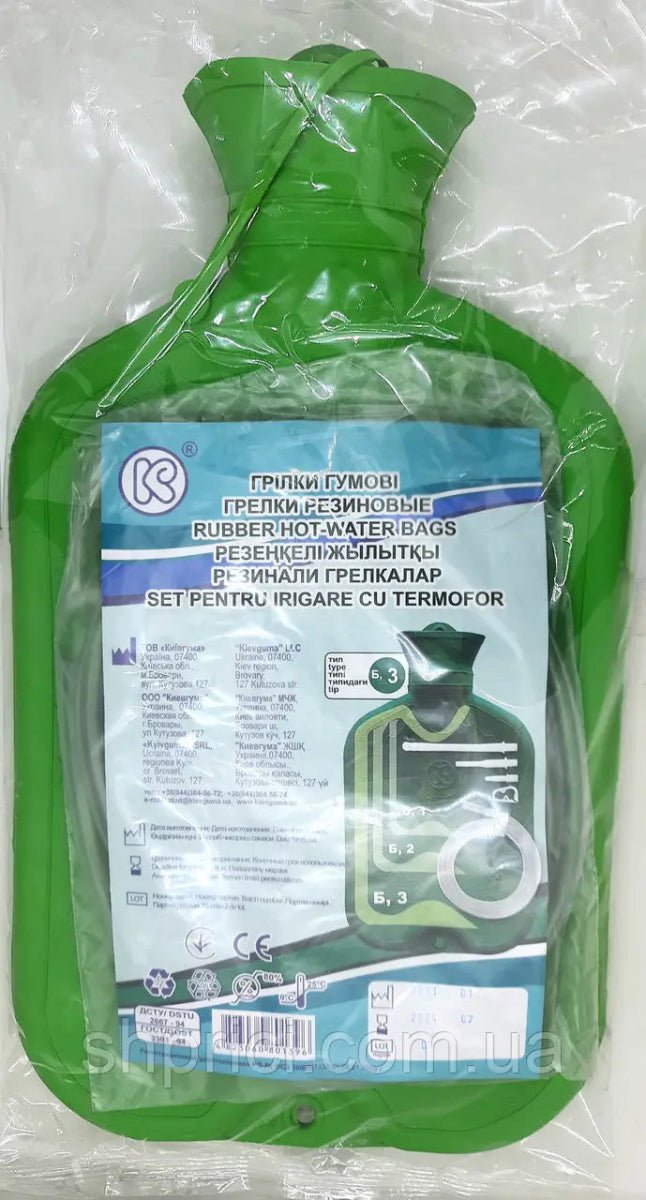
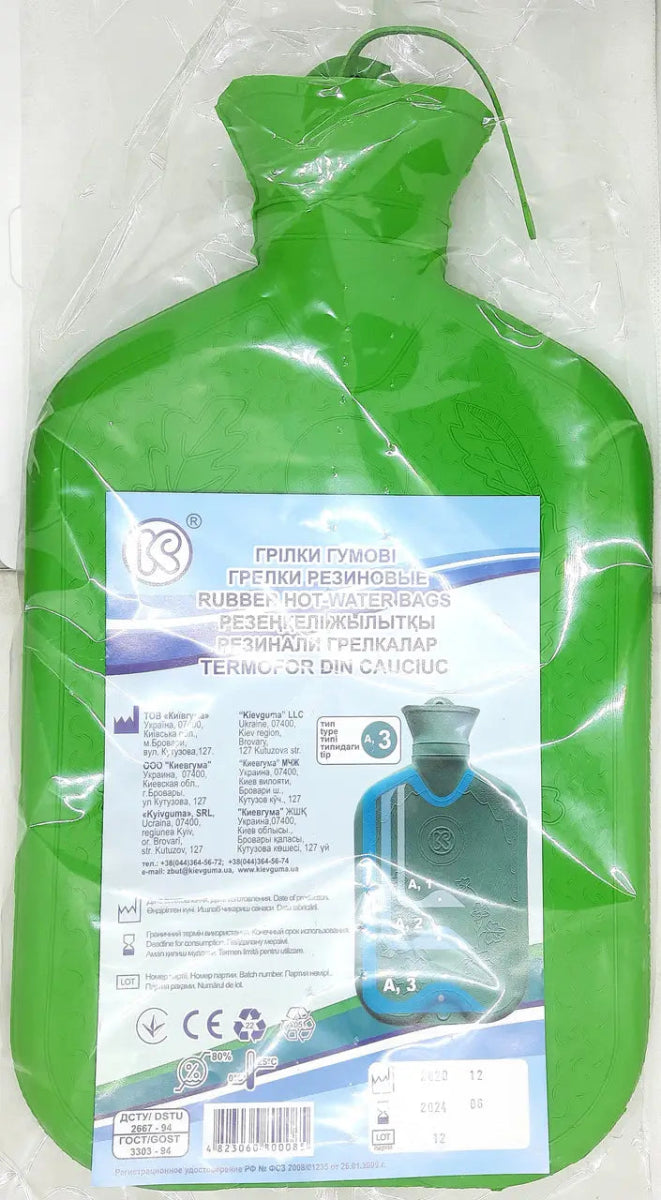
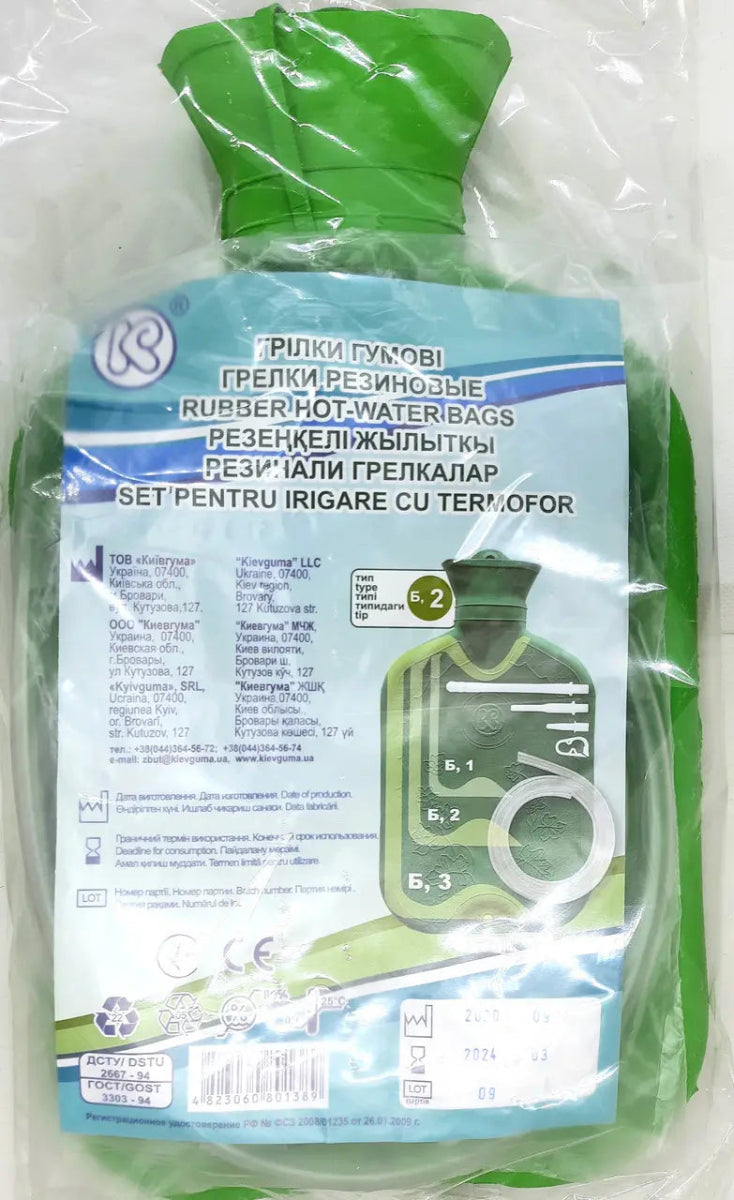
Medical rubber bottles come in two types:
- Type A is a plain hot water bottle with a stopper, made only for warming;
- Type B is a combined bottle that comes with a rubber or plastic tube, several tips and a clamp, so it can also be used for washing and douching procedures.
The number in the name shows the volume in liters, so a 2 marks a 2-liter bottle and a 3 marks a 3-liter one. According to the product description, the same bottle can be filled with cold water and used as a cold compress for a bruise. Washing and douching procedures with a type B kit are done only when a doctor recommends them and in the way the doctor explains.
Warmth has its place and its limits. For acute low back pain, MedlinePlus, the US government health library, suggests heat or ice and notes that one good method is ice for the first 48 to 72 hours, then heat. For a fresh sprain, Mayo Clinic advises ice, not heat, for the first few days. A hot water bottle is a comfort tool, not a fix, and back pain that does not ease, gets worse or comes with numbness in the legs needs a doctor.
How long a rubber hot water bottle stays warm
Neither manufacturers nor safety regulators give a fixed number of hours, because the answer depends on several things:
- volume: a 3-liter bottle holds more water and cools more slowly than a 2-liter one;
- the starting temperature of the water, which should be hot tap water and never boiling water;
- the cover: a fabric cover or towel slows cooling and protects the skin at the same time;
- the room and the bed: under a blanket the bottle cools more slowly than on an open sofa.
In practice, the bottle feels pleasantly hot at first and then cools gradually, so after a while it becomes simply warm. The temptation to pour in boiling water so that the bottle stays hot longer is exactly what safety regulators warn against: boiling water weakens the rubber and the seams, and a bottle that splits can cause a severe scald.
Two habits help more than hotter water. Wrapping the bottle in a cover keeps the warmth longer and keeps the skin safe, and it is better to refill the bottle with fresh hot tap water when it cools than to start with boiling water. If you find that you need constant warmth to get through the day because of pain, that is a reason to see a doctor and find the cause.
When the bottle is meant for a child or an older relative, an adult checks it first: the cover should feel warm, not hot, against the inside of the wrist, and the bottle is taken out of the bed before the person falls asleep. A child or a frail person may not notice that the skin is getting too hot, and the ACCC warns that such burns happen gradually.
How to use a rubber hot water bottle safely
The Australian product safety regulator, the ACCC, gives clear rules that apply to any rubber hot water bottle:
- check the bottle before each use and throw it away if it leaks or looks cracked, brittle, worn or faded;
- use hot tap water, never boiling water;
- do not overfill the bottle or fill it too quickly, and fill it over the sink;
- make sure the stopper is screwed in properly;
- always use a cover or wrap the bottle in a towel, so it never touches bare skin;
- do not lie on the bottle, rest on it or put weight on it, and take it out of the bed before you go to sleep;
- store it upside down with the stopper removed, completely dry, in a dark, dry place.
The ACCC explains why these rules matter. Burns from a hot water bottle develop gradually, and people often do not feel them until it is too late, which is how they end up with deep burns that may need skin grafts. Children and older adults have thinner skin and are more vulnerable, and people with diabetes are prone to burns on their hands and feet. Rubber bottles can also cause a reaction in people who are sensitive to latex.
Every bottle carries a manufacturing date in the form of a small "daisy wheel" stamped on the rubber, and the ACCC advises buying a new bottle every year, because a bottle that looks fine outside may be damaged inside. The product description of our type B bottles gives a storage life of 3.5 years and a use life of 2 years, so it helps to write down when you started using it. If the skin under the bottle turns red and stays red, blisters or hurts, stop using it and show the burn to a doctor.
How to choose a rubber hot water bottle and care for it
The choice starts with the purpose. For a warm bed, cold feet or a tired back, a plain type A bottle is enough. A type B bottle makes sense only when a doctor has recommended washing or douching procedures at home and explained how to do them, and its tube and tips are washed and dried after each use and kept clean, as the product description says the kit withstands repeated disinfection.
Volume is the second question. A 3-liter bottle holds warmth longer and suits the bed or the back, while a 2-liter bottle is lighter and easier to place on the shoulders or the feet. A soft fabric cover is worth having for any size: it keeps the warmth longer and keeps the rubber off the skin. Unlike an electric heating pad, a water bottle needs no outlet and does not get hotter over time, but it can still burn if the water is too hot or the bottle sits on bare skin for long.
Care is simple: empty the bottle after use, let it dry upside down with the stopper out, keep it away from radiators and direct sun, and replace it on time. If anyone in the family has diabetes, a latex sensitivity or numb skin, talk to a doctor before using a hot water bottle at all.
When warmth is not the right choice
There are situations in which a hot water bottle should stay in the cabinet:
- a fresh injury such as a sprain or bruise, where cold comes first, as Mayo Clinic advises for the first days;
- sudden, sharp belly pain, which MedlinePlus lists among the signs that need help right away, so warmth is not first aid here;
- skin that does not feel heat well, as in diabetes with numb feet, and sleep, when a person cannot notice that the skin is getting too hot;
- a small child or a frail older person who cannot move the bottle away or say that it is too hot;
- broken or irritated skin, a fresh rash or a swollen, red and hot joint.
If you are not sure whether warmth is a good idea for your situation, ask a doctor first. That is especially true for pain that came on for no clear reason or keeps getting worse.
What else is handy next to a hot water bottle
A hot water bottle usually lives in the bedroom closet rather than in the kit, but on a cold evening it often ends up next to the same three products, and you may find them useful too.
- Validol is a small menthol tablet that people place under the tongue when they feel tense or have a slight discomfort in the chest. A warm bottle and a quiet evening help some people calm down after a hard day, and Validol is kept for the same kind of moment. Pressure or pain in the chest that does not go away within a few minutes is a reason to call 911, not to reach for a tablet or a warm bottle.
- Citramon combines aspirin, paracetamol and caffeine and is kept for headaches. A hot water bottle on the neck and shoulders can ease muscle tension, and Citramon is not taken with other products that contain paracetamol, is not given to children and teenagers and can be hard on the stomach. A headache that is new, severe or keeps coming back needs a doctor.
- Viferon contains interferon and is registered in Russia for viral conditions, in suppositories, gel and balm form. It comes out in the cold season, the same time as the hot water bottle, and it is used only as its leaflet describes, for a child only on a pediatrician's advice. A high temperature is not a reason to warm a person with a bottle, and a temperature that lasts more than three days needs a doctor.
The hot water bottle itself is there for warm feet, a warm bed and tired muscles, filled with hot tap water, wrapped in a cover and replaced on time.
Every family keeps its own set of things for cold evenings, and there is no single right one. None of these products replaces a doctor, and pain that does not ease with rest and warmth is worth showing to one.
Where to find
Rubber hot water bottles of type A and type B in different volumes can be ordered from USA Apteka, a Russian and Ukrainian store in the US, and the whole selection is on this page. Delivery within the US, including Hawaii and Alaska, is free over $69, while orders to other countries ship at a paid rate regardless of the total. The care team answers questions about the products or delivery in the chat on the website or on WhatsApp, and regular customers have a bonus program and seasonal sales.
Fill the bottle only with hot tap water, always use a cover, check the date and the rubber before each use, and if a burn or pain does not settle, see a doctor.
Please Chat with us or send us a message on WhatsApp