





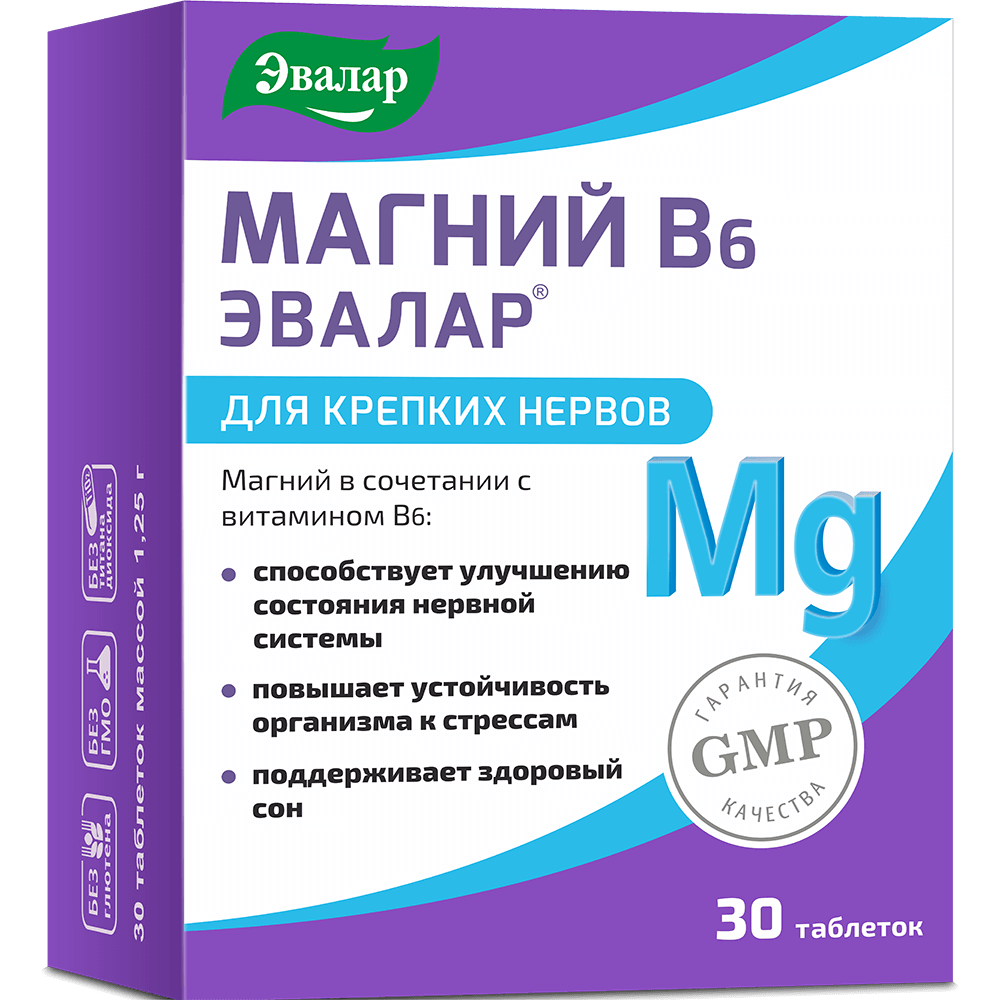




Magnesium is one of the most familiar names in a home supplement kit, and it is usually paired with vitamin B6 for a simple reason: B6 helps the body take up and hold on to magnesium, so the two work better together than apart. Magnesium itself is a mineral the body leans on for calm nerves, steady muscles, and a normal heartbeat, and many people reach for it through stressful stretches, restless nights, and the kind of leg cramps that strike out of nowhere. On USA Apteka magnesium comes in several familiar formats, from the classic Magne B6-style pairing to citrate and other forms, in the original packaging of European and CIS-region producers, so a returning buyer finds a name they know.
This page is a plain-language guide, not a personal recommendation. Magnesium with B6 is an everyday supportive supplement rather than a fix for a diagnosed condition, and the honest way to see it is as steady background support. The aim here is to explain what magnesium is taken for, how the forms differ, and where the cautions are, while any ongoing or heavy situation stays with a doctor.
Magnesium and vitamin B6: why they go together
The pairing of magnesium and B6 is the heart of this range, and the idea behind it is straightforward. Magnesium does the main work, and B6 helps it land.
A quick way to hold it:
- magnesium is the mineral the body actually uses for nerves, muscles, and energy;
- vitamin B6 improves how well magnesium is taken up and kept in the cells;
- the classic Magne B6 pairing puts the two together in one familiar format, and in speech people often shorten it to magne or magne b6;
- a magniy b6, магний б6, product is simply that same idea, magnesium plus B6, whatever the exact brand.
Whichever pairing you pick, the label sets the amount per piece and the daily guidance, and it is worth a read, since magnesium products vary widely in how much they carry and in which form.
What magnesium is taken for
People take magnesium for a handful of well-known, everyday roles rather than as a treatment for any one illness. Its honest place is as a supportive mineral the body needs steadily.
The familiar reasons:
- for calmer nerves through stressful, wound-up stretches;
- for steadier muscles and fewer of the sudden leg and calf cramps that break up sleep;
- as part of normal energy production, which is why tiredness and irritability are common signs of running low;
- for easier, more settled evenings and sleep, a classic reason people take it before bed;
- as general support during demanding weeks, heavy training, or a plainer diet.
It is worth being plain about scale: magnesium is a supportive mineral, not a switch that fixes anything overnight, and its effect builds over steady use. Signs of running low, cramps, twitches, tiredness, poor sleep, are common and usually mild, but a lasting or severe version of any of them is a reason to see a doctor rather than simply to take more.
Forms of magnesium: citrate, sulfate, and others
Magnesium comes in several forms, and they are not interchangeable, since they differ in how well the body absorbs them and in what they are used for.
A quick guide:
- magnesium citrate, tsitrat magniya, цитрат магния, is an organic form that is well absorbed and gentle, a common everyday pick;
- other organic forms such as lactate sit behind many Magne B6-style products;
- magnesium sulfate, sulfat magniya, сульфат магния, is a different animal, better known as Epsom salt and, taken by mouth, as a laxative;
- the same magnesium sulfate is what people mean by magneziya, магнезия, which in everyday speech usually points to the laxative or the bath salt rather than the daily supplement.
So when a label says citrate, it is talking about an everyday, well-absorbed supplement, while sulfate, or magnesia, points to a different job entirely. Reading which form is in the pack matters more than the size of the number on the front.
What pain magnesia eases
A common question is what pain magnesia eases, and the honest answer depends on which magnesium is meant, because the word covers two different things.
Two separate ideas:
- as a supportive mineral, magnesium helps with the cramping, spasm-type discomfort of tired or twitchy muscles, the night-time calf cramp being the classic example;
- magnesia in the sense of magnesium sulfate, taken by mouth, is a laxative, so the discomfort it addresses is the bloated, backed-up kind, not an ache;
- neither is a general painkiller, and neither replaces proper care for a real, ongoing pain;
- tension that comes with stress can ease as the nerves settle, but that is background support, not a targeted effect on pain.
So magnesium can take the edge off muscle cramps and tension, and magnesia the laxative eases a backed-up gut, but a sharp, new, or lasting pain is a matter for a doctor rather than for either.
Which magnesium is taken for blood pressure
People often ask which magnesium to take for blood pressure, and the honest framing is that magnesium is supportive here, not a stand-in for blood-pressure care a doctor prescribes.
A few sensible points:
- magnesium takes part in the normal working of blood vessels and the heartbeat, which is the background role;
- well-absorbed organic forms, such as citrate and lactate, are the usual everyday picks for general support;
- it is not a substitute for prescribed blood-pressure care, and a real reading problem belongs with a doctor;
- anyone already managing blood pressure or the heart checks any magnesium plan with a doctor, especially since kidney health affects how magnesium is handled.
So the calm answer is a well-absorbed everyday form for general support, chosen and timed with a doctor when blood pressure or the heart is genuinely in the picture, rather than a search for the one magnesium that lowers pressure on its own.
How to take magnesium and how much
Getting the routine right helps magnesium do its job and lowers the chance of the one common side effect, a looser stomach.
A sensible approach:
- follow the amount on the label, since products differ widely in the magnesium they carry;
- take it with or after food, which is gentler on the stomach;
- a magnesium taken in the evening suits people using it for calmer, more settled nights;
- split a larger daily amount into two smaller doses rather than one big one, which the body handles better;
- give it steady, regular use, since the effect builds rather than arriving in a single dose.
One practical note: the most common sign of too much magnesium by mouth is a loosening of the stool, which is a cue to lower the amount or switch form rather than to push on. Plenty of water helps throughout.
Who should be careful with magnesium
Magnesium is a familiar, well-tolerated supplement, but it still has clear cautions worth knowing before a regular course.
It is approached with care:
- with reduced kidney function, since the kidneys clear magnesium and it can build up;
- with certain heart-rhythm or conduction issues, where a doctor guides any mineral plan;
- alongside some other items, which magnesium can interact with on timing, so spacing is worth checking;
- with a tendency to a loose stomach, where the citrate and sulfate forms can add to it;
- during pregnancy and breastfeeding, where the form and amount are agreed with a doctor.
If a course brings ongoing loose stools, weakness, or any unexpected reaction, the amount is lowered or the course paused and a doctor is asked. And any heart, kidney, or blood-pressure situation is a reason to coordinate rather than to self-dose.
Magnesium, calm, and the heart: neighboring themes
A couple of honest notes help place magnesium next to other familiar items, since it overlaps with calm and the heart but is its own thing.
Worth keeping in mind:
- when wound-up nerves or a hard time falling asleep are the main issue, calming herbal options such as valerian or a ready blend like Novo-Passit sit alongside magnesium in the same calm-support corner, each with its own role;
- a fluttery, anxious feeling around the heart is its own separate matter, where something familiar like Validol is the usual choice, and a mineral supplement is not a stand-in for it;
- magnesium stays in its lane as steady background support, while the herbal-calm side and the heart-comfort side each keep their own place;
- none of these replaces a doctor when the heart, the pressure, or the sleep problem is more than everyday.
In short, magnesium supports calm and steady muscles in the background, while herbal calming options and heart-comfort items each sit in their own corner and, where it matters, under a doctor’s eye.
A few facts about magnesium with B6
A few details help place this familiar pairing.
Worth knowing:
- magnesium is a mineral the body uses for nerves, muscles, energy, and a normal heartbeat;
- vitamin B6 helps the body absorb and hold on to magnesium, which is why they are paired;
- citrate and other organic forms are well absorbed for everyday use, while sulfate (magnesia) is a laxative;
- it comes as tablets, pieces, and soluble and liquid formats, in a wide range of amounts;
- the date and storage terms are printed on the pack.
Common questions about magnesium
A few questions come up again and again, and short, honest answers help.
Quick answers:
- what is it for, calm nerves, steady muscles, energy, and settled sleep, as steady support rather than a fix;
- citrate or sulfate, citrate for everyday absorbed support, sulfate (magnesia) as a laxative, two different jobs;
- can it help cramps, yes, magnesium often eases the tired, twitchy muscle-cramp kind of discomfort;
- when is the best time, with food, and often in the evening for calmer sleep;
- who should be careful, anyone with reduced kidney function, a heart-rhythm issue, or in pregnancy, ideally with a doctor.
If a question is not answered here, the support team is glad to point to the right part of the section, while the personal decision stays with you and your doctor.
Where to find magnesium with B6
Magnesium with B6 is available to order from USA Apteka with delivery across the United States and abroad, in the classic pairing, in citrate, and in other forms, in the original packaging of European and CIS-region producers. Delivery within the US, including Hawaii and Alaska, is free over $69, while orders to other countries ship at a paid rate regardless of the total. The support team is glad to help by chat or WhatsApp with a format or a stock check, and regular customers have a bonus program and seasonal offers.
Storage is simple, a dry place out of direct sunlight, with the pack closed, and the date on the box. And the sensible rule for magnesium is a steady, label-appropriate amount with food rather than the biggest dose on the box, with a doctor’s word for any heart, kidney, or blood-pressure situation. Take care of yourself, and let magnesium play its quiet, steadying part.
Please Chat with us or send us a message on WhatsApp