



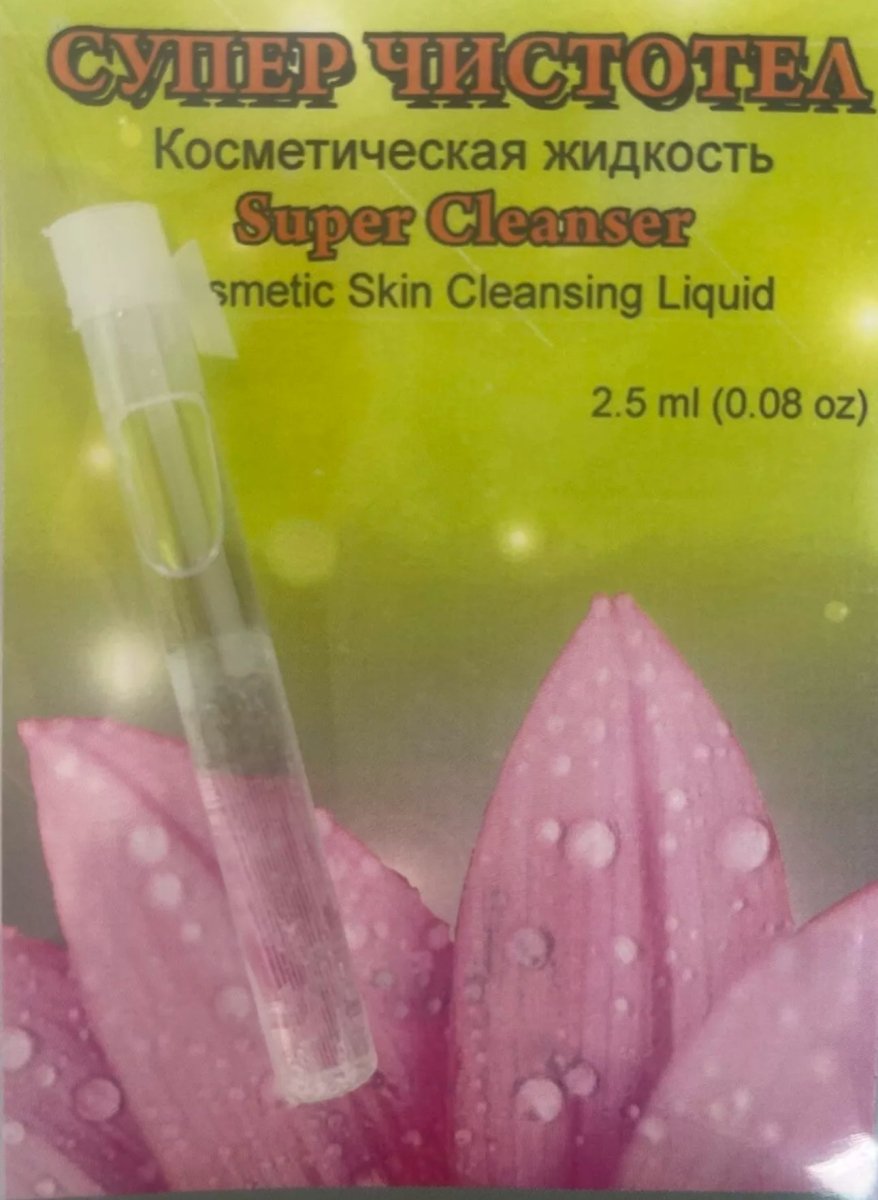

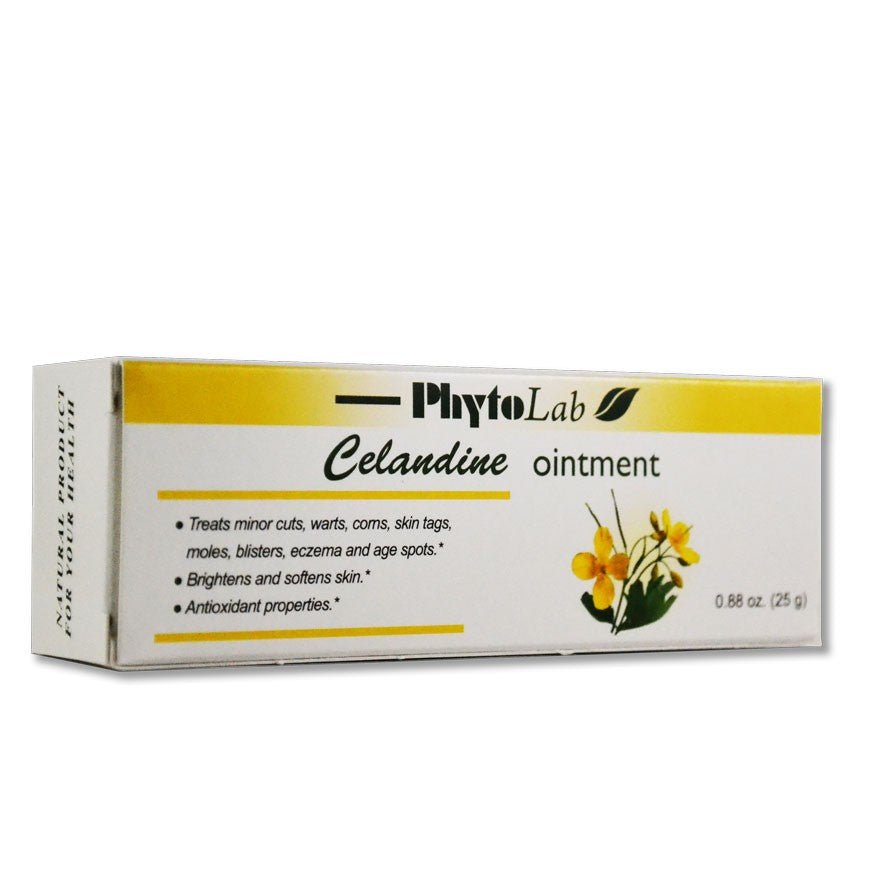
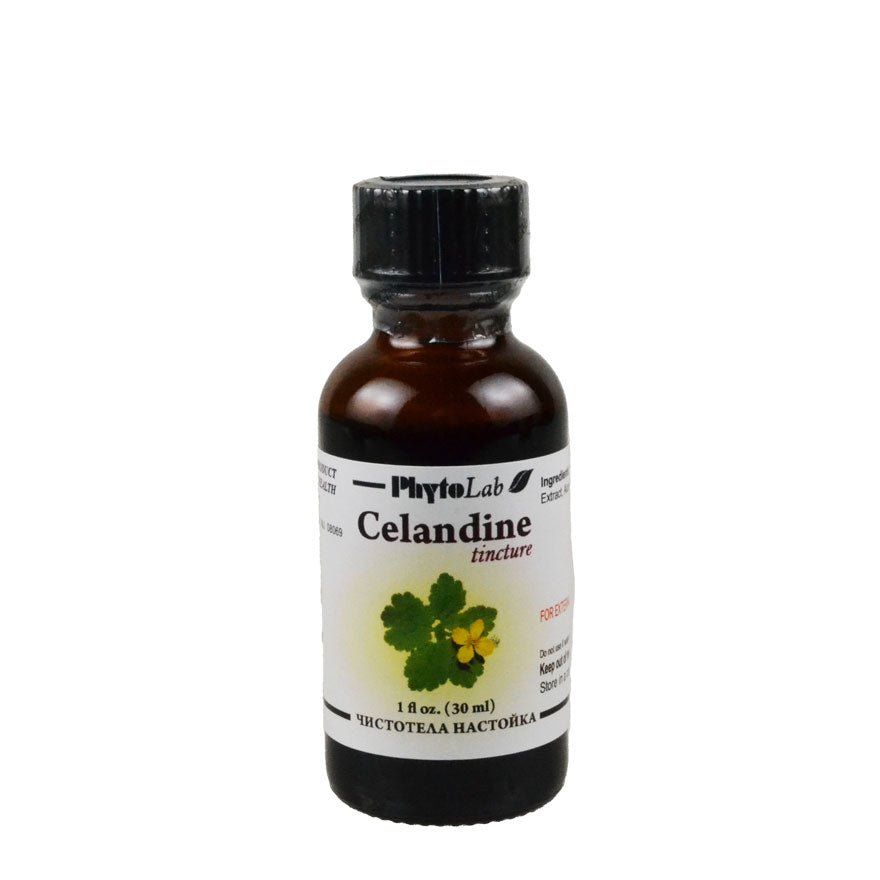


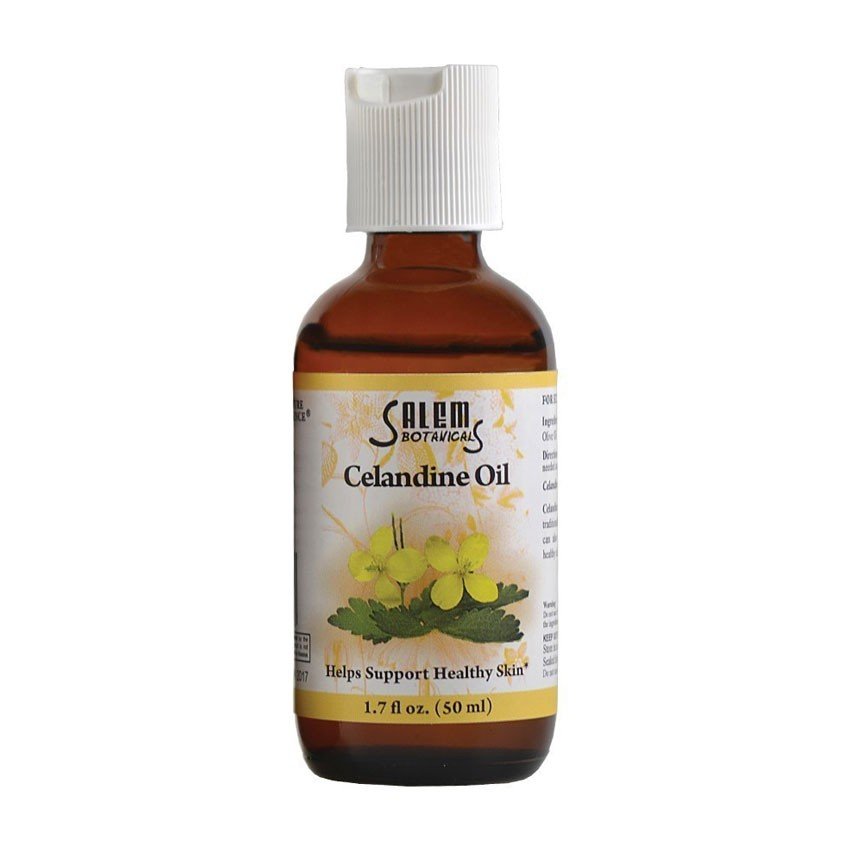

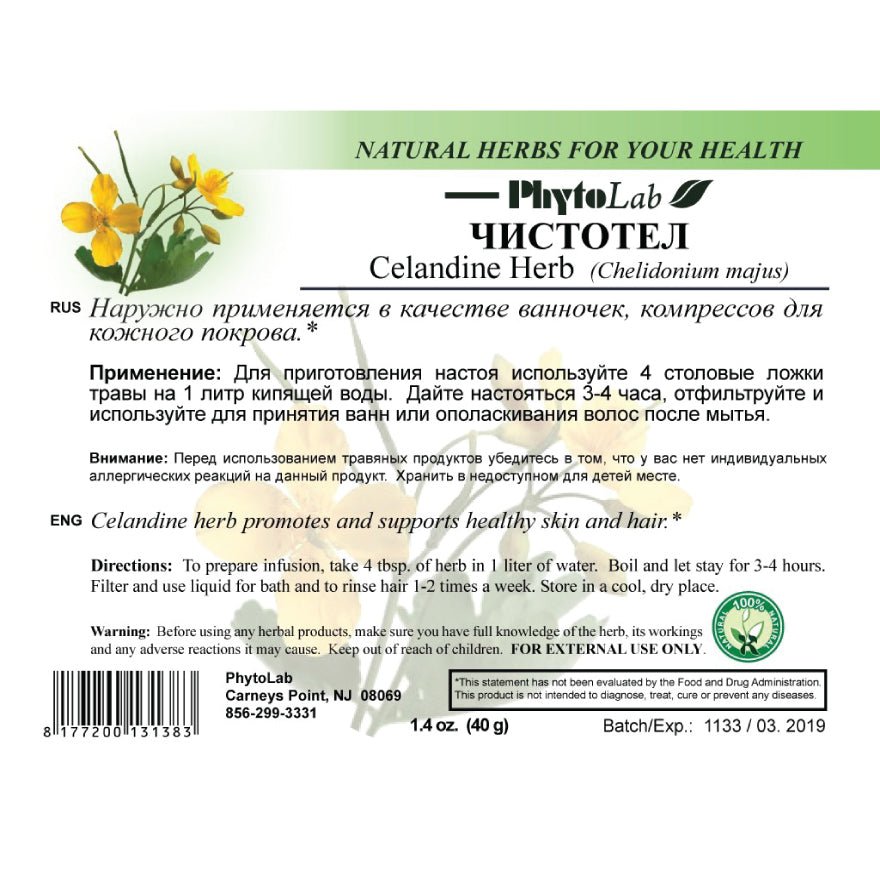


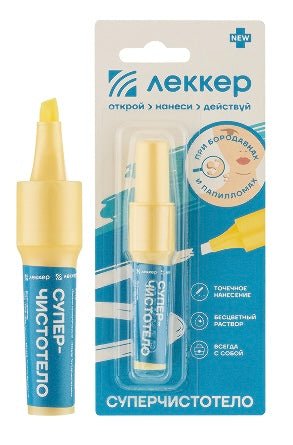

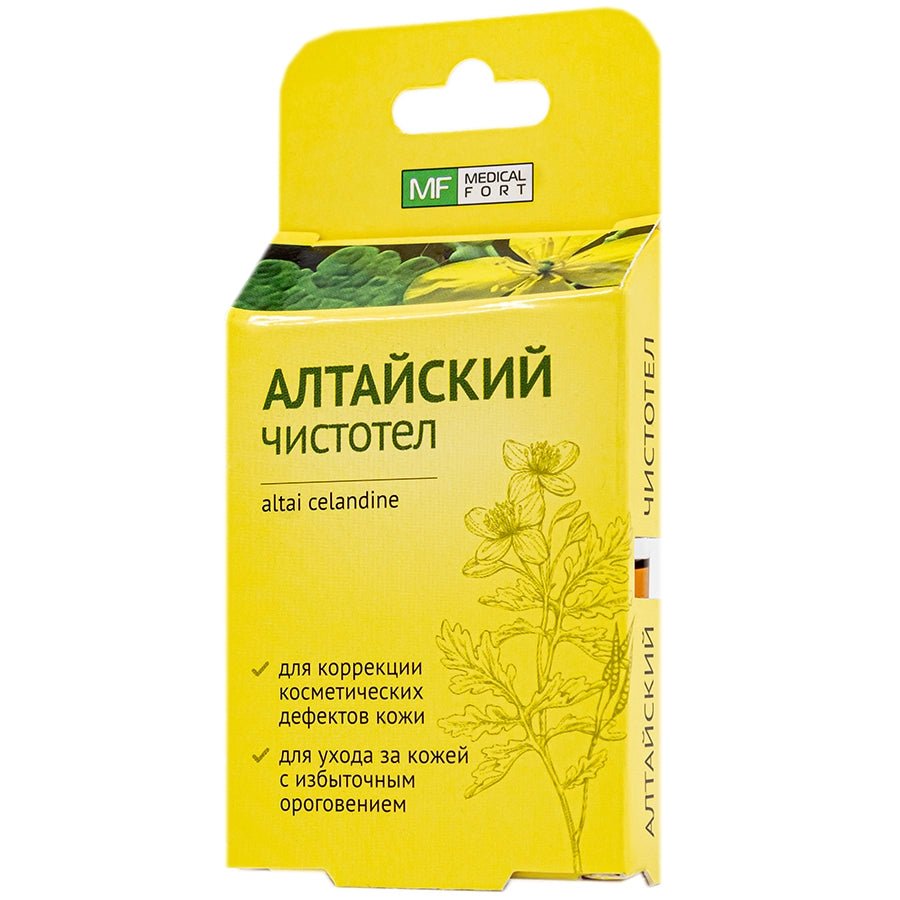


Celandine, known in Latin as Chelidonium majus, is a wild plant of the poppy family that grows along fences, field edges and shaded roadsides across much of Europe. Break a stem and it releases a thick orange-yellow latex, and it is that latex, rather than the leaf or the flower, that Russian, Ukrainian and wider European folk practice has relied on for centuries. On USA Apteka celandine turns up in the forms a returning buyer recognizes: dried herb, an alcohol tincture, an oil and an extract, and small bottles of ready-made liquid with an applicator, sold for dabbing on warts.
It is also a plant that has to be introduced by its limits rather than its promises. Its alkaloids, among them chelidonine, sanguinarine and coptisine, are pharmacologically active substances, and in quantity they are toxic. That single fact shapes everything below: external, point application to a small patch of skin is the territory where celandine has a defensible place, and taking it by mouth is not.
What celandine was used for in folk practice
A search for what celandine treats usually returns a long list, and the list needs sorting before it is any use. Folk practice reached for the plant in two very different ways, and only one of them still makes sense.
On the skin, the fresh latex was applied point by point to warts, papillomas and other small growths, and that is where the plant became household knowledge in Russian and Ukrainian homes. The dried herb also went into home preparations for skin complaints, and for aching joints it was used externally, in rubs and as a bath additive. By mouth, the herb was brewed and taken for digestive complaints and as a bile stimulant, and it is that second tradition that modern safety data has overturned.
The overturning is not a cautious hedge. European regulators and national medicines agencies have restricted or withdrawn oral celandine products because of documented cases of acute liver injury, some of them severe, occurring at ordinary herbal amounts and after only a few weeks of use. Alongside the liver, the plant can cause outright poisoning, with nausea, vomiting, abdominal pain, dizziness and a slowed heart rate. For that reason this page gives no internal amounts of any kind, does not describe brewing it, and states plainly that taking celandine by mouth is not advised and is not something to begin on one’s own judgment.
As for what celandine treats, the plain answer is that it cures nothing, not warts, not papillomas, not joints, and not any named disease. What it has is a long external tradition, a modern regulatory record against internal use, and a place that a doctor confirms rather than a page on a store website.
Gallstones and why celandine is the wrong idea
Of all the questions about drinking celandine, the one about gallstones has the clearest mechanical answer, and the answer is no.
Folk practice valued celandine partly as a bile stimulant, something that makes the gallbladder contract and push bile along. Where stones are already sitting in the gallbladder, that movement is precisely what should not be encouraged. A stone nudged out of the bladder and into a narrow duct can lodge there, and the result is an obstruction: pain that builds in waves under the right ribs, often with nausea, sometimes with fever or a yellowing of the skin and the whites of the eyes. Biliary colic and a blocked duct are surgical emergencies rather than a home matter, and obstruction of the bile ducts is a standard contraindication for bile-stimulating herbs of every kind, celandine among them.
This risk is worth separating from the general liver warning, because the two are different in nature. Liver injury comes from the plant’s chemistry and unfolds over days and weeks. The gallstone risk is physical and can arrive within hours: a stone that was lying quietly gets a push.
Anyone with known stones, with sludge in the gallbladder, with a history of colic, or with a gallbladder that has already been removed should treat bile-stimulating herbs as a question for a doctor rather than a self-service decision, and celandine is not the one to experiment with. Wave-like pain under the right ribs that does not settle, especially with fever or yellow skin, means emergency care rather than anything tried at home.
A stomach ulcer rules celandine out
An ulcer gives the same answer for a different reason, and the reason sits in the stomach lining rather than in the ducts.
An ulcer is a break in the mucosa, a patch of the stomach or duodenal wall where the protective layer has failed. Celandine’s alkaloids are irritant substances, and the most common home form, the alcohol tincture, adds an alcohol base on top of them. Putting an irritant onto a surface that is already damaged is the opposite of what the situation calls for: it can worsen pain, provoke nausea, and at worst contribute to bleeding.
There is a second reason, less dramatic and just as firm. Peptic ulcer disease has an established treatment that works, usually acid-lowering medicines and, where the bacterium Helicobacter pylori is involved, a prescribed course to clear it. Celandine is no part of that treatment and does not substitute for it. Putting an herb in the place of a regimen that heals an ulcer means losing weeks while the break in the lining stays open.
An ulcer, then, is a reason to be under a doctor’s care rather than a reason to experiment. Black or tarry stools, vomit that looks like coffee grounds, sudden severe stomach pain or fainting are emergency signs that need immediate attention. The same logic holds for gastritis, for reflux and for an ulcer that has already healed: the lining is the thing being protected, and an alcohol tincture does not protect it.
Allergy, sensitive skin and celandine
Allergy is the third question that comes up, and the answer has two halves, because this plant can cause trouble on the skin as well as inside.
On the skin, the poppy family is well known for contact reactions, and celandine’s fresh latex is among the more reactive plant saps anyone handles at home. It can cause contact dermatitis, redness, itching and blistering, and because the sap is caustic it can leave a chemical burn on the healthy skin around the spot it was aimed at. People with atopic skin, with eczema, or with a known history of reacting to plants are the most likely to run into this, and for them even external use begins with a patch test: a small amount on an inconspicuous area, left for a day, before anything goes near a growth.
Internally the answer is simply no, and allergy adds to the reasons already given rather than replacing them. On top of the liver risk that applies to everyone, an allergic reaction to a plant taken by mouth can develop quickly and severely, and there is no benefit on the other side of the scale to weigh against it.
Anyone with a history of plant or medicine allergies, and anyone who carries an adrenaline auto-injector, should raise celandine with a doctor before using it even on the skin. Swelling of the lips, tongue or throat, a spreading rash, or difficulty breathing after any exposure is an emergency, and the product is stopped at once.
Forms of celandine and how external use is actually done
This is the part of the subject with a practical answer, so it deserves to be set out carefully. Celandine reaches the shelf in several forms: dried herb for external preparations, an alcohol tincture, an oil and an extract, and small bottles of ready-made liquid with an applicator, intended for point application. The manufacturer’s leaflet sets the terms for each of them, and it is read before the first use rather than after.
Point application is the technique the whole external tradition is built on. The drop goes onto the growth itself and nowhere else, and that growth is often no larger than a match head. The skin around it is protected first, with a ring of thick greasy cream, petroleum jelly, or a bandage with a hole cut in it, because the liquid is caustic and healthy skin is damaged easily. It is kept away from the eyes and the skin around them, away from mucous membranes, and away from broken or inflamed skin. Hands are washed afterward, and the bottle is closed and put where a child cannot reach it.
Papillomas were treated on the same principle, and here it matters most who this kind of home work does not suit. Growths on the face, growths in the genital area, anything on a child, and anything on a person with diabetes or poor circulation in the feet all belong with a doctor, because home cauterizing in those cases leaves consequences. Separately: any growth that changes color, shape or size, that bleeds, itches persistently or hurts, needs to be shown to a doctor rather than burned off, since a changing skin lesion is exactly what a dermatologist is trained to look at.
Joints sit in the same place. Rubs and baths with the herb were widespread in folk practice, there is no good evidence that they help, the skin-irritation caution applies exactly as it does everywhere else, and joint pain that lasts for weeks, wakes a person at night or comes with swelling needs a diagnosis rather than a rub.
Two more limits apply to every form. Celandine is not used in pregnancy or while breastfeeding, it is not given to children by mouth at all, and the bottle is stored out of children’s reach. And because the wild plant is easily confused with harmless look-alikes when it is gathered, a standardized product with a leaflet and a manufacturer behind it is a clearer starting point than a jar of something picked at the edge of a field.
Neighboring themes
Each of following four products may end up in a home kit for a different reason, and it helps to know which one, because their jobs do not overlap and none of them stands in for another.
- Furacilin is kept for a graze that needs rinsing and a sore throat that needs gargling: the tablet is dissolved in water and the solution goes over the whole surface. It is an antiseptic for a clean wound, and celandine never goes on that same graze.
- Pentalgin is kept for sudden pain, a headache, a toothache, period cramps. It is a combination painkiller taken by mouth, so it comes with its own limits on amount and on days in a row, and pain that keeps coming back is a question for a doctor rather than for the next tablet.
- No-shpa is in the kit for a cramp: a stomach that has seized up, a pulling ache low down during a period. It relaxes smooth muscle and eases the spasm itself, not inflammation. One warning matters more than the rest here: pain under the right ribs that comes in waves is a reason to see a doctor, not a reason for No-shpa and certainly not for a bile-stimulating herb.
Celandine is the only one of the four that is never taken by mouth. Its place in the kit is a small bottle for dabbing onto a wart, one point at a time, and it is stored apart from the rest, tightly closed and out of a child's reach, because the liquid is caustic.
A home kit is put together for the household that uses it, and there is no correct set: some kits hold all four, some skip celandine entirely. The one rule they share is that none of them replaces a doctor, and anything involving swallowing celandine, along with any skin growth that is changing, starts with a doctor rather than with the kit
Where to find
Celandine is available to order from USA Apteka with delivery across the United States and abroad, in the familiar forms: dried herb, tincture, oil and extract, and ready-made liquid for point application, in the original packaging of European and CIS-region producers. Delivery within the US, including Hawaii and Alaska, is free over $69, while orders to other countries ship at a paid rate regardless of the total. The support team is glad to help by chat or WhatsApp with choosing a form or checking stock, and regular customers have a bonus program and seasonal offers. Storage is simple: a dry place out of direct sunlight, the bottle tightly closed and out of children’s reach, with the date on the pack.
Warning! Celandine is an herbal product rather than a treatment, and taking it by mouth is not advised. Anything involving swallowing it, and any skin growth that is changing, is a conversation with a doctor first.
Please Chat with us or send us a message on WhatsApp