



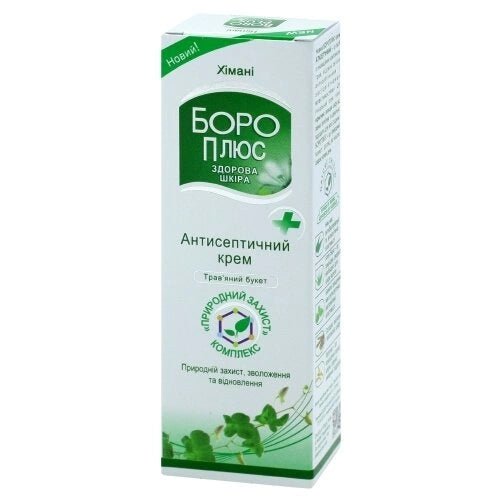

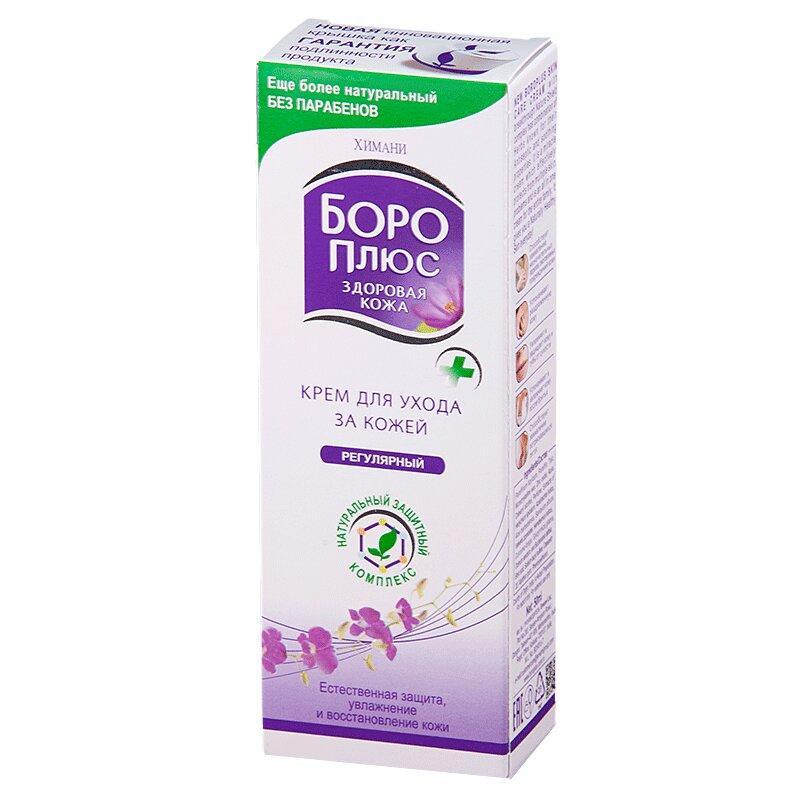

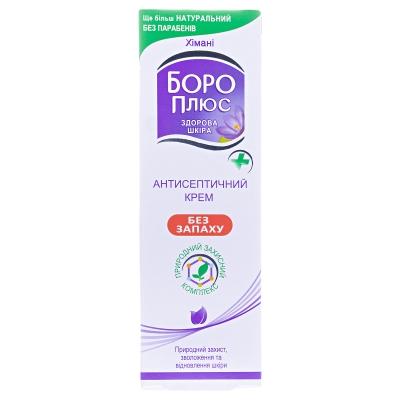





Boro Plus is an Indian cream made by Himani, part of the Emami group. It has been sold across Russia, Ukraine and the rest of the CIS region since the 1990s, and in that time the small tube with the herbal smell turned into a household fixture: one lives in the bathroom, another travels in a bag, a third gets left at a summer house and is still sitting there the following year. The base is a blend of plant extracts used in ayurvedic practice, typically neem, tulsi (holy basil), aloe, turmeric, sandalwood, vetiver and similar botanicals worked into a cream. The maker prints the exact list on the pack, and it shifts a little between versions and between countries of release.
What it actually gets used for is ordinary. Dry, rough or chapped hands in winter, elbows, heels and lips in cold weather, small everyday skin troubles such as scratches and grazes once they are clean, insect bites, chafing from a shoe or a backpack strap, skin that has taken a beating from wind and frost. Boro Plus is a cosmetic skin-care product rather than something a doctor would reach for when the skin needs more than care, and that is worth stating once and plainly, because the sober green pack makes people file it more seriously than it asks to be filed.
What is in it and what the two pack colors mean
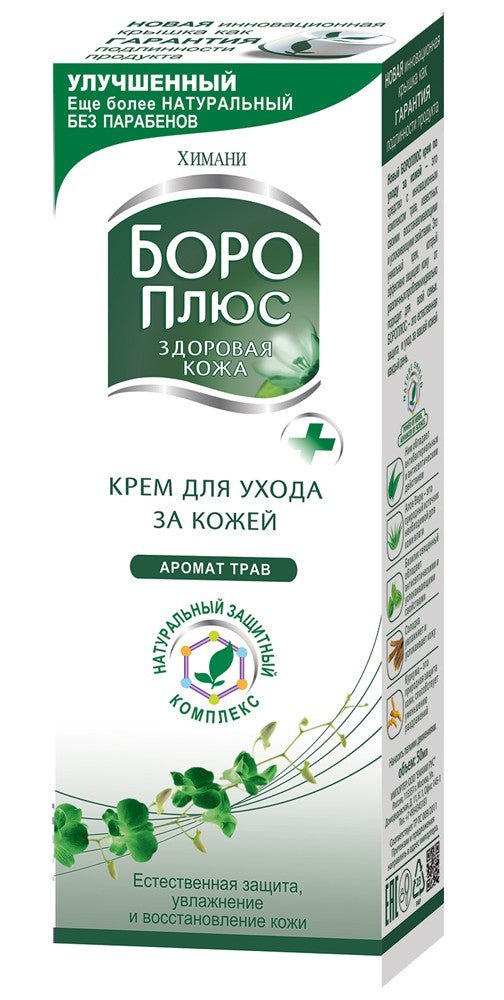
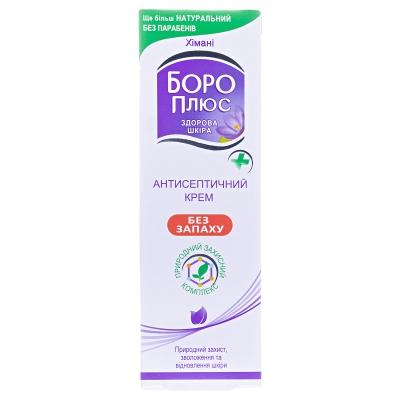
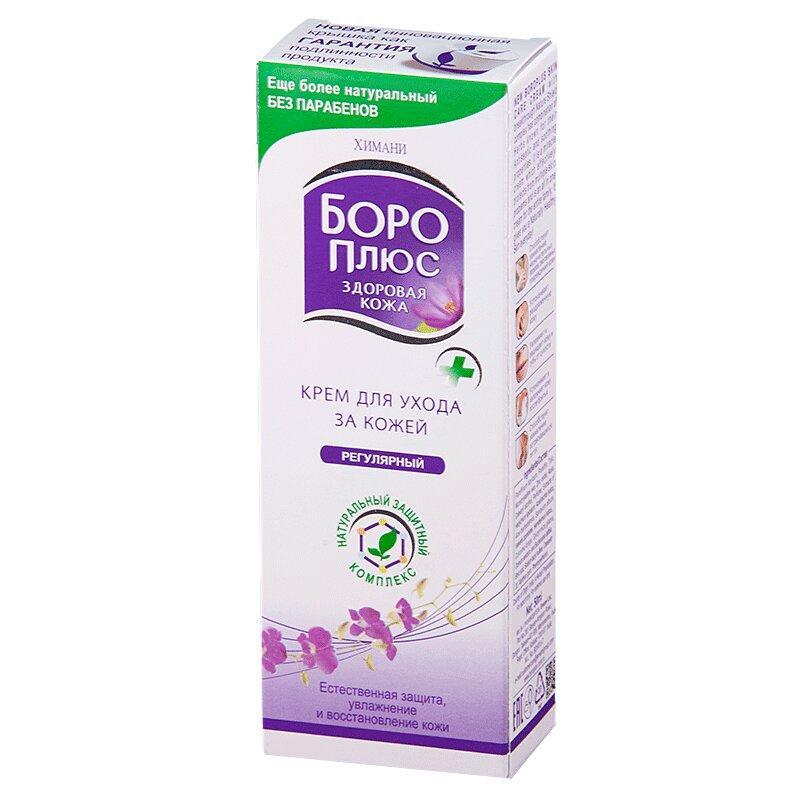
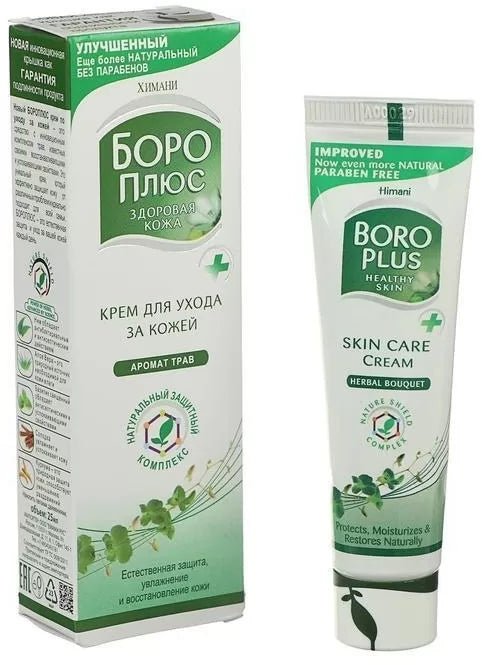
Two versions sit next to each other on most shelves, and the pack color is how people tell them apart. The green one is the version the maker describes as what it calls antiseptic care, aimed at irritated skin and the small everyday troubles that come with it: scratches, bites, patches of redness, chafing. The violet one, which plenty of buyers call the purple or lilac tube, is presented as a softening cream for dry skin, for hands that have cracked, for lips, for heels at the end of a long winter. The difference between them is one of emphasis, not of category. Both are built on the same idea, plant extracts carried in a fairly rich cream, and one of them leans toward calming irritated skin while the other leans toward softening skin that has gone dry and tight.
Habit has given the product a second name in conversation, and people often say ointment rather than cream. By texture it really is a cream, dense enough to sit on the surface for a while before it sinks in, but not so heavy that it stays as a film you can scrape off with a fingernail. That density is not a flaw. It is the whole point on knuckles that split in January, and it is exactly what makes the product awkward in other places, which the next section gets to.
Whatever is in the particular tube in your hand is printed on that tube, and that is the only list worth trusting. Recipes differ by country and by year of release, and a list copied from somebody’s review online may not match the pack you actually bought. Anyone who reacts to plants, to essential oils, to ragweed or wormwood pollen, has a practical reason to read the pack before buying rather than after, and a doctor can look over the list in under a minute if anything on it is unfamiliar.
Boro Plus on the face is for dry patches, not for daily whole-face care
The short version is yes, it can go on the face, but not in the way a face cream goes on a face. People use it there for a reason and in one place at a time: a dry flaking patch in frosty weather, chapped lips and the corners of the mouth, a stretch of skin that got angry after shaving, the raised mark left by a bite. For that it works, because the rich base holds moisture in and the softening side of the formula does something useful where skin feels tight and starts to peel.
Past that point, two cautions are worth having in advance. Boro Plus is noticeably heavier than a modern face cream and it carries plant extracts and fragrance. On oily skin, and on skin that breaks out easily, that weight can be more than the skin wants: the layer sits on top, pores underneath do worse rather than better, and a few days of spreading it over the whole face can leave things looking worse than they started. On sensitive skin the issue is a different one. Botanicals and fragrance are themselves among the more common irritants, and how a given face responds to a mix of seven plant extracts is genuinely hard to predict from the outside.
So the sensible route is a patch test first. A small amount behind the ear or on the inside of the forearm, then a day of leaving it alone. If nothing turns red, itches or puffs up in that time, it can go on the face, still on separate patches rather than as an all-over layer. Anyone with a known plant allergy has more reason than most to run that test, and a short word with a doctor before the first application costs far less than a reaction on the face costs afterward.
One more thing so there is no confusion later. Boro Plus was not designed as a daily moisturizer for the whole face, it does not stand in for care chosen to suit your skin type, and it behaves badly under makeup in a morning routine. It is the thing you reach for when one spot of skin is dry, sore or scratched, and it stops being useful the moment the job gets bigger than that.
Using Boro Plus as a spot application on individual blemishes
Home practice settled on this a long time ago: the cream goes on individual inflamed spots, one at a time. The routine is not complicated. Clean the skin and let it dry, take less cream than instinct suggests, and put a thin layer on the spot itself rather than smoothing it across the cheek or building it into a mask. Most people do this at night, partly because a rich base under foundation is a bad combination and partly because the hours of sleep give it time to sink in.
Now the limits, and these need saying precisely. There is no solid research showing that Boro Plus clears breakouts. What exists is a long domestic habit, passed from one household to the next, which is a different thing from a demonstrated effect. It does not stand in for what a dermatologist would recommend when skin keeps breaking out, and it should not be counted on as the main step in anyone’s routine. There is also a real possibility of the opposite result: on skin that breaks out easily, a rich base sometimes works against you, and some people find they get more blemishes after using it regularly, not fewer. That is not a sign of doing it wrong, it is what a dense cream does on that kind of skin.
Which gives a plain rule. If a few days of spot application change nothing or make the picture worse, stop. And breakouts that run for months, cover the face, back or chest rather than appearing one at a time, leave marks and scars behind, or come in waves for no visible reason, belong with a dermatologist rather than with a tube of cream. A doctor can work out what sits behind them and offer something built for the job, which a cosmetic cream was never built for.
Two small practical notes round this out. Apply with clean hands or a cotton swab, so that whatever was on your fingers does not go onto an inflamed spot along with the cream. There is no reason to cover it with a bandage afterward, since a rich cream under a sealed dressing does worse, not better. And if a spot has been opened, is weeping, or is painful to touch, that is no longer the territory of a cosmetic product and is worth showing to a doctor.
Is Boro Plus a hormonal cream?
The answer is no. Boro Plus contains no corticosteroids and is not a hormonal cream in any of its versions. It is a cosmetic product built on plant extracts, and that is how the maker presents it.
The question does not come out of nowhere. Steroid ointments, the ones a doctor may recommend for an inflammatory skin condition, look and feel similar from the outside: also thick, also white or faintly yellow, also good at taking redness down. Anyone who has been given one of those in the past carries a reasonable wariness about anything that resembles it, and Boro Plus gets asked about in exactly that tone of voice. The wariness itself is sound, because corticosteroids do call for care, for a set period of use and for a doctor deciding when and where, especially on the face and in children.
The practical consequence matters more than the answer itself. Because there are no hormones in the tube, there are none of the risks that come with them, no thinning of the skin, no visible small vessels, no trouble from months of unsupervised use. And by exactly the same logic there is none of the strength either. That second half tends to get skipped. A cream without corticosteroids cannot do what a steroid ointment does for an inflammatory skin condition. It softens, it cares for dry skin, it feels good on a windburned cheek, and it does not turn an inflammatory process around.
A rash that is spreading, weeping, itching without let-up, holding on for weeks, or coming with a fever is a reason to see a doctor rather than to buy a second tube. And the mirror situation is worth naming too: somebody has been given a steroid ointment, finds the idea alarming, and wants to swap it for something herbal that feels safer. Swapping on your own rarely ends well, because the strength, the schedule and the length of use were worked out for one particular case. Taking the worry back to the doctor who made the call is more useful than quietly replacing it with a cosmetic cream.
Practical points and common questions
The handling rules are short and nearly all of them are printed on the pack. External use only. Onto skin that is clean and dry. Not onto mucous membranes and not around the eyes, where fragrance and the essential oil components have no business being. Not into deep, dirty or infected wounds, where a rich cream gets in the way instead of helping. Signs such as pus, redness spreading outward from the edges, heat in the area, or a fever mean an infected wound and a doctor rather than a tube. If redness or itching gets stronger after application rather than settling, stop using it, since that can be a reaction to one of the plant components. Keep the cap closed, store it the way the pack says, and check the date printed there.
The questions that come up again and again are easier to answer in one place:
- the green tube and the violet tube are the same family of product with a different emphasis, one leaning toward irritated skin and the other toward dry skin, and the full list is on each pack;
- people call it both a cream and an ointment, and by texture it is a cream, dense but not greasy to the point of being sticky;
- how often it goes on is a matter of how dry the skin is, as a rule once or twice a day on hands and heels and a single thin dab on a spot at night;
- whether children can use it comes down to the pack, since the maker as a rule does not set an age limit for external use, though for small children and for a child’s face it is worth asking a pediatrician first;
- whether it suits pregnancy is usually not an issue for an external cosmetic product, though anyone whose skin has become more reactive should run it past a doctor;
- whether it does anything for burns or serious wounds, no, that is not its job, and those need a doctor.
Neighboring themes
Novo-Passit, Mukaltin and Hematogen all turn up in a house for a reason, and you can see the reason in how quickly they disappear again. Novo-Passit gets bought during a week when sleep has gone sideways and nerves are stretched, and the bottle stays in plain view for exactly as long as that stretch lasts. Mukaltin gets bought when a cough is already there and something has to help the chest clear, and the pack runs out the same week the cough does, after which nobody thinks about it until the next cold. Hematogen plays by the rules of candy rather than anything else: it comes home because somebody liked the look of it, not because anything happened, and it is eaten faster than anyone gets around to asking why.
Boro Plus stands apart from those three, and not because it happens to be about skin. It is the only one of the four that answers no complaint at all. It gets bought for no occasion, on the principle of having one around, and it gets spent in tiny amounts, a pea for cracked hands in January, a dab on a bite in July. Which is why the tube outlives nearly everything else in the house. The calming drops are finished, the cough tablets are gone, the bar was eaten in an evening, and the cream is still exactly where somebody put it two years ago with half the lettering rubbed off the label.
What runs out for it is not the occasion but the date on the tube, and that is close to the only reason it ever gets thrown away. Having something permanently within reach, though, is not the same as it being right for whatever comes up. When skin needs looking into rather than looking after, a conversation with a doctor is worth more than any of the four names here.
Where to find
Boro Plus is available to order from USA Apteka with delivery across the United States and abroad, in the original packaging familiar from CIS-region counters, in both the green and the violet version. Delivery within the US, including Hawaii and Alaska, is free over $69, while orders to other countries ship at a paid rate regardless of the total. The support team is glad to help by chat or WhatsApp with which version is in stock and how the tube sizes differ, and regular customers have a bonus program and seasonal offers.
Storage is simple: a dry place out of direct sunlight, the cap closed, the date on the box. This page is reference material and not a consultation. If irritation, a rash or dryness does not settle, see a doctor.
Please Chat with us or send us a message on WhatsApp