



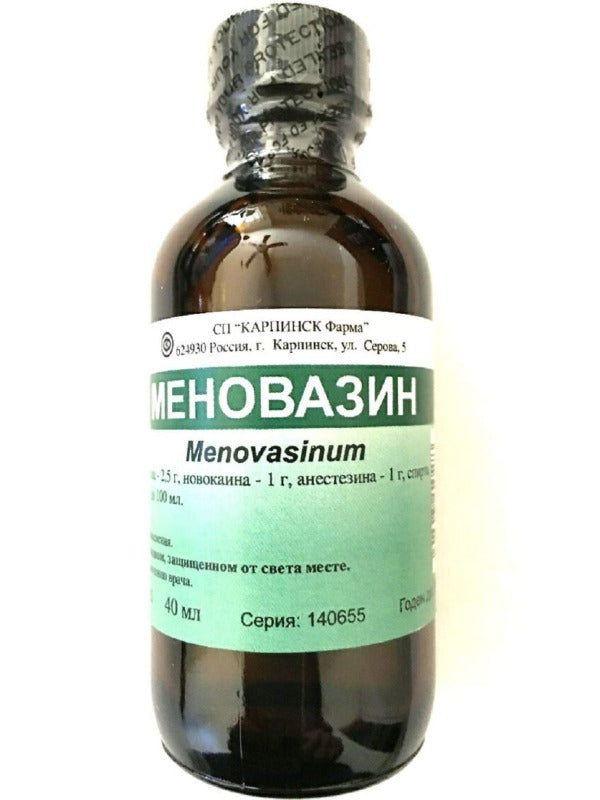
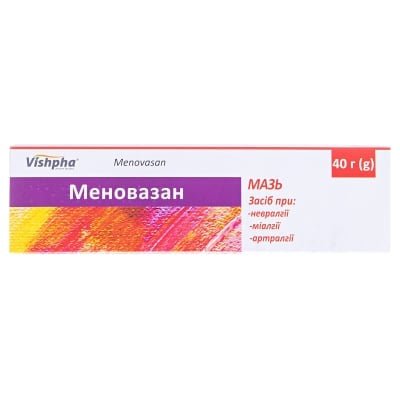

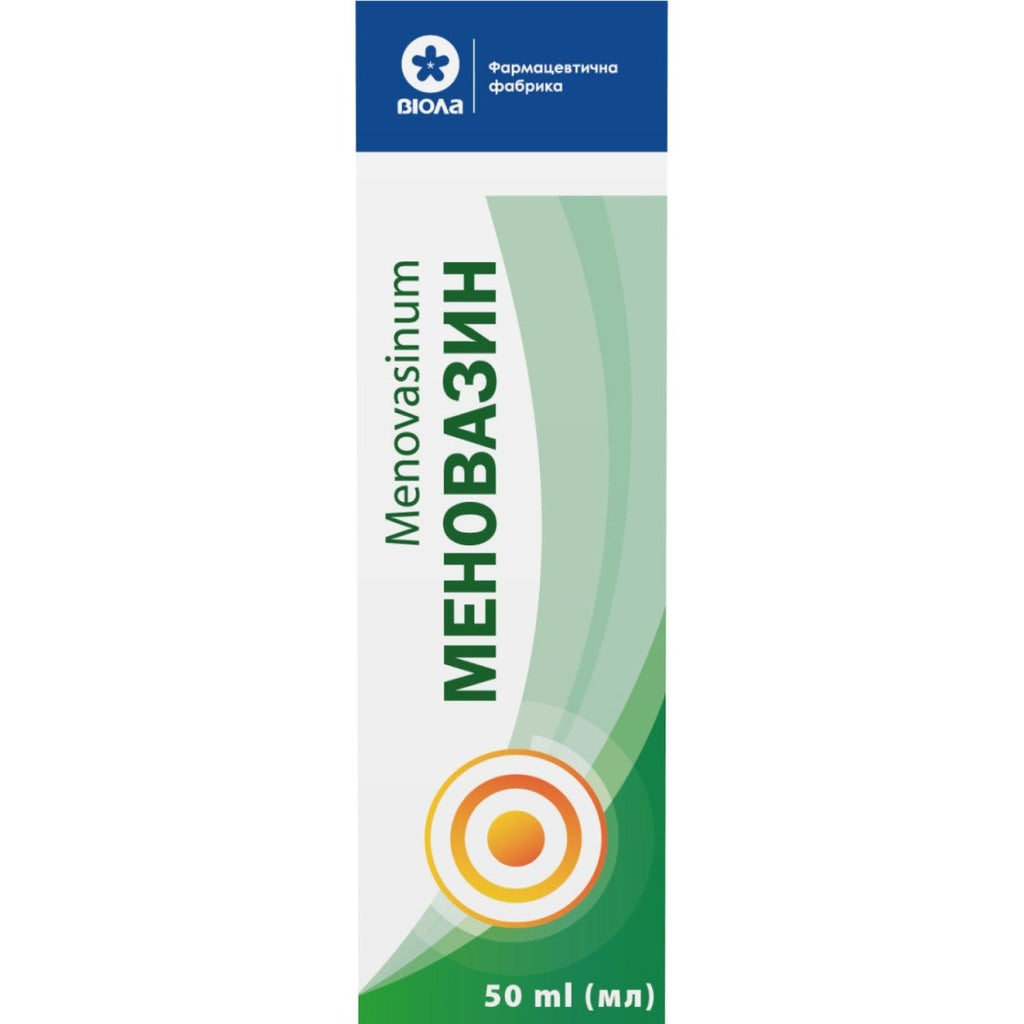

Menovazin is one of those simple external rubs that lived in almost every home cabinet, reached for after a long day on the feet or a stiff, aching back. It is built on three familiar components, two mild numbing agents, benzocaine and procaine, together with menthol, carried in an ethyl-alcohol base. That mix gives it the cool, tingling feel that people recognize the moment it touches the skin. On USA Apteka it comes in two formats, the classic alcohol solution and an ointment, in the original packaging of European and CIS-region producers, so a returning buyer finds a familiar name rather than a new one.
This page is a plain-language guide, not a personal recommendation. Menovazin is for external use only, on intact skin, and it is the kind of comfort measure people keep for everyday aches rather than a fix for anything serious. The aim here is to explain what it is, how the two formats differ, how it is used sensibly, and where the line is that calls for a doctor.
What is in menovazin: the solution and the ointment
The composition of menovazin is the same idea in two textures. The active trio stays constant, the two numbing components and menthol, while the base changes.
A quick guide to the formats:
- the menovazin solution is the classic alcohol-based liquid, fast to spread and quick to cool, rubbed into the skin from a cotton pad or the fingertips;
- the menovazin ointment, often sold under the close name Menovazan, carries the same idea in a thicker, longer-staying layer that suits a slow rub into a stiff spot;
- both formats share the cooling menthol note and the mild surface numbing that make the rub feel like it is doing something within a minute or two.
Whichever format you pick, the producer’s leaflet on the pack sets how often and how much to apply, and it is worth a read before the first use, especially for anyone with sensitive skin.
Where menovazin helps at home
People keep menovazin for the everyday aches of muscles, joints, and nerves rather than for anything that needs a clinic. Its action is mostly a distracting, cooling, surface comfort, not a deep fix for the cause.
The familiar home uses:
- tired, aching muscles after work, sport, or a long drive;
- stiff, achy joints and the dull background ache of the lower back;
- the nerve-type aches people describe as neuralgia, along a sore spot;
- itchy skin from minor, non-broken irritation, where the cooling menthol soothes the urge to scratch.
The honest framing is that menovazin eases the feeling of an ache for a while and makes a stiff area more comfortable to move, which is exactly why it has stayed in home cabinets for generations. It is not a treatment for the cause of a lasting pain, so an ache that keeps coming back, or one that is sharp and new, is a reason to see a doctor rather than to rub on more.
How menovazin works
The feel of menovazin is easy to explain. It works on the surface, not deep inside, through a simple, old idea, and that is the whole of its job.
What happens on the skin:
- the menthol brings a fast cooling, tingling sensation that draws attention away from the dull ache underneath;
- the two mild numbing components soften the surface feeling for a while;
- the rubbing itself warms the spot and helps the muscles relax a little;
- together this is a distracting, comforting effect rather than a deep one, which is why it suits everyday aches and fades after a few hours.
People often pair the rub with a few minutes of rest or gentle warmth on the spot, which suits the same idea. Because the effect is on the surface and short-lived, menovazin is reapplied through the day by the leaflet rather than expected to fix anything once, and a spot that needs more than this cooling comfort is a spot for a doctor to look at.
How to use menovazin
Menovazin is simple to use, and a few habits keep it both comfortable and safe.
Sensible use, in short:
- apply only to clean, intact skin, never to broken skin, grazes, or a rash;
- rub a thin layer into the sore spot two or three times a day, by the leaflet, and wash the hands afterward;
- keep it well away from the eyes, the mouth, and any mucous lining, since the alcohol and menthol sting there;
- do a small patch test first if the skin is sensitive, and stop if a strong burning or redness sets in;
- hold the course short, a stretch of days rather than weeks of constant use.
The alcohol base means it should not go under a tight, airtight dressing, which can over-irritate the skin. And because it is for the surface only, it is never taken by mouth and is kept out of reach of children.
Menovazin on the lower back during pregnancy
A lower-back ache is one of the most common reasons people reach for menovazin, and pregnancy is exactly when that ache is common and when caution matters most. The honest answer is that this is a decision for a doctor, not for habit.
A few points behind that caution:
- menovazin carries numbing components and a notable alcohol base, and how much crosses the skin is not something to guess at during pregnancy;
- the producer’s leaflet generally places pregnancy and breastfeeding in the use-only-with-a-doctor column;
- a back ache in pregnancy also has gentler first options, warmth, rest, posture, and support, that a doctor can guide;
- self-treating a pregnancy backache with an alcohol-based rub, just because it worked before, is the part to avoid.
So menovazin on the lower back during pregnancy is not an automatic yes or a flat no; it is a question to bring to the doctor who knows the pregnancy, who can weigh it against the gentler measures first.
How Menovazan differs from menovazin
A common question is the difference between Menovazan and menovazin, and the short answer is that they are close relatives rather than different ideas. Both lean on the same trio, the two numbing components and menthol.
The practical differences are mostly format and maker:
- menovazin is best known as the classic alcohol solution, though an ointment version exists too;
- Menovazan is most often the ointment, a thicker, longer-staying layer, sometimes from a different producer and with its own emollient base;
- the solution feels faster and cooler and dries quickly, while the ointment stays put for a slow rub into a stiff area;
- the choice between them is about texture and preference far more than about strength.
In everyday terms, then, mazy Menovazan and a bottle of menovazin solution are two faces of the same familiar rub. The pick comes down to whether you want a quick, cooling liquid or a thicker layer that lingers, and the leaflet on the specific pack always sets the details.
Who should be careful with menovazin
Menovazin has a gentle surface action, but it still has clear limits worth knowing before the first use.
It is generally not used:
- on broken skin, grazes, open areas, or an active rash and dermatitis;
- with a known allergy to the numbing components or to menthol;
- near the eyes, mouth, or any mucous lining;
- in young children, except on a doctor’s say-so;
- during pregnancy and breastfeeding, except by a doctor’s decision.
If a strong burning, swelling, or spreading redness follows the first use, that points to a sensitivity, and the rub is stopped and the skin rinsed. As with any external item, a reaction that does not settle is a reason to check with a doctor.
What menovazin pairs with, and what it does not
A couple of honest notes help place menovazin next to other familiar items. It works on the outside, on skin, muscles, and the feeling of an ache, and the rest of the body belongs to other categories.
Worth keeping straight:
- when a stiff, aching back or neck is really driven by stress and tension, that is its own theme, and calming options such as valerian or a ready blend like Novo-Passit sit in a different aisle than a rub;
- menovazin has nothing to do with digestion, so stomach heaviness or discomfort after meals points toward enzyme support such as Mezym, a separate category entirely;
- the rub is not stacked on top of other strong external products on the same patch of skin at the same time, which only over-irritates it.
The thread is simple. Menovazin is a cooling external comfort for everyday aches, and the nervous side, the digestive side, and anything deeper each belong to their own place and, where it matters, to a doctor.
A few facts about menovazin
A few details help place this familiar rub.
Worth knowing:
- it is built on two mild numbing components, benzocaine and procaine, plus menthol, in an alcohol base;
- the cooling, tingling feel comes mostly from the menthol;
- it is for external use only, on intact skin;
- it comes as a classic solution and as an ointment, the latter often named Menovazan;
- it is a handy cabinet staple for sport, the garden, and long trips, where muscles tire more often;
- the date and storage terms are printed on the pack.
Where to find menovazin
Menovazin is available to order from USA Apteka with delivery across the United States and abroad, in both the classic solution and the ointment, in the original packaging of European and CIS-region producers. Delivery within US is free over $69, and the support team is glad to help by chat or WhatsApp with a format or a stock check; regular customers have a bonus program and seasonal offers.
Storage is simple, a cool, dry place out of direct sunlight, with the bottle tightly closed, and the date on the pack. And the sensible rule for a surface rub is to use it on intact skin for everyday aches, keep the course short, and see a doctor when a pain is sharp, new, or keeps returning. Take care of yourself, and let menovazin do its small, cooling job for the ordinary aches it was made for.
Please Chat with us or send us a message on WhatsApp