





Pectoral herbal tea, known in Russian as grudnoy sbor, which literally means a chest blend, is a mix of dried herbs brewed into a warm infusion when a cold settles in the chest and the throat feels raw. There are four standard blends, numbered from 1 to 4, and each has its own set of plants: marshmallow root, coltsfoot leaf, oregano, plantain, licorice root, anise, pine buds, sage, chamomile, calendula, violet, peppermint and marsh Labrador tea. On USA Apteka these teas are listed as Breast collection №1 to №4, loose in packs and in filter bags. In Russia, the blends are registered as plant-based products that help loosen and clear phlegm, with an official leaflet for each.
Here you will find how to brew and drink pectoral herbal tea, what goes into each of the four blends, when the tea is used and when a chest cold needs a doctor instead, who should not drink these blends, and how the loose and bagged versions on our website differ.
How to drink pectoral herbal tea correctly
Pectoral herbal tea is not brewed like ordinary tea, and its leaflet describes the method in detail.
For the loose blends, the leaflets of the Russian manufacturer describe it like this: 2 tablespoons of the herbs, about 10 g, go into an enamel pot and are covered with 200 ml of boiling water; the pot is then heated in a boiling water bath, meaning set inside a larger pot of boiling water, for 15 minutes, left to cool at room temperature for 45 minutes and strained. The herbs are squeezed out, and the infusion is topped up with boiled water to 200 ml. For filter bags, it is simpler: one bag is covered with boiling water, left under a lid for about 15 minutes while it is pressed with a spoon from time to time, and then squeezed out, and the amount of water is given on the pack.
The infusion is drunk warm or hot, usually 3 to 4 times a day, in the amount given on the pack. Some leaflets ask for it after meals, as for blends №1 and №2, and the description of blend №4 on our website says before meals, so the pack of each blend is the guide. The usual course is 2 to 3 weeks. The infusion is shaken before drinking, because the fine particles settle, and a prepared infusion is kept in a cool place for no more than 48 hours.
The numbers differ above all in their composition, and that is why they are not interchangeable for everyone:
- blend №1 combines marshmallow root, coltsfoot and oregano;
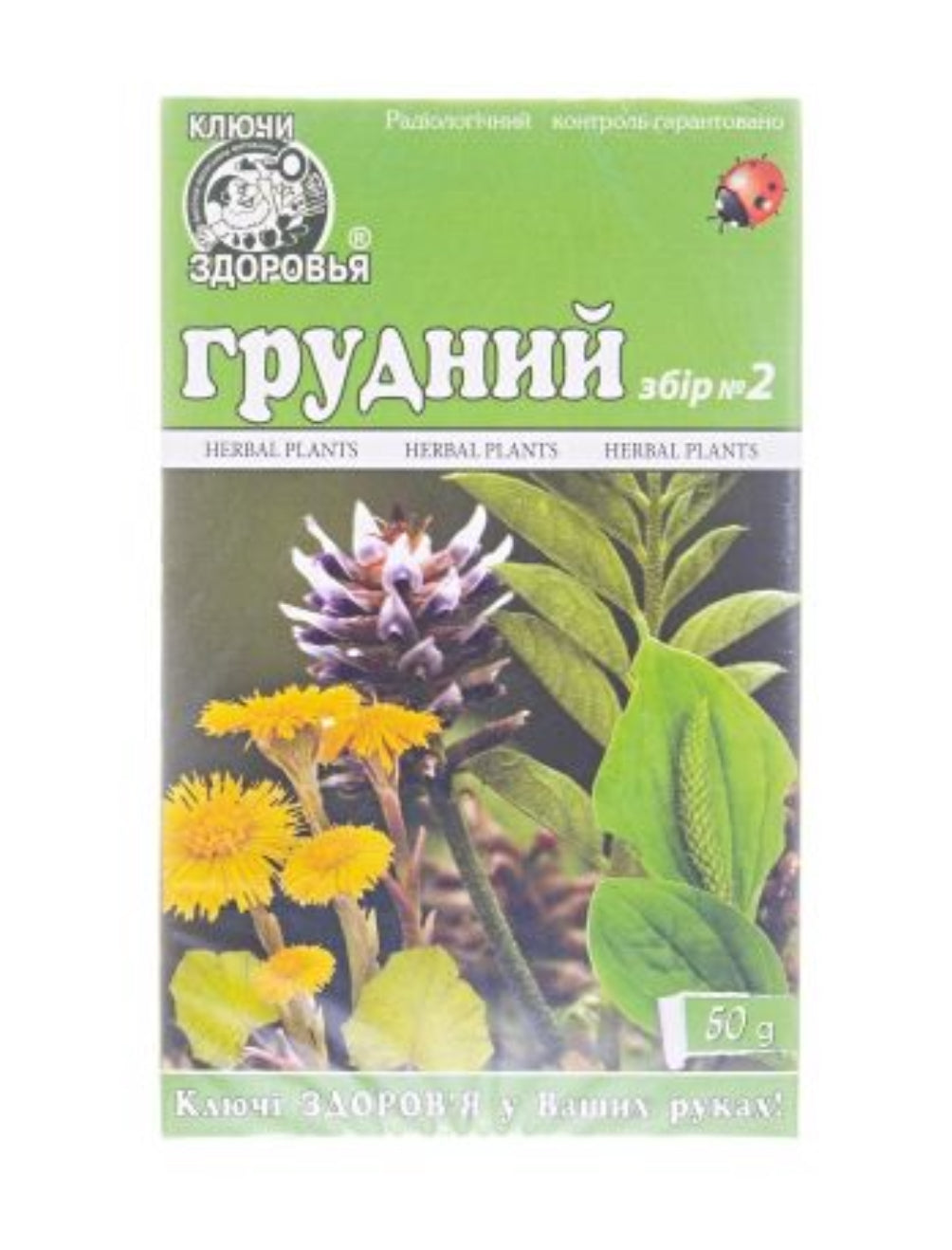
- blend №2 combines coltsfoot, plantain and licorice root;
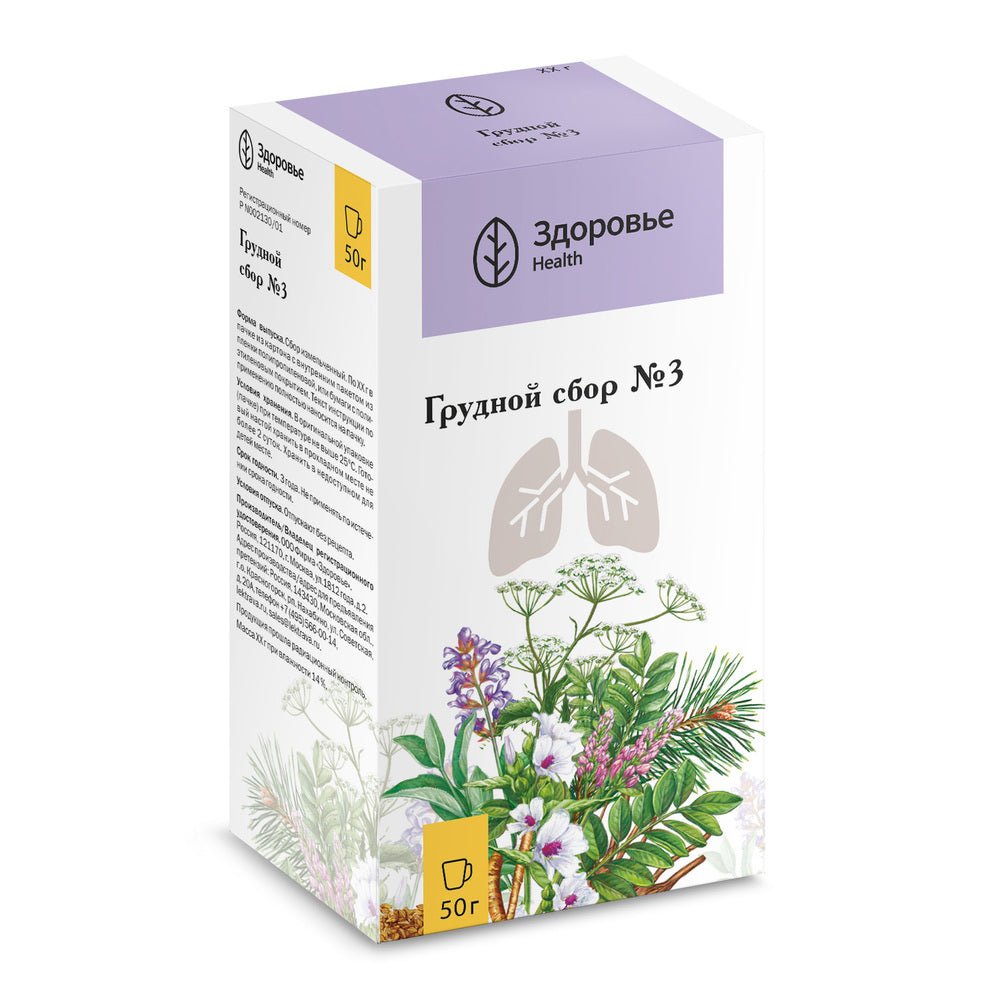
- blend №3 combines marshmallow, licorice, anise, pine buds and sage;
- blend №4 combines chamomile, marsh Labrador tea, calendula, violet, licorice and peppermint.
Age limits also differ, and the details are in the section on who should not drink these teas. For a child, any blend is best agreed with a pediatrician first.
What goes into pectoral herbal tea №1, 2, 3 and 4
The composition below follows the product descriptions on our website and, for blend №3, the Russian reference Vidal. Proportions can vary slightly between manufacturers, and the pack always has the final word.
Blend №1:
- marshmallow root, rich in plant mucilage, a soft gel that coats the throat;
- coltsfoot leaf, a traditional plant for the chest that contains substances limiting how long it can be used, explained below;
- oregano, an aromatic herb.
Blend №2:
- coltsfoot leaf, 40%;
- greater plantain leaf, 30%, a familiar plant for the chest;
- licorice root, 30%, which gives the tea a sweet taste.
Blend №3, per 100 g:
- marshmallow root, 28.8 g;
- licorice root, 28 g;
- anise fruit, 14.4 g, an aromatic seed often added to such blends;
- pine buds, 14.4 g, with a resinous smell;
- sage leaf, 14.4 g.
Blend №4:
- chamomile flowers;
- shoots of marsh Labrador tea, a bog shrub;
- calendula flowers;
- violet herb;
- licorice root;
- peppermint leaf.
Several of these plants come with limits. Coltsfoot contains pyrrolizidine alkaloids, which damage the liver, and the European Medicines Agency names coltsfoot among the traditional plants that contain them and sets a very low limit on how much of these substances a person should get per day. Licorice contains glycyrrhizin, and the US National Center for Complementary and Integrative Health warns that it can cause serious effects such as an irregular heartbeat, especially in large amounts or over a long time and in people with high blood pressure or heart or kidney conditions. Marsh Labrador tea contains toxic substances, ledol and grayanotoxins, and a scientific review advises drinking teas with it no more than once a day. Sage contains thujone, which is harmful in large amounts. These are the reasons why the tea is brewed exactly as the pack says and is not drunk longer than the leaflet allows. Anyone who takes products for the heart or blood pressure should ask a doctor before a course.
Pectoral herbal tea for a dry or a wet chest
The leaflets of the blends describe them for a heavy chest with thick phlegm that is hard to clear, as part of combined care during a cold. The tea helps to loosen the phlegm, so it is not combined with products that suppress the urge to clear the throat: the phlegm gets thinner, but it cannot be cleared.
When the throat is dry and scratchy at the start of a cold, many people choose blends with marshmallow root, №1 and №3, because its mucilage coats and soothes the throat. A dry, harsh, barking urge to clear the throat, especially at night or with noisy breathing, is a reason to see a doctor, in a child even more so, because another blend will not help here.
MedlinePlus, the US government health library, advises calling 911 for shortness of breath or trouble breathing, and for hives or a swollen face or throat with difficulty swallowing. It advises contacting a doctor right away if:
- the discomfort lasts longer than 10 to 14 days;
- there is blood in the phlegm;
- a high temperature comes with it;
- there is a high-pitched sound when breathing in;
- the phlegm is thick, foul-smelling and yellowish-green;
- a baby younger than 3 months is affected;
- a person with a heart condition or leg swelling gets worse when lying down;
- there has been contact with someone who has tuberculosis, or there is unexplained weight loss or night sweats.
Who should not drink pectoral herbal tea
The leaflets of all four blends name sensitivity to any of the plants as a contraindication. Chamomile, calendula and coltsfoot belong to the daisy family, so people allergic to plants of this family are especially careful.
The leaflet of blend №2 also names:
- pregnancy and breastfeeding;
- children under 12;
- erosions and ulcers of the stomach or intestines.
For blend №4, the description on our website gives amounts for children from 3 years. Even so, it contains licorice and marsh Labrador tea, blends №1 and №2 contain coltsfoot, and the European Medicines Agency notes that children are particularly vulnerable to the pyrrolizidine alkaloids found in coltsfoot. A pediatrician is the right person to decide whether a child needs a herbal tea at all.
During pregnancy and breastfeeding, the blends with coltsfoot and licorice are better left aside, and any herbal tea is first discussed with a doctor: the National Center for Complementary and Integrative Health calls large amounts of licorice during pregnancy unsafe, and sage may be unsafe during pregnancy as well. People with high blood pressure, heart or kidney conditions or liver conditions, and anyone taking several products every day, talk to a doctor before starting a course. Side effects are mostly allergic reactions, and if a rash, itching or swelling appears, the tea is stopped.
Pectoral herbal tea on USA Apteka: loose and in bags
On USA Apteka, the blends come in two formats:
- loose, in packs: Breast collection №1, 50 g; №2, 50 g; №3, 50 g; №4, 50 g, when it is in stock; and Phitopectol №2, 35 g, when it is in stock;
- in filter bags: blend №2, 20 bags, and blend №4, 20 filter bags.
Filter bags are convenient for work and travel: the amount of herbs is measured in advance, there is no need for a water bath, and the bag is simply steeped in boiling water. The loose blend is the classic form for those who brew a day's portion at home. In both cases the leaflet sets the amount and the course. The packs are stored dry and away from light, as the leaflet asks, and out of children's reach. The leaflet of blend №2 gives a shelf life of 3 years for the dry herbs, the exact date is printed on the pack, and an opened pack is closed tightly so that the herbs do not take on moisture. For a chest cold that does not get better within two weeks, the next step is a doctor.
In the cold season the box of pectoral herbal tea usually lives next to the kettle, while the three products below are kept in the kit for quite different occasions.
- AntiGrippin is a dissolving tablet or powder for the first days of a cold that combines paracetamol, chlorphenamine and vitamin C. Pectoral tea and AntiGrippin are often used in the same week, and they do different things. Chlorphenamine can make a person sleepy, and paracetamol is easy to double if other cold products are taken at the same time. A high temperature that lasts more than three days is a reason to see a doctor.
- Benzyl benzoate is an emulsion or balm for scabies, applied to the body according to its leaflet. Scabies spreads easily among people who live together, so a doctor usually decides who in the family needs care at the same time. A herbal tea does nothing for itching, and an itch that gets worse at night is worth showing to a doctor before using any product.
- Duphalac is a lactulose syrup for constipation. During a cold, people move less and sometimes drink less, and the bowel can slow down. Warm herbal tea adds fluid, but it is not a laxative. Duphalac contains small amounts of lactose and galactose, and a change in bowel habits that lasts, or blood in the stool, needs a doctor.
In this company, pectoral herbal tea is the one for a heavy chest during a cold, brewed exactly as the pack says and drunk no longer than the leaflet allows.
What to keep at hand is suggested by a family's own experience, and that experience is different for everyone. A chest cold that drags on or gets worse is still worth showing to a doctor, because a herbal tea does not replace one.
Where to find
Pectoral herbal teas №1, №2, №3 and №4, loose in 50 g packs and in filter bags, can be ordered from USA Apteka in the original packaging of their manufacturers. Delivery within the US, including Hawaii and Alaska, is free over $69, while orders to other countries ship at a paid rate regardless of the total. The care team answers questions about the products or stock in the chat on the website or on WhatsApp, and regular customers have a bonus program and seasonal sales.
Store the packs dry, away from light and out of children's reach, and check the date on the pack. For a child, during pregnancy or with a chest cold that lasts more than 10 to 14 days, see a doctor.
Please Chat with us or send us a message on WhatsApp