


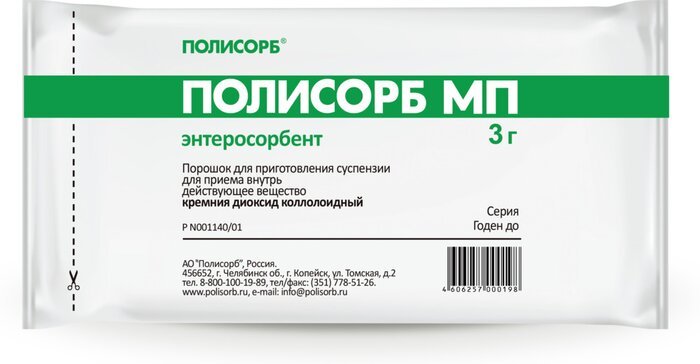
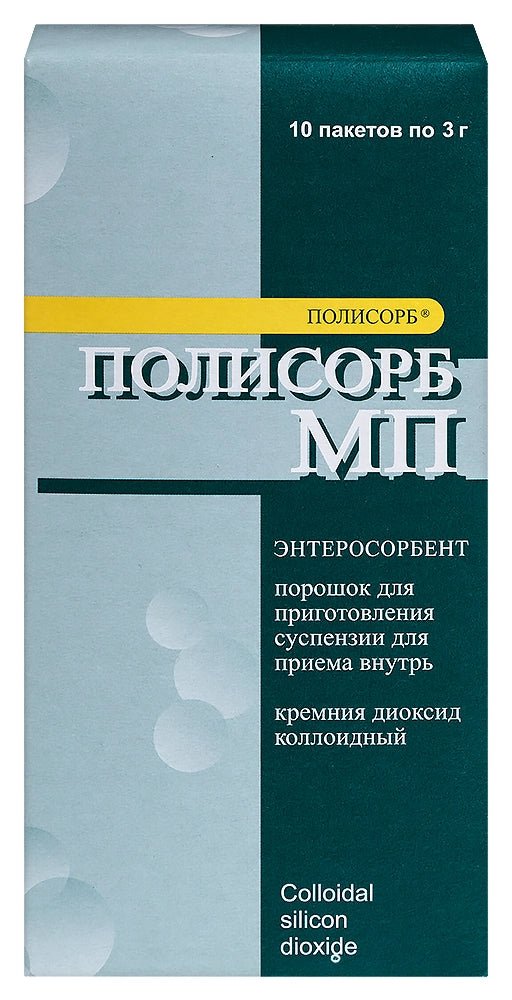
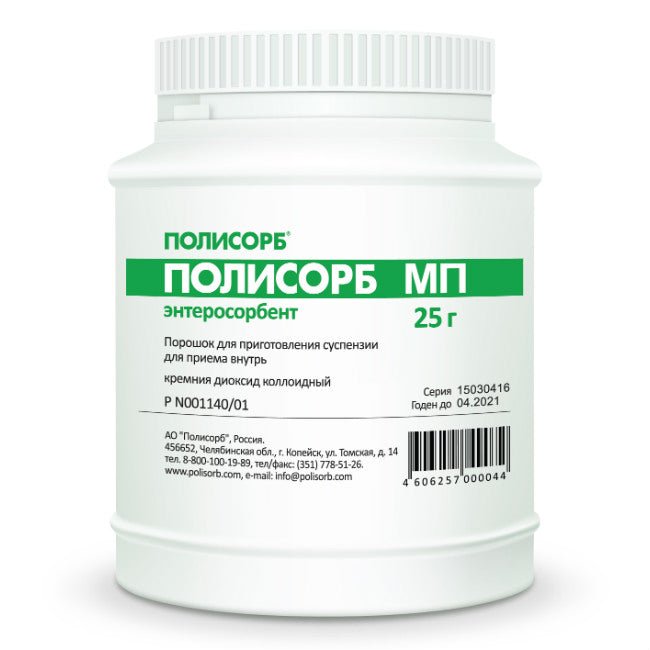
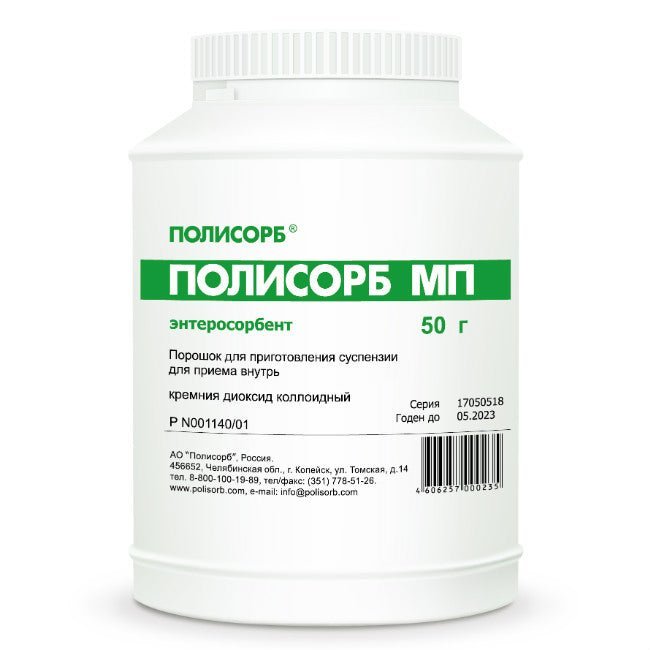
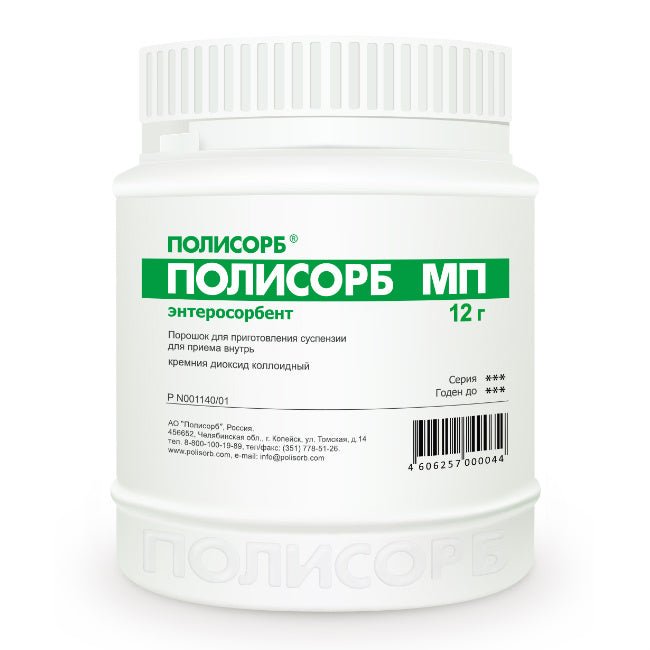
Polysorb is a very fine white powder based on colloidal silicon dioxide. You stir it into a glass of water until it turns into a cloudy suspension and drink it down. In the gut it binds a portion of what passes through and leaves with it, without being taken up into the blood. On USA Apteka, Polysorb comes in the maker’s original packaging, in jars and in single-use sachets.
In plain terms, what Polysorb is used for at home is everyday digestive overload: a heavy table, food that did not sit well, the unsettled feeling that travel brings with different food and water. The exact amount and schedule are set out in the Polysorb leaflet on the pack, which matters more than any general note.
What Polysorb is used for
In most homes the powder comes out for ordinary moments rather than anything dramatic. The classic one is the morning after a big meal, when the stomach feels heavy and slow and a person just wants to feel like themselves again. People also keep it for travel days, when unfamiliar food and water throw off the usual rhythm.
The everyday reasons:
- a heavy or rich meal that leaves things sluggish;
- mild digestive upset from food that did not agree;
- travel, when the food and water are different;
- keeping a familiar item in the cabinet just in case.
The thing to watch is not mistaking an ordinary moment for a worrying one. If stomach pain is strong or does not pass, a high temperature appears, there is blood, or things get worse day by day, the powder is set aside and the sensible move is to see a doctor.
How often Polysorb is taken
A “cleanse” is what people often call the wish to feel normal again after a heavy table or a trip. What the powder actually does is simpler and more local: as a suspension it binds part of what it meets in the gut during the hours it is there, and leaves with it. So a short run after a big meal is the realistic picture, not a weeks-long routine.
What the leaflet generally says about timing and amount:
- the suspension is taken a few times a day, between meals;
- the amount is worked out by body weight rather than one scoop for everyone;
- for children the amount is smaller and calculated by the child’s weight;
- courses are kept short, a few days rather than weeks;
- plenty of plain water goes alongside.
One practical point: a sorbent does not tell the difference between what you ate and anything else taken by mouth, so it can bind a vitamin taken at the same time and quietly reduce how much gets through. The sensible habit is to space things out, leaving a comfortable gap on either side, and to ask a doctor if you are unsure how to arrange the timing.
Polysorb during pregnancy
Pregnancy is a time to think twice about anything taken by mouth. Sorbents of this kind are often considered acceptable for short use, and many people reach for the familiar powder for the same everyday reasons. Whether to use it, and for how long, is a decision for a doctor who knows the full picture, not a forum thread or a relative’s memory.
Worth raising with a doctor:
- how many days of use, if any, make sense in your situation;
- the right amount, which is worked out individually;
- how to space the powder from prenatal vitamins, which it can otherwise bind;
- which signs mean the powder should be set aside and the doctor called instead.
In an ordinary situation it is a calm thing to keep around, but in this stretch a short conversation clears up the questions better than any general note.
How to mix and take Polysorb
Polysorb is not swallowed as a dry powder; it is stirred into water first. That step affects both how easy it is to take and how it sits.
The usual way:
- measure the amount from the leaflet into half a glass or a glass of cool or room-temperature water;
- stir it into an even, cloudy suspension and drink it before it settles;
- rinse the glass with a little more water and drink that too, so none is left on the sides;
- take it between meals, with plenty of plain water across the day.
Hot drinks, juice, and fizzy drinks are usually skipped, since plain water is gentler on a heavy stomach. It is best mixed just before taking it rather than in advance.
When Polysorb is not the right choice
Sorbents have situations where they are not used, and Polysorb is no exception. These are set out in the leaflet and are worth knowing in advance.
Polysorb is generally not used:
- with a blockage in the gut;
- with a flare of a stomach or duodenal ulcer, or with bleeding in the gut;
- with a still, non-moving gut (atony);
- with a known intolerance.
If there are long-running digestive conditions, or any doubt about whether it fits, it is wiser to talk it through with a doctor first. And to be clear, a sorbent is for occasional everyday support, not for sorting out serious digestive trouble on your own, which calls for a proper look.
Polysorb and children
With children, Polysorb is used the same way, by weight, but with an eye on age and a little more care. The amount for a child is worked out from body weight, with a separate chart in the leaflet for it, so nothing here is done by eye.
What matters for parents:
- mix the powder only in water and give it as a suspension, never dry;
- make sure the child drinks the whole suspension before it settles, then a little water;
- do not give a sorbent at the same time as vitamins or other items, and space them apart;
- with loose stools in a child the main thing is fluids, so keep them drinking, and with any worsening, or in a very young child, see a doctor straight away.
A sorbent is everyday support for a short moment, not a stand-in for a proper look when a child genuinely feels unwell or when an upset drags on.
A few facts about Polysorb
A few details help place Polysorb and set it apart from other sorbents.
Worth knowing:
- its base is colloidal silicon dioxide, a very fine white powder with no taste or smell;
- it is not taken up into the blood and works only inside the gut, then leaves the normal way;
- it comes in jars of different sizes and in single-use sachets that are easy to pack for a trip;
- unlike sorbents in solid form, it is taken as a suspension, which lets the amount be matched to weight;
- the powder draws in moisture, so the jar and sachets are kept tightly closed, away from damp.
These details are about what it is and how it is packaged, and they help you choose a convenient format and store it properly.
Where to find
Polysorb is available to order from USA Apteka with delivery across the United States and abroad, in the maker’s original packaging, jars and single-use sachets that are easy to pack for a trip. Delivery is free over $69, and the support team is glad to help by chat or WhatsApp to choose a format or check what is in stock; regular customers have a bonus program and seasonal offers.
Storage follows the leaflet: a dry spot, tightly closed, away from moisture. Mix it just before taking it and drink it while it is still cloudy. As with any sorbent, it is wiser to keep it for everyday moments rather than turn it into a standing habit, and to see a doctor if digestive complaints drag on. Take care of yourself.
Please Chat with us or send us a message on WhatsApp