



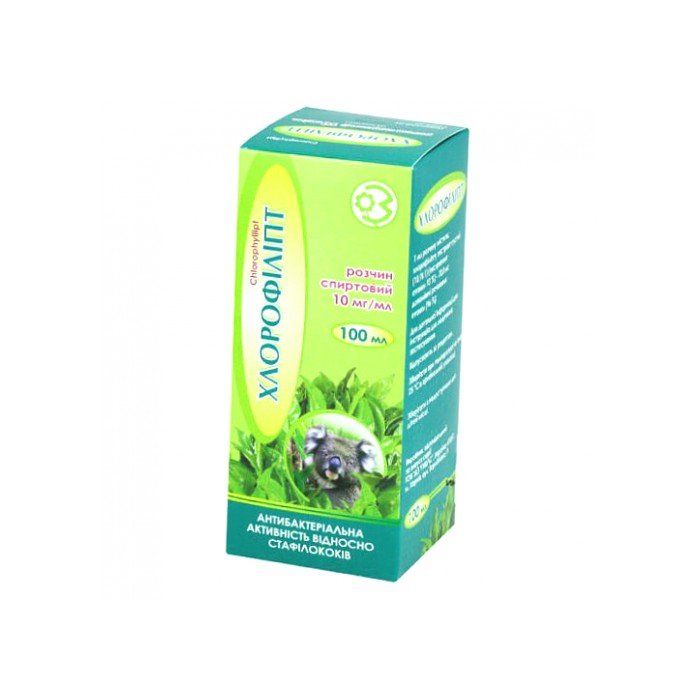
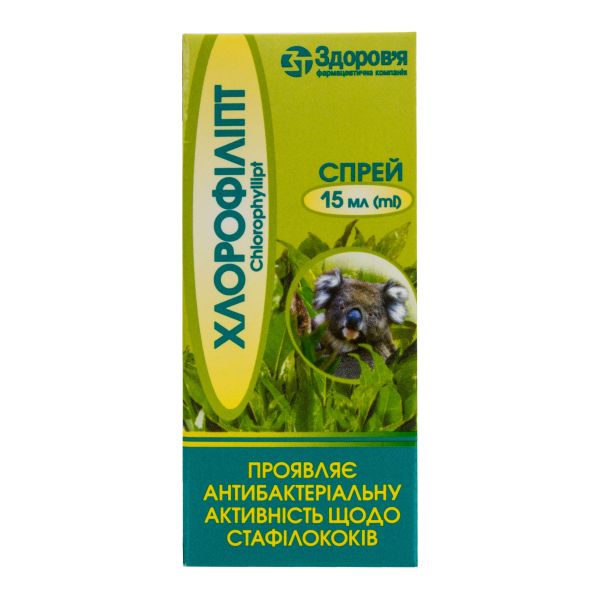
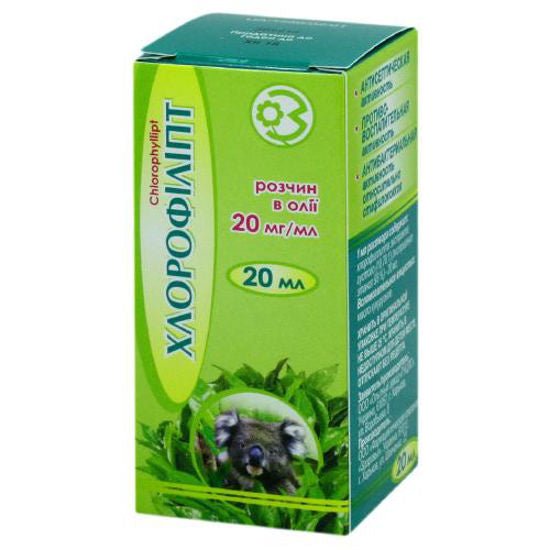

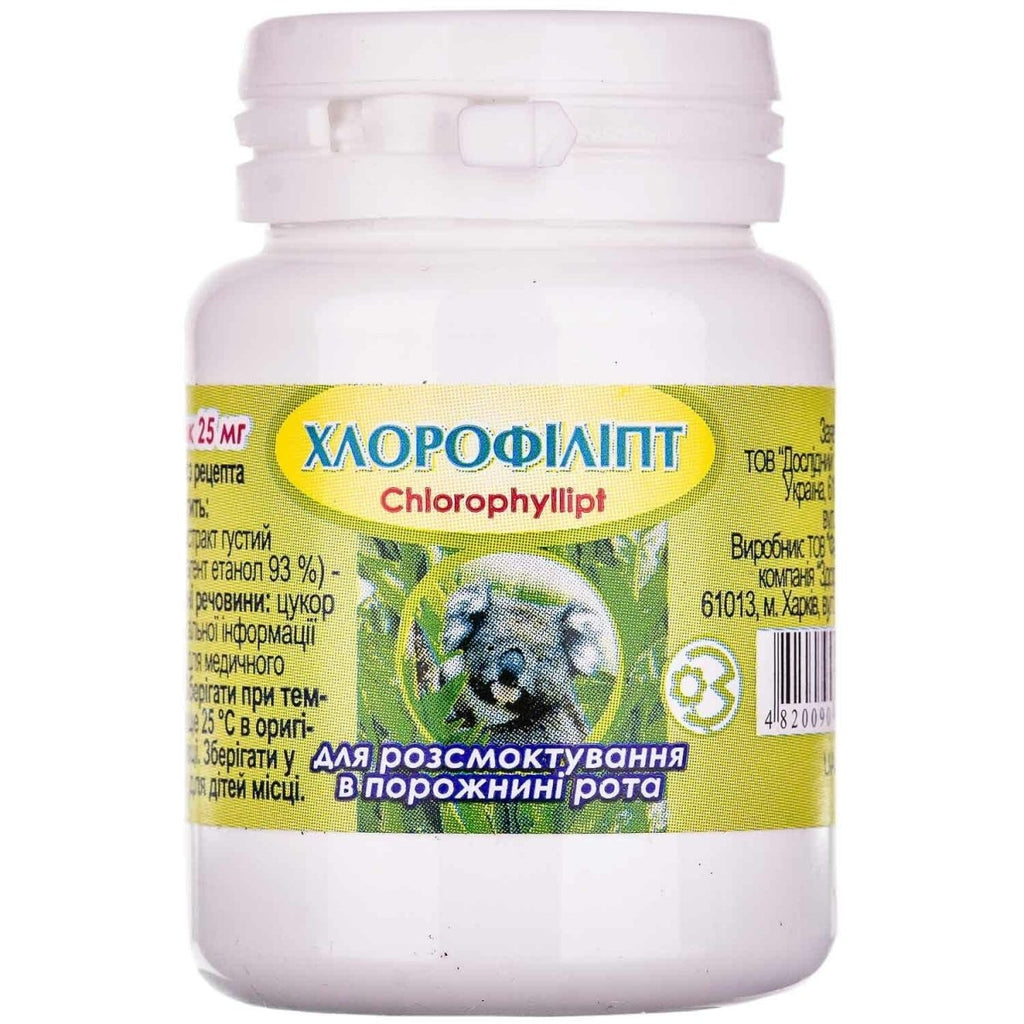

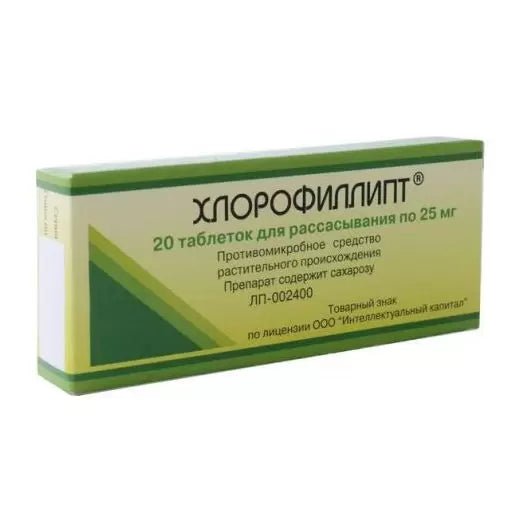

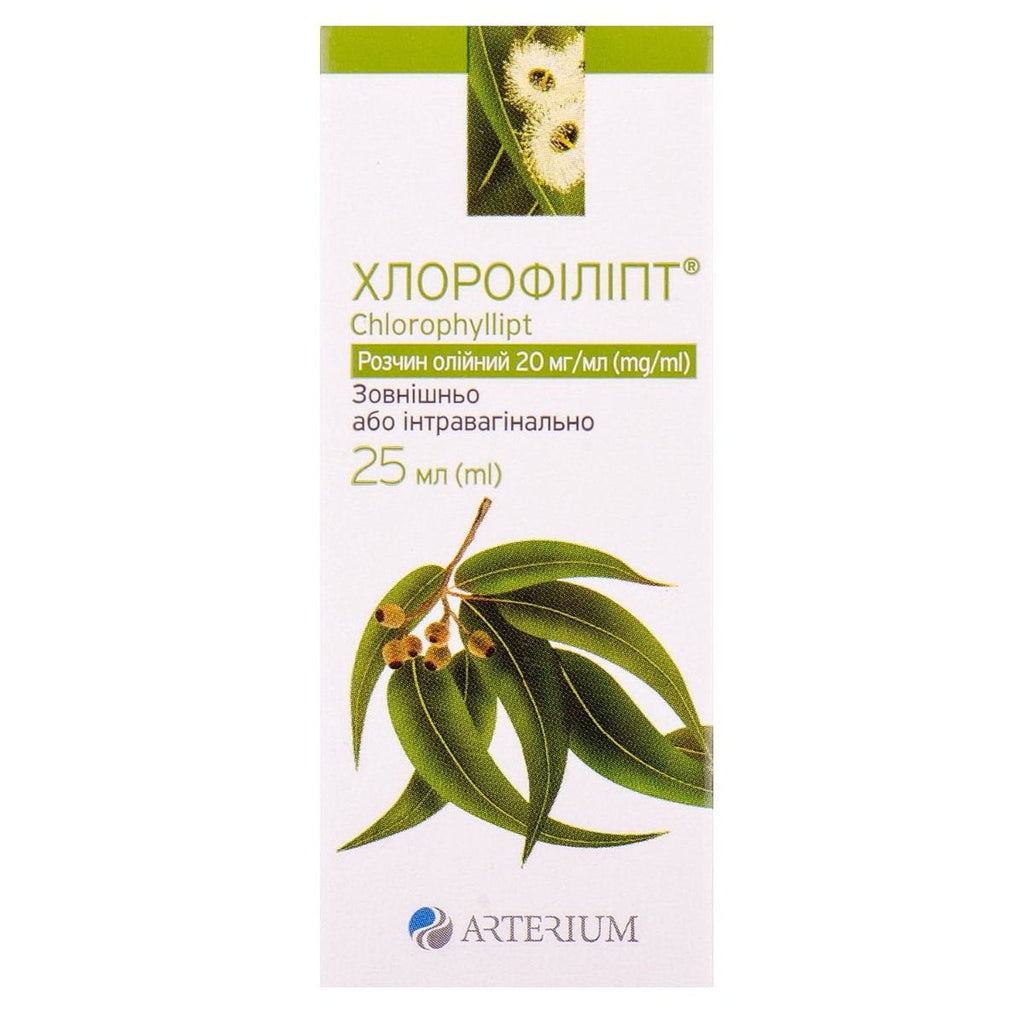

Chlorophyllipt is one of those deep-green bottles that stood in the home cabinet next to iodine, the kind of thing reached for at the first «my throat hurts». Its base is an extract of round-leaf eucalyptus leaves, rich in chlorophylls, which is where the thick green colour and the familiar dark glass bottle come from. On USA Apteka it comes in several forms: a spirit-based solution at 1%, an oil-based solution at 2%, a throat spray, and slow-dissolving lozenges. People usually keep it as a familiar home item for a scratchy throat, small irritations of the mouth, and dabbing on the skin, though it has a few less obvious uses as well. In the post-Soviet home it is one of the most recognizable staples: the thick green liquid, the dark glass, and the sharp eucalyptus note are remembered across several generations.
Chlorophyllipt formats and how they differ
Chlorophyllipt comes in a handful of forms, and the right one depends on the task rather than on which feels strongest.
A quick guide to the formats:
- spirit-based chlorophyllipt, the 1% solution, is diluted for gargles, and in everyday speech it is often called chlorophyllipt tincture;
- oil-based chlorophyllipt, the 2% solution, is dabbed onto the throat lining or placed in the nose, and it is especially welcome in winter when heating dries the lining out;
- the throat spray is a pocket format for the road, easy to use at the office or on a plane;
- the lozenges dissolve slowly and need no dilution, which suits anyone who would rather not measure and rinse.
Whichever format you pick, the chlorophyllipt leaflet on the box sets the dilution and the schedule for that form, and it is worth a read before the first use.
Chlorophyllipt for the throat
Using chlorophyllipt for the throat is the most common scenario and the reason many keep a bottle on hand. Some long-time users also reach for it for the «familiar from childhood» sharp eucalyptus taste, recognized at once. In winter the oil-based form is especially valued: when heating dries the air, the throat lining suffers from dryness as much as from anything else, and a thin coat on the back of the throat gives a sense that the lining is shielded again.
By the producer’s leaflet, the 1% spirit-based solution is used for gargles: a teaspoon stirred into a glass of warm boiled water, three or four times a day after meals, with no eating or drinking for about half an hour afterward.
The other forms have their own logic:
- the oil-based solution is wiped onto the throat lining with a cotton pad in a thin layer, or placed as a couple of drops in each nostril when the lining is dry and crusty;
- the spray is two or three puffs, three or four times a day after meals, with the can shaken first and the first puff aimed into the air;
- the lozenges are dissolved slowly, one every four to five hours, without chewing.
The time to start is at the first scratchy feeling, rather than waiting for things to get heavy. What chlorophyllipt does not do is replace a doctor’s visit when the throat hurts sharply, the temperature climbs above 38, there are white patches, swollen glands, or hard swallowing. In those cases the bottle steps aside. If symptoms hold past two or three days or keep growing, it is wiser to set the home solution down and book an appointment.
A sensitivity check before the first use
Before a first-ever use, the producer’s leaflet asks plainly for a sensitivity check, and this step is easy to skip and worth keeping.
The check is simple:
- stir 25 drops of the spirit-based solution into a tablespoon of water and take it;
- watch over the next six to eight hours for swelling of the lips or tongue, a rash, itching, throat tightness, or any other sign of oversensitivity;
- if none of that appears, the item is usually tolerated;
- if anything does appear, further use is stopped and an alternative is discussed with a doctor.
This check matters most for children, for people with multiple allergies, and during pregnancy, where the go-ahead comes from a doctor first.
How to use chlorophyllipt properly
Each form has its own routine, and the leaflet on the specific pack always wins over a general guide.
The short version by form:
- spirit-based 1% for gargles: a teaspoon in a glass of warm boiled water, three or four times a day after meals;
- oil-based 2% applied locally: a thin layer on the throat lining, or two or three drops in each nostril for an adult, three or four times a day;
- spray: two or three puffs, three or four times a day after meals;
- lozenges: one every four to five hours, no more than five a day.
Taken by mouth, the spirit-based solution follows a different and much smaller dose that a doctor sets, not a home guess. That route belongs in a narrow, supervised plan, and ongoing stomach discomfort is sorted out for its cause first rather than reached for with drops. The same caution applies to any plan that goes beyond the throat: chlorophyllipt fits there only as a supporting part, once a doctor has looked at the bigger picture.
How chlorophyllipt differs from a doctor’s course
The short answer is that chlorophyllipt is a eucalyptus-leaf extract, not a manufactured course from a doctor. It works gently and on the surface of the throat and mouth, its range is narrower, and its evidence base is lighter than that of the targeted options a doctor reaches for. That is exactly why it sits where it sits.
A couple of practical conclusions follow:
- it is not used in place of a course a doctor has set, on the hope of «getting by with herbs»;
- it can sit alongside such a plan as gentle local care, once the doctor has agreed, but as an addition rather than a replacement.
People sometimes lean on botanical extracts as a stand-in for a real course, and that mix-up is the one worth clearing up. The calm view, the same one written into the old leaflets, is to use chlorophyllipt for light, familiar situations and to let a doctor handle anything that needs more. If a situation genuinely calls for a doctor’s course, the choice and the amount belong to the doctor, not to intuition or articles online.
Who should take chlorophyllipt carefully
Chlorophyllipt has a gentle profile, but it still has situations where there is no rush.
It is approached carefully:
- with an allergy to eucalyptus or essential oils, which is exactly why the sensitivity check comes first;
- by children, where the form and age are set by the leaflet, and the spirit-based solution is not given by mouth without a doctor;
- during pregnancy and breastfeeding, where the decision to use it belongs with a doctor;
- with a tendency to airway tightness or very dry linings, where the sharp eucalyptus profile can irritate;
- the spirit base adds the usual limits: the concentrate is not put on open skin or linings without dilution, and by mouth it is kept away from anything that should not meet alcohol.
If burning, swelling, or a rash shows up after the first use, the item is set aside and a doctor is seen if needed. The calm rule is simple: chlorophyllipt is good for light, clear situations, and anything beyond them is settled with a doctor.
A few facts about chlorophyllipt
A few details help place the green bottle and explain its long run in the home cabinet.
Worth knowing:
- it is an extract of round-leaf eucalyptus leaves, rich in chlorophylls, which gives the deep green colour;
- it has been a familiar home-cabinet item across the CIS region for decades;
- it comes in spirit-based 1%, oil-based 2%, spray, and lozenge forms;
- it works on the surface of the throat and mouth, building comfort across use rather than switching symptoms off in one go;
- the date and storage terms are printed on the box.
Where to find chlorophyllipt
Chlorophyllipt on USA Apteka comes in several formats, a spirit-based 1% solution in bottles of different sizes, an oil-based 2% solution, a throat spray, and lozenges, all in the original factory pack from European and CIS-region producers. Orders are placed online, delivery is free over $69, and the support team is glad to help by chat or WhatsApp with a format or a stock check; regular customers have a bonus program and seasonal offers.
A word on combinations: it sits calmly with a plain salt-water rinse, and it is sensible to clear the lining with salt water first and only then apply the oil or gargle with the spirit-based form. It pairs with throat lozenges too, but not at the same moment, letting one finish before the next. It is not mixed with other spirit tinctures in one cup, since the result is unpredictable. Storage is a dry, cool place out of direct sunlight, with the bottle tightly closed, and the date on the box; once opened, a bottle is usually used within a few weeks per the leaflet. Take care of yourself, and let the green bottle do its calm, familiar job in the simple situations it was made for.
Please Chat with us or send us a message on WhatsApp